
Shenzhen North Station: High-Standard Maintenance in a Critical Hub
Shenzhen North Station: High-Standard Maintenance in a Critical Hub
The Client
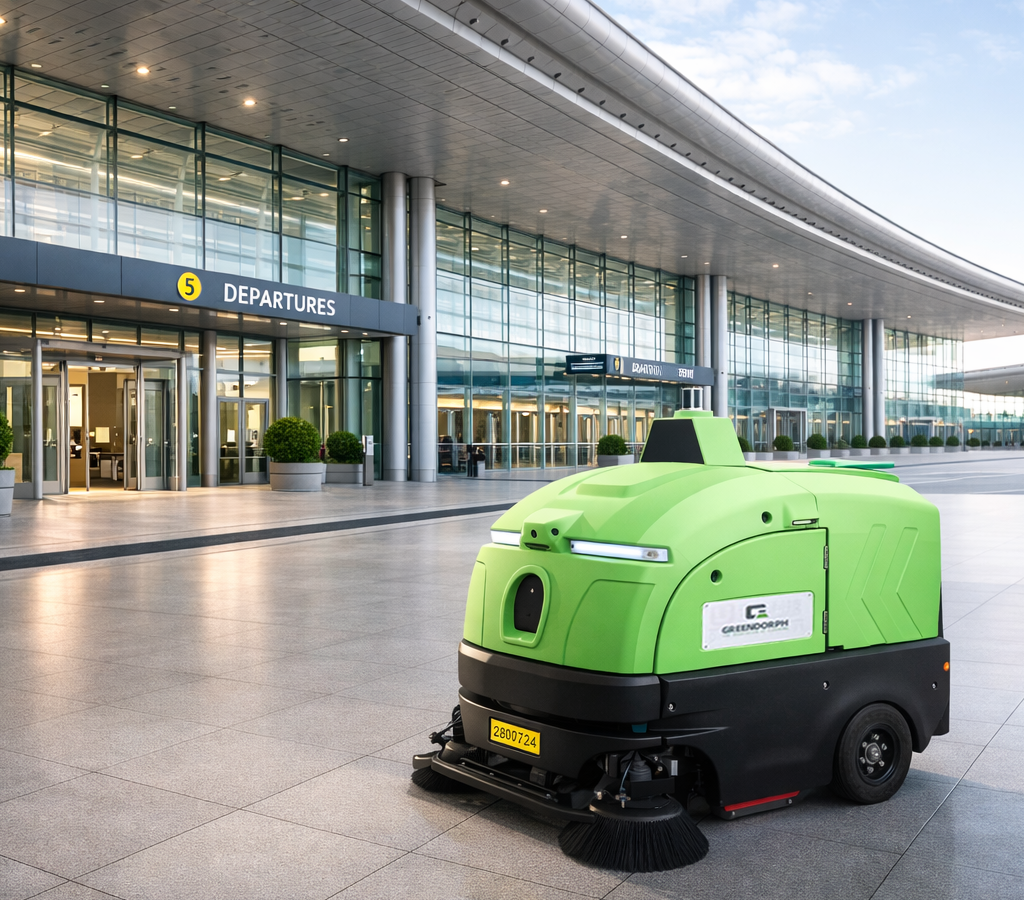
The Comprehensive Management Center of Shenzhen North Station oversees the nexus of Southern China’s high-speed rail network.
As a critical infrastructure hub, the station operates under stricter regulations than any mall or factory. The management team’s priority is not just “cleanliness,” but “Operational Safety & Compliance.” They need equipment that meets the rigorous standards of a “National Civilized City” while posing zero risk to the millions of passengers passing through.
Challenges
We moved beyond simple "cleaning" and identified three safety-critical challenges that manual labor struggled to manage:
Solution
We deployed the YJ130, positioning it as the "Safest Choice" for public infrastructure. We upgraded the navigation stack to handle the high-speed, clutter-filled environment:
High-Frequency
Rapid Loops
To address the "5-Minute Spillage Risk," the YJ130 executes tight, high-frequency loops in high-risk zones. This drastically reduces the average time a slip-hazard remains on the floor, ensuring the granite surface stays safe for rushing passengers.
Millisecond-Level
Safety Reflex
In a hub where crowds move fast, reaction time is everything. The YJ130’s edge-computing architecture achieves millisecond-level latency across the entire perception-to-control link. This allows the robot to "think and brake" instantly when a passenger suddenly cuts across its path, ensuring absolute pedestrian safety.
Micro-Obstacle
Detection
Standard sweepers often run over luggage because they look "too high." We calibrated the sensors specifically for ground-level hazards. The system boasts a standard detection height of 15cm, with the capability to identify obstacles as low as 5cm (minimum). This ensures that even flat-lying laptop bags, dropped phones, or small suitcases are detected and avoided.
Public Safety Design
To meet strict safety codes, the unit features LFP batteries, and to meet strict public safety codes, the unit features a Smart Thermal Management System inside the waste hopper it operates on two levels to prevent combustion risks:
-
Proactive: A dust-suppression mist is automatically triggered every 20 minutes to keep waste damp and inert.
-
Reactive: Onboard sensors monitor internal temperature; if a heat spike is detected (e.g., from a lit cigarette), the system immediately deploys a targeted cooling mist to neutralize the thermal threat before it escalates.
Results
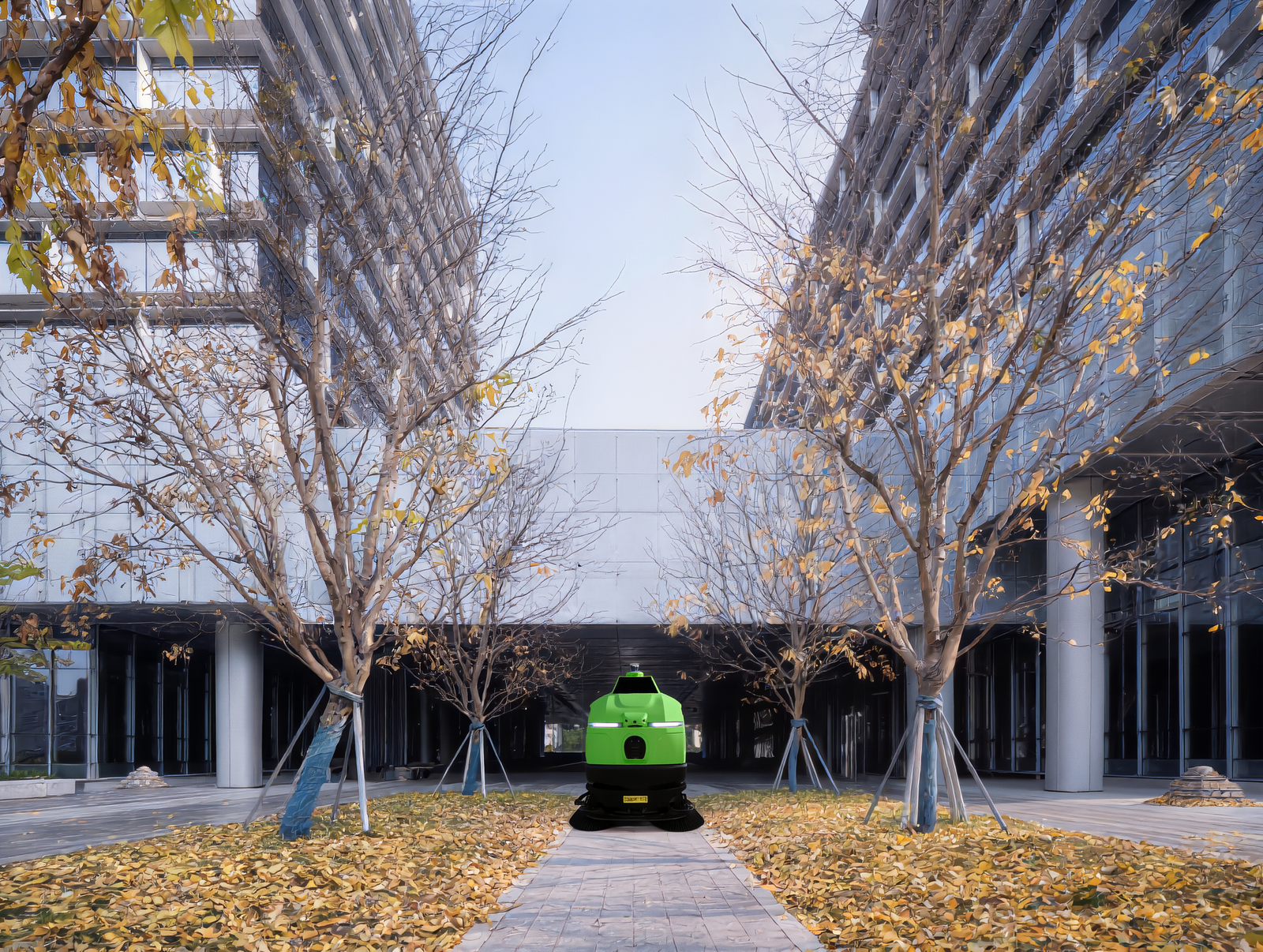
The YJ130 is now an integral part of the station's safety and sanitation protocol.
It provides a verifiable standard of cleanliness that meets government audits, while its safety-first design allows it to operate confidently among crowds.
The management team values "Peace of Mind" above all. The robot does the job without creating safety hazards, proving that in a critical transport hub, safety is the ultimate luxury.