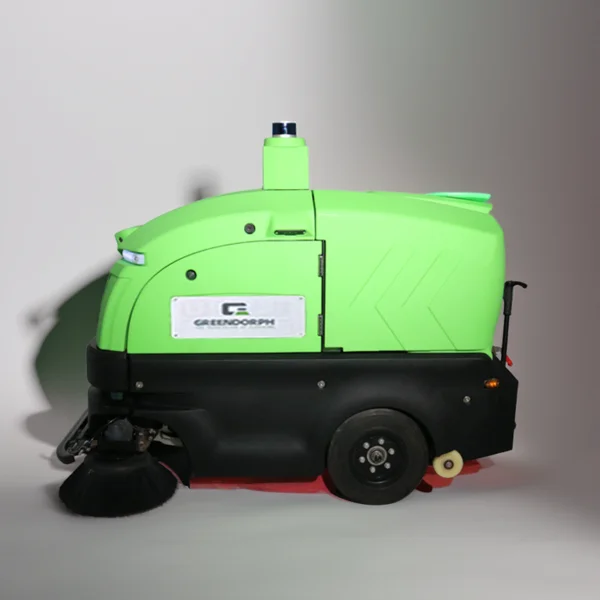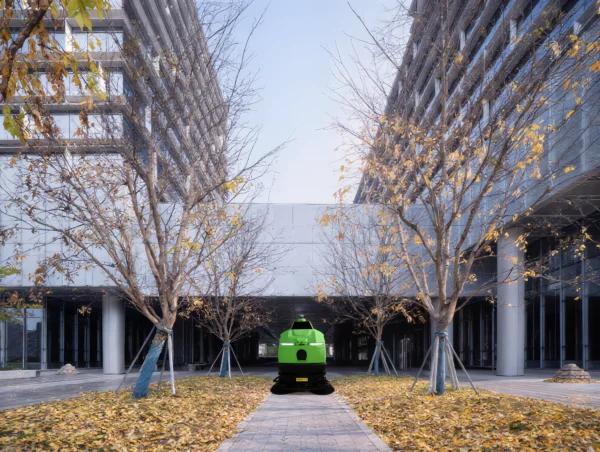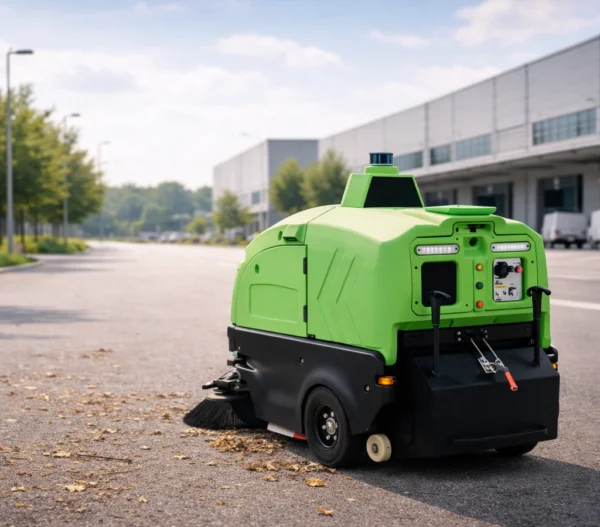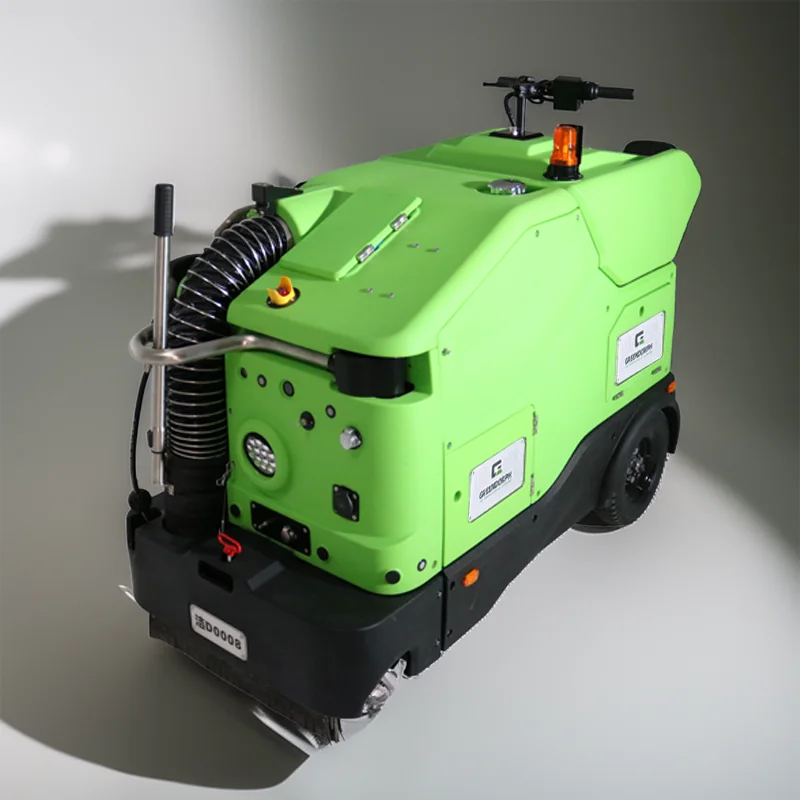
Precision defines the difference between a machine that merely moves and one that truly cleans. For any organization operating across expansive outdoor environments—campuses, industrial parks, or agricultural facilities—autonomous cleaning demands more than basic mobility. It requires an uninterrupted understanding of surroundings. We at Greendorph have seen this firsthand across more than 300 project deployments globally. Among the various technologies that enable reliable automation, one component consistently determines success: the LiDAR sensor. Its function extends far beyond obstacle detection; it forms the foundation upon which intelligent cleaning operations are built.
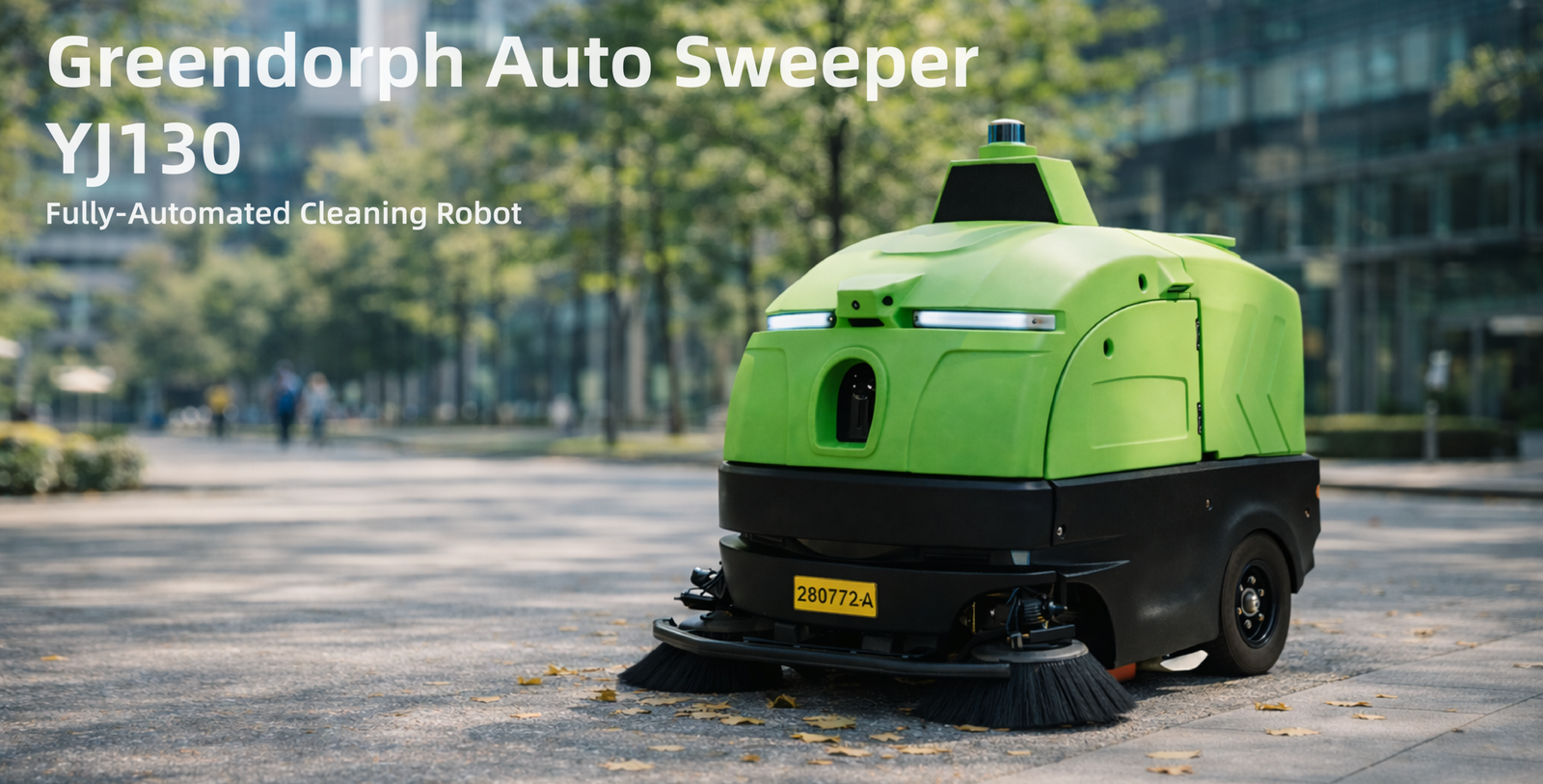
How LiDAR Enables Accurate Navigation in Floor Cleaning Machines
Autonomous navigation hinges on a machine’s ability to perceive its environment with high fidelity. LiDAR—Light Detection and Ranging—operates by emitting laser pulses and measuring the time each pulse takes to return. This process generates millions of precise data points per second, producing a dynamic three-dimensional map of the surroundings. For floor cleaning machines used in large outdoor settings, this capability is indispensable.
Unlike camera-based systems that struggle in low light or varying weather, LiDAR delivers consistent performance regardless of illumination. When we engineer our floor cleaning machines, we prioritize sensor configurations that maintain millimeter-level accuracy even under direct sunlight or light rain. This allows the equipment to distinguish between permanent structures—such as building perimeters and lampposts—and transient obstacles like fallen branches or temporary signage. The result is uninterrupted cleaning cycles without manual intervention. As a sweeping robot manufacturer, we consider this level of environmental resilience not an enhancement but a baseline requirement for commercial deployments.
Why a Sweeping Robot Manufacturer Prioritizes LiDAR Over Alternative Sensors
The choice of perception technology directly influences operational reliability. Alternative approaches, such as vision-only systems or ultrasonic sensors, each carry inherent limitations. Vision systems require extensive computational resources and are vulnerable to visual occlusion and lighting changes. Ultrasonic sensors, while useful for close-range detection, lack the range and resolution needed for high-speed outdoor sweeping.
For a sweeping robot manufacturer focused on large-area applications, LiDAR offers a balance of range, resolution, and computational efficiency. In our projects across industrial zones and agricultural sites, we consistently observe that LiDAR-equipped units achieve higher route adherence and fewer emergency stops. The sensor’s ability to generate real-time point clouds enables simultaneous localization and mapping—commonly known as SLAM—without requiring pre-installed beacons or magnetic strips. This reduces installation complexity for clients and allows our floor cleaning machines to adapt to layout changes, such as seasonal facility reconfigurations, with minimal reprogramming. From a system-integrity standpoint, LiDAR also provides redundant safety monitoring, a critical factor when operating near personnel or sensitive infrastructure.
Integrating LiDAR with AI Platforms for Large-Scale Deployments
A sensor alone does not deliver intelligence; it must feed data into a system capable of interpretation and action. This is where the combination of LiDAR and an AI-enabled cloud platform creates measurable efficiency gains. In our deployments exceeding 300 projects worldwide, we have integrated LiDAR data streams with centralized fleet management systems. The platform aggregates sensor inputs across multiple units, allowing operators to monitor coverage maps, identify recurring debris accumulation areas, and adjust sweeping frequencies based on real-world conditions.
For a sweeping robot manufacturer, this integration transforms LiDAR from a navigation tool into a strategic asset. The AI platform analyzes historical point-cloud data to predict maintenance needs—for example, detecting gradual drift in motor alignment or identifying zones where sensor surfaces require cleaning. Furthermore, the fusion of LiDAR with cloud-based analytics enables over-the-air optimization. When our floor cleaning machines encounter new obstacles or layout changes, the central system refines navigation parameters across the entire fleet without requiring on-site technicians. This architecture has proven particularly effective in campus and commercial park environments, where operational continuity and minimal disruption are paramount.
LiDAR sensors do more than help a machine avoid collisions; they define the scope of what autonomous cleaning can achieve in demanding outdoor environments. From enabling precise navigation in floor cleaning machines to serving as the data backbone for AI-driven fleet management, this technology directly impacts uptime, safety, and operational cost. For any sweeping robot manufacturer committed to reliable performance across diverse commercial and industrial settings, the strategic implementation of LiDAR is not merely a technical decision—it is the foundation for scalable, intelligent cleaning solutions. Our experience across hundreds of global deployments confirms that when precision meets intelligent integration, the result is a standard of cleanliness that manual methods simply cannot match.