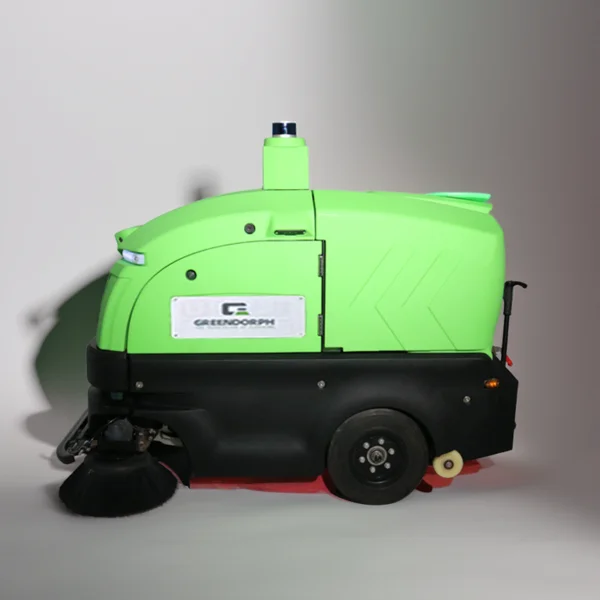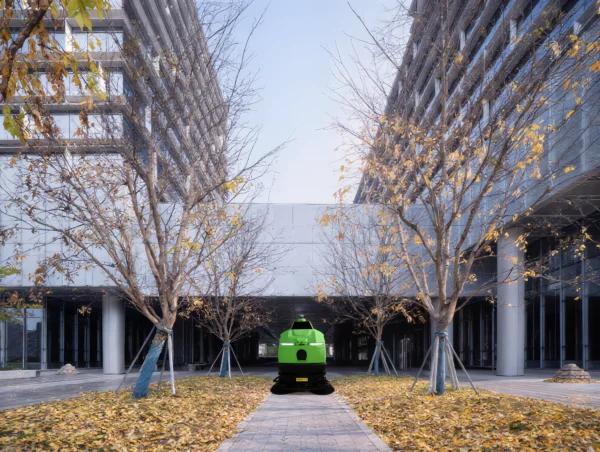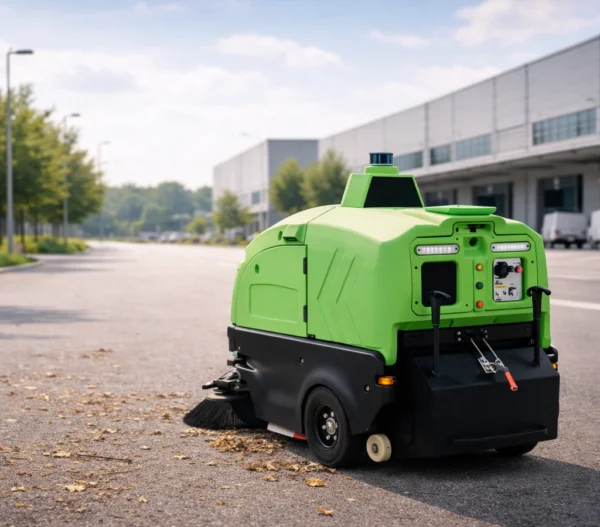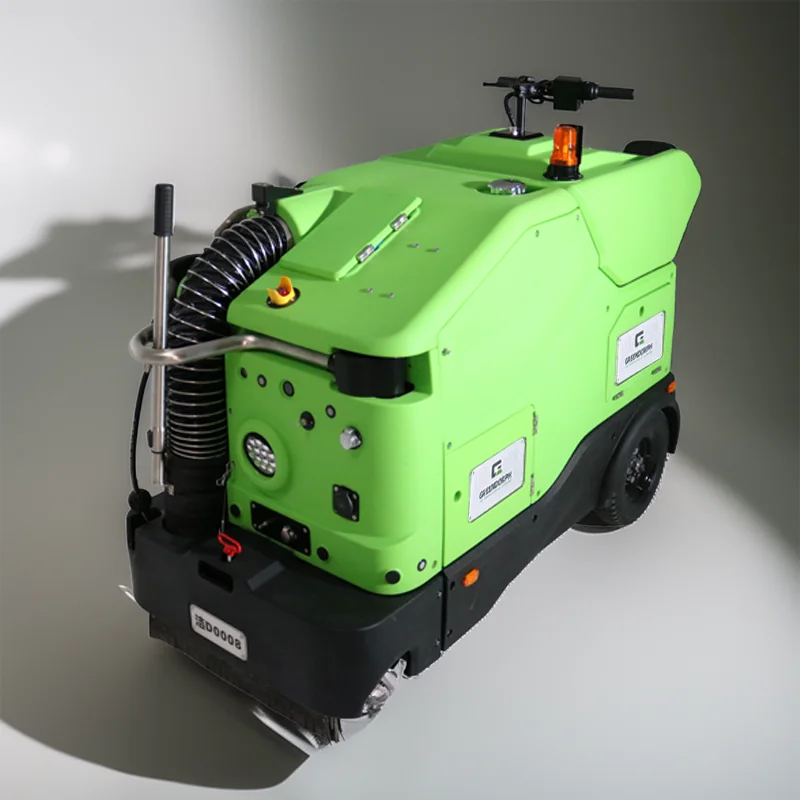
To understand how artificial intelligence transforms outdoor cleaning, one must look beyond the hardware. The metal frames, brushes, and vacuum assemblies are visible, but the intelligence that enables consistent operation without human oversight resides in a layered architecture of perception, decision, and execution. We designed this architecture to answer a fundamental question from facility managers overseeing car parks, industrial parks, and pedestrianised areas: how does a machine make the same judgment calls a skilled operator would, but across multiple sites and throughout extended hours? The answer lies in how AI-powered autonomous cleaning equipment processes environmental data, applies contextual logic, and translates decisions into precise mechanical actions. This functional framework distinguishes modern floor cleaning machines from their conventional predecessors and establishes a new baseline for operational reliability.
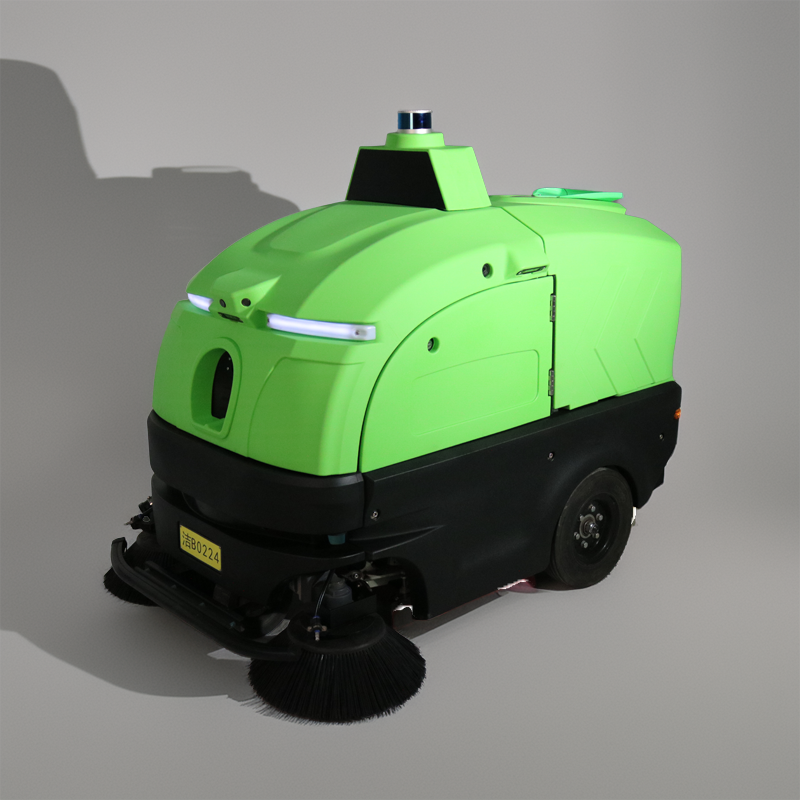
Perception: Building a Digital Understanding of the Environment
Every intelligent cleaning task begins with perception. AI-powered autonomous cleaning equipment uses a multi-modal sensor array—solid-state LiDAR, high-resolution cameras, and ultrasonic proximity sensors—to construct a real-time digital model of its surroundings. Unlike traditional floor cleaning machines that operate on fixed schedules with no awareness of their environment, our systems continuously classify objects and surfaces. LiDAR provides accurate distance measurements to curbs, building edges, and parked vehicles. Cameras add semantic meaning: they distinguish a pedestrian waiting to cross from a temporary construction barrier or a pile of debris that requires focused vacuuming. Ultrasonic sensors fill the close-range gaps, ensuring safe operation near loading docks and narrow passageways. These data streams are fused on an onboard computing unit that runs proprietary sensor fusion algorithms. The output is a dynamic occupancy grid that the machine updates several times per second. For a floor cleaning machine covering a large car park, this means it knows not only where fixed structures are located but also which areas are temporarily occupied by moving vehicles. This perceptual layer forms the foundation for all subsequent AI functions, enabling autonomous cleaning equipment to operate without pre-programmed fixed routes.
Decision: Applying Context-Aware Logic to Cleaning Tasks
Once the environment is perceived, the machine must determine what to do. This decision layer applies context-aware logic that goes beyond simple rule-based automation. Conventional floor cleaning machines often follow a predetermined path; if an obstacle appears, they stop and wait for human intervention. AI-powered autonomous cleaning equipment handles such situations differently. Our systems incorporate a hierarchical decision framework. At the highest level, a mission planner sets coverage goals—such as sweeping a defined zone in an industrial park or washing specific pavement sections. At the execution level, a local decision module continuously evaluates trade-offs. Should the machine pause cleaning to navigate around a delivery truck, or can it complete the current row and return later? Should it increase vacuum power when passing through a leaf-covered section of a pedestrianised area, or maintain standard settings to conserve battery? These decisions are informed by historical data from the same site as well as aggregated insights from our fleet of more than 300 deployed units. The AI does not simply react; it anticipates. For facility managers, this means autonomous cleaning equipment adapts to daily variations in layout, traffic, and debris load without requiring reprogramming. The decision layer effectively transforms floor cleaning machines from passive tools into active participants in site operations.
Action: Executing with Precision Across Diverse Surfaces
The final functional layer translates decisions into precise mechanical execution. AI-powered autonomous cleaning equipment must control multiple actuators simultaneously—steering, brush speed, vacuum suction, water flow—while maintaining stability on varied surfaces. We engineered our outdoor autonomous driving cleaning robot and SEMI-ride-on cleaning robot to execute with sub‑second latency between decision and action. When the decision layer determines that a section of pavement requires increased washing intensity, the action layer adjusts water pressure and brush rotation within milliseconds. When navigating a car park with frequent stop‑and‑go patterns, the action layer modulates acceleration and braking to prevent uneven cleaning patterns. This precision extends to fleet coordination. Through our AI smart cloud platform, multiple units operating in the same industrial park can synchronize actions—for instance, ensuring two floor cleaning machines do not attempt to clean overlapping zones simultaneously. The cloud platform also logs action outcomes, creating a feedback loop that refines future decisions. Over time, autonomous cleaning equipment deployed across campuses, commercial complexes, and agricultural sites builds a site‑specific operational history that improves cleaning efficiency without manual intervention.
AI-powered cleaning functions through a carefully engineered sequence: perceiving the environment with sensor fusion, making context‑aware decisions, and executing with coordinated mechanical precision. We at Greendorph built this architecture into our autonomous and semi‑ride‑on platforms to give facility managers a reliable alternative to manual cleaning operations across large outdoor environments. By treating autonomous cleaning equipment as an integrated system rather than a collection of components, we ensure that every floor cleaning machine delivers consistent results—whether it is sweeping a pedestrianised area, vacuuming an industrial park, or washing a car park. The technology continues to evolve, but the functional principles remain the foundation for intelligent, low‑carbon cleaning solutions.