
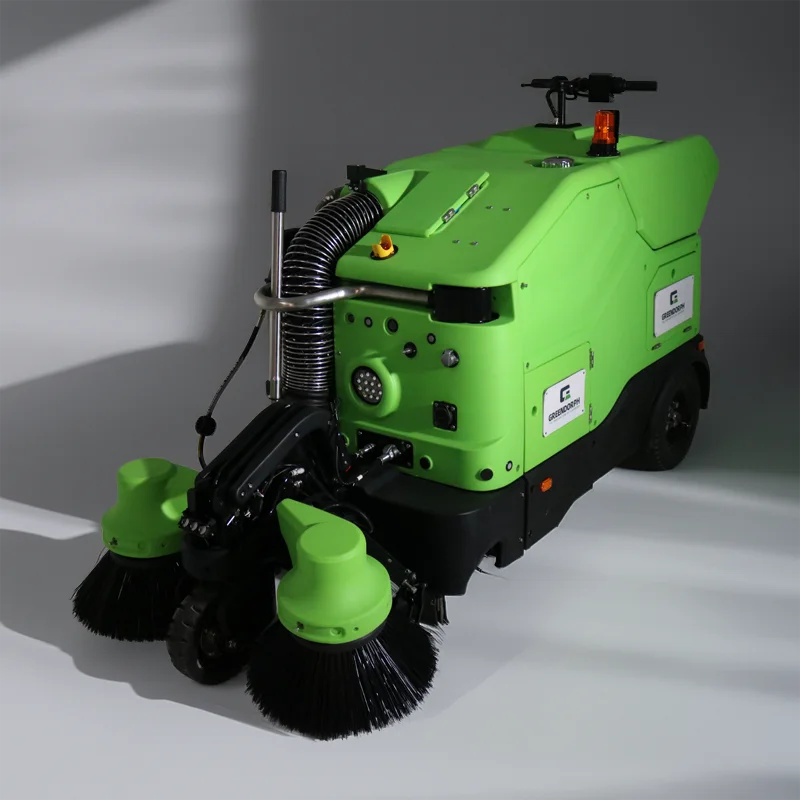
Maintaining cleanliness in parking lots is essential for any business that relies on these spaces for customer access and operational efficiency. Parking lot cleaning often presents various challenges, from managing debris accumulation to ensuring safety for both pedestrians and vehicles. An automated parking lot cleaning system, such as the Greendorph Omniclean Urban Street Sweeper YJ80, can address these issues effectively. This article explores the common problems solved by such automated systems.
1. Inefficiency and Labor Costs
One of the primary problems in parking lot cleaning is the inefficiency associated with traditional cleaning methods. Manual cleaning requires significant labor resources, often leading to increased costs and time expenditures.
Automated parking lot sweepers significantly reduce reliance on human resources. The YJ80 operates autonomously, enabling it to cover vast areas swiftly and efficiently. With an impressive runtime of up to eight hours, this parking lot sweeper can complete cleaning tasks during operational downtimes or off-peak hours, minimizing disruptions to business activities. This efficiency not only lowers labor costs but also maximizes resource utilization, allowing staff to focus on more critical tasks within the organization.
2. Inconsistent Cleaning Results
Manual cleaning methods often result in inconsistent cleaning quality. Human operators may miss areas, leading to debris and dirt accumulation that tarnishes the overall appearance of the parking lot.
Automated parking lot cleaning systems address this problem through advanced technology and design. The YJ80 features a powerful suction system complemented by a range of functions, including high-pressure surface flushing and intelligent dust suppression. This comprehensive approach ensures thorough removal of dust, leaves, and litter, maintaining high cleanliness standards consistently across the parking area. The result is a well-maintained environment that enhances the overall user experience for customers and visitors.
3. Environmental Impact and Safety Concerns
Environmental sustainability is becoming increasingly important for businesses today. Traditional cleaning methods that rely on gasoline-powered equipment contribute to harmful emissions and can negatively impact air quality. Additionally, manual cleaning can create safety hazards, as debris left on the ground poses risks for both vehicles and pedestrians.
The transition to an electric parking lot sweeper, like the YJ80, mitigates these environmental concerns. Operating with zero CO2 emissions, it not only cleans efficiently but also prioritizes sustainability. The near-silent operation of the YJ80 also minimizes noise pollution, fostering a more pleasant atmosphere for nearby businesses and customers.
Moreover, an automated cleaning system enhances safety by ensuring that no debris is left behind, reducing slip and fall risks and ensuring smooth vehicle and pedestrian traffic flow. By investing in such advanced cleaning solutions, businesses can create cleaner and safer environments that align with modern sustainability goals.
Elevating Parking Lot Maintenance with Automation
In summary, automated parking lot cleaning systems effectively solve common issues associated with maintaining cleanliness and safety. From reducing labor costs and ensuring consistent cleaning results to promoting environmental sustainability, parking lot sweepers like the Greendorph Omniclean Urban Street Sweeper YJ80 offer comprehensive solutions for businesses.
By embracing automation in parking lot cleaning, organizations not only improve operational efficiency but also enhance the overall experience for customers and employees. Investing in advanced cleaning technologies demonstrates a commitment to cleanliness, safety, and environmental responsibility, positioning businesses for success in today’s competitive landscape.