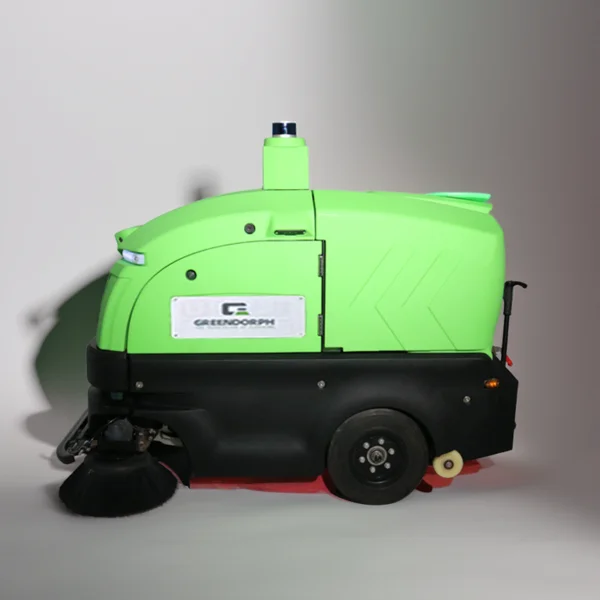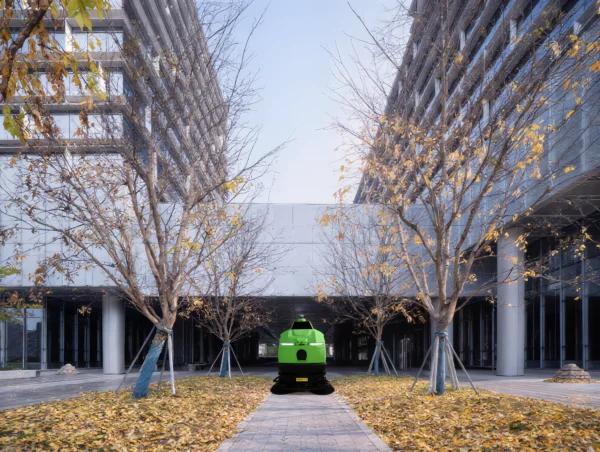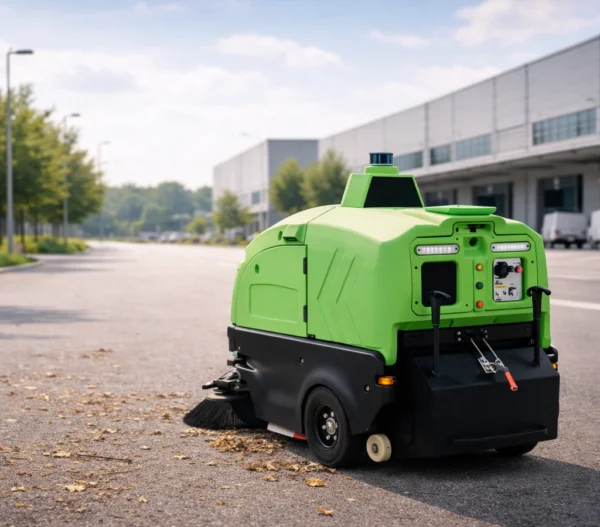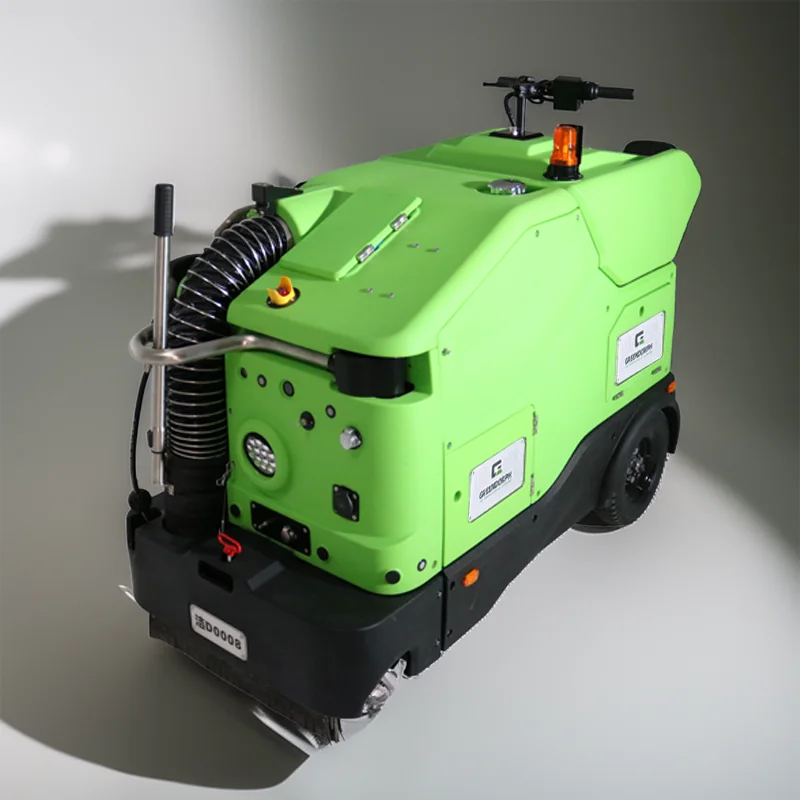
When facilities managers evaluate cleaning methodologies, the choice often narrows to two distinct approaches: automated equipment or conventional manual mopping. We at Greendorph have spent years analyzing real-world performance data across commercial, industrial, and campus environments, and the differences extend far beyond surface-level convenience. Understanding the operational science behind each method helps organizations make decisions that impact labor efficiency, cleaning consistency, and long-term cost structures.
The Science of Soil Removal and Consistency
Manual mopping relies on human-controlled variables—pressure, stroke pattern, solution concentration, and mop-head saturation. Studies in facility management consistently show that manual methods produce high variability in microbial reduction and soil extraction, largely because operator fatigue and technique inconsistencies affect outcomes. A robotic floor scrubber, by contrast, applies engineered parameters: downforce measured in kilograms, water flow regulated by sensors, and scrubbing patterns executed with repeatable precision. We have observed that automated systems maintain uniform contact time per square meter, a factor directly correlated with biofilm disruption and particulate removal. This scientific approach to consistency means that a robotic floor scrubber does not experience the performance drop-off seen in the final hours of a manual cleaning shift. For organizations tracking cleanliness metrics such as ATP readings or visual inspection scores, the switch to autonomous equipment often yields statistically significant improvements in both mean values and standard deviations.
Labor Deployment and Ergonomic Considerations
Traditional mopping systems impose physical demands that accumulate over time. Pushing heavy buckets, wringing mops manually, and performing repetitive twisting motions contribute to musculoskeletal strain—a leading cause of injury among custodial staff. From an operational research perspective, the total cost of manual cleaning includes not only wages but also sick leave, turnover, and ergonomic risk mitigation. We integrate these factors when advising clients on automation transitions. A modern robot floor cleaner eliminates the need for workers to perform sustained low-posture work; instead, staff can be redeployed to detail tasks, high-touch disinfection, or quality assurance roles. Facilities that have adopted autonomous solutions report that workers experience fewer ergonomic complaints, and management gains the ability to schedule labor for value-added functions rather than repetitive travel across expansive floor areas. This reallocation aligns with lean management principles, reducing waste in motion and improving overall labor productivity.
Water Consumption, Chemical Use, and Sustainability Metrics
Environmental impact has become a quantifiable factor in procurement decisions. Conventional mopping typically uses a large volume of water and cleaning solution per shift, with significant waste due to uncontrolled dilution and frequent solution dumping. We have benchmarked operations where a single robotic floor scrubber reduced water usage by over 70% compared to manual mopping of the same area, achieved through on-demand dispensing systems and precision application. Moreover, automated units recover used solution via integrated vacuum systems, minimizing runoff and chemical discharge into drains. This closed-loop efficiency supports sustainability goals without compromising cleaning efficacy. Facilities seeking LEED certification or corporate carbon reduction targets find that automating floor care contributes measurable progress. The data consistently show that a robot floor cleaner not only maintains consistent hygiene outcomes but does so with a fraction of the water and chemical footprint.
The comparison between robotic floor scrubbers and traditional manual mopping systems reveals distinct advantages in consistency, labor optimization, and resource efficiency. Manual methods remain viable for small or highly irregular spaces, yet for the large-area environments where we deploy our technology—commercial complexes, industrial facilities, campuses, and parks—the scientific case for automation is compelling. By shifting to autonomous equipment, organizations transform floor care from a variable, labor-intensive task into a predictable, data-driven process. We continue to work with facility leaders to measure these outcomes directly, ensuring that every transition delivers measurable improvements in cleanliness, safety, and operational cost.