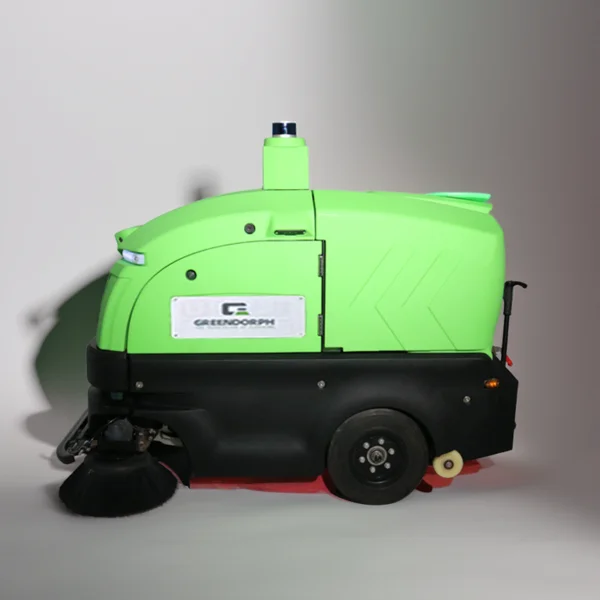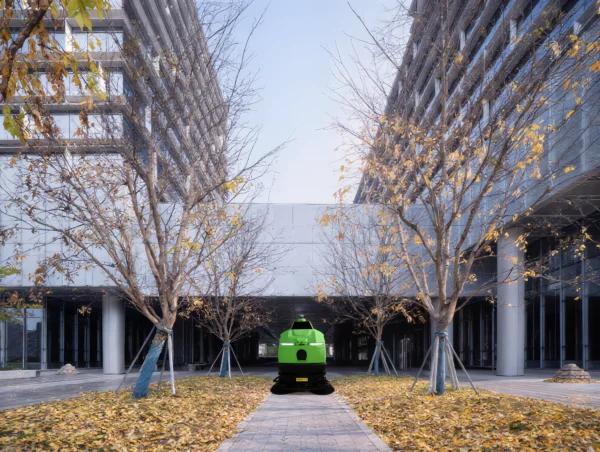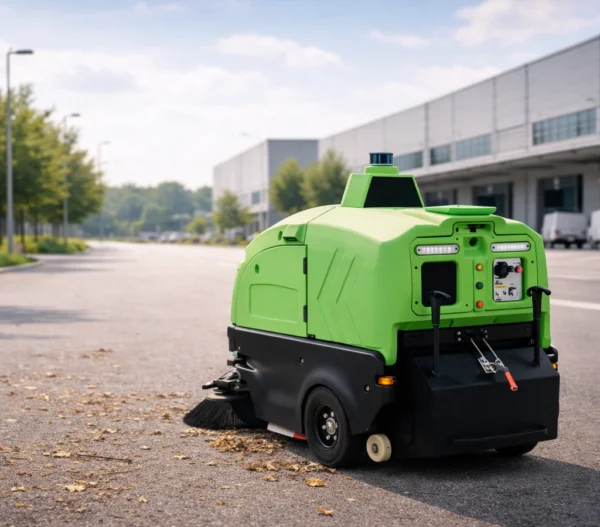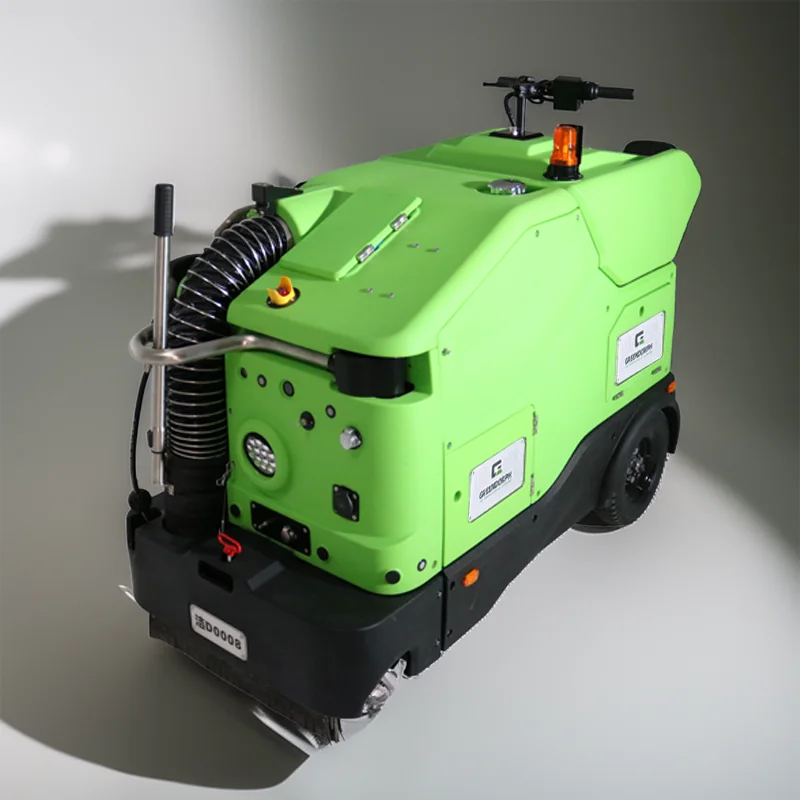
When evaluating cleaning equipment for large-scale commercial, industrial, or municipal applications, the distinction between conventional designs and intelligent systems has never been more pronounced. For years, the mechanical street sweeper served as the industry standard—reliable, straightforward, and widely understood. Yet the emergence of AI‑driven platforms has introduced a new paradigm, one defined by adaptive control, predictive analytics, and verifiable efficiency gains. We at Greendorph have observed across hundreds of deployment sites that the operational gap between these two classes of equipment continues to widen, and the underlying reasons are grounded in engineering principles that directly impact total cost of ownership and cleaning consistency.
Adaptive Control Versus Fixed Mechanical Operation
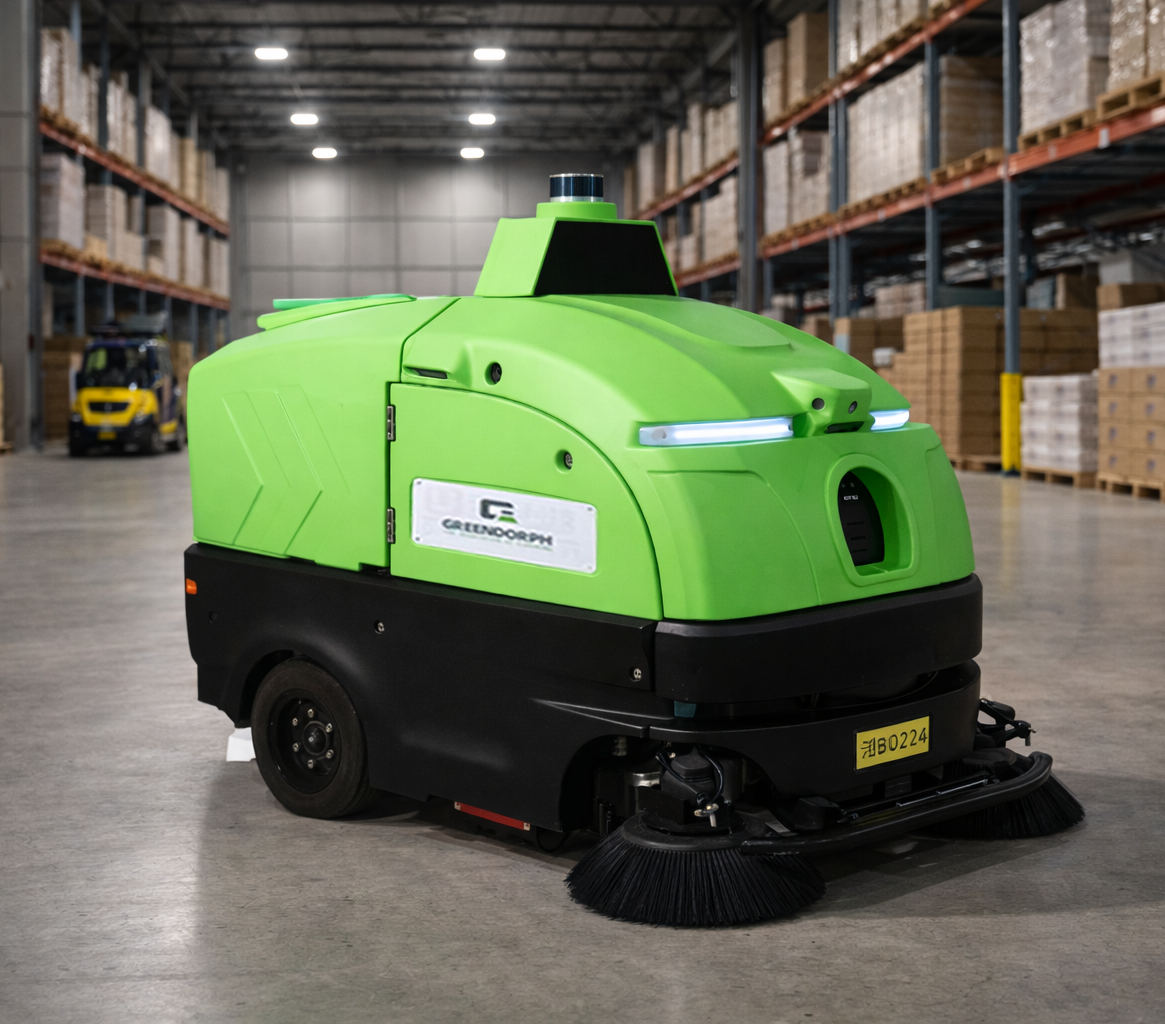
A traditional mechanical street sweeper operates on a fixed mechanical architecture. The engine drives hydraulic pumps at a constant speed, which in turn power the main broom, gutter brooms, and suction fan. Regardless of whether the surface is heavily soiled or already clean, the machine expends the same amount of energy per minute of operation. This uniformity, while simple, introduces inefficiency. By contrast, AI‑driven sweepers employ sensor fusion—combining lidar, optical cameras, and particulate sensors—to characterize the surface in real time. The control system then modulates broom pressure, fan speed, and water flow dynamically. When the sensors detect light debris, the machine reduces energy consumption automatically; when a debris-dense zone is identified, it momentarily increases cleaning intensity. This adaptive approach means the machine functions as a responsive system rather than a rigid implement. For facility operators, the result is lower fuel or battery consumption per cleaned area and extended component life, as brushes and filters are not subjected to unnecessary wear during low‑load conditions.
Predictive Maintenance Versus Reactive Repair Cycles
Maintenance practices highlight another fundamental divergence. With a mechanical street sweeper, fleet managers typically rely on scheduled service intervals or react to performance degradation—reduced suction, unusual vibration, or visible debris left behind. By the time these symptoms appear, secondary damage may have already occurred. AI‑driven platforms continuously monitor key variables: brush motor current draw, hydraulic fluid temperature, filter pressure differentials, and bearing vibration signatures. When a parameter deviates from the established baseline, the system generates an alert with a specific diagnostic code. This allows maintenance teams to replace a worn brush or clean a clogged filter before it impacts sweeping quality or causes collateral damage to other components. In practice, this shift from reactive to predictive maintenance reduces unplanned downtime by a measurable margin and extends the usable life of major assemblies. Moreover, the operational data collected enables root‑cause analysis—identifying whether repeated brush wear is due to surface irregularities, operator patterns, or debris composition—so that corrective actions can be applied systemically rather than repeatedly treating symptoms.
Lifecycle Cost and Operational Visibility
The total cost of ownership for a mechanical street sweeper often underestimates indirect expenses such as fuel consumption variability, labor inefficiency from manual adjustments, and the cost of unscheduled repairs. Because a mechanical street sweeper lacks integrated telematics, fleet managers have limited visibility into how each machine is being operated or which routes yield suboptimal performance. AI‑driven systems provide granular data: cleaning coverage maps, debris load by zone, active sweeping time versus idle time, and energy consumption per shift. This visibility transforms fleet management from an exercise in estimation to a data‑informed discipline. Routes can be optimized to eliminate redundant passes; operator training can be targeted based on actual machine usage patterns; and procurement decisions can be supported by performance metrics rather than anecdotal evidence. When scaled across a fleet of multiple units, these efficiencies compound, often yielding a return on investment that surpasses what traditional mechanical street sweeper fleets can achieve through incremental improvements alone.
The advantages of AI‑driven sweepers over the traditional mechanical street sweeper are not speculative—they are rooted in measurable differences in control logic, maintenance methodology, and operational visibility. Fixed mechanical designs, while familiar, cannot match the efficiency gains that come from real‑time adaptation, predictive diagnostics, and data‑backed fleet management. As cleaning requirements grow more demanding across commercial campuses, industrial sites, and municipal districts, the ability to deploy equipment that learns, adapts, and reports becomes a strategic advantage. For organizations evaluating their next generation of sweeping assets, the question is no longer whether AI‑driven technology can outperform conventional designs, but how quickly they can realize the benefits already demonstrated across hundreds of real‑world deployments.