For facility managers overseeing large outdoor environments, the question is no longer whether automation can handle cleaning tasks, but how a machine makes sense of complex, unpredictable spaces without a human at the controls. We encounter this question frequently from clients managing industrial parks, campuses, and car parks where pedestrian traffic, moving vehicles, and variable terrain create constant change. The answer lies not in a single technology but in a layered navigation architecture that combines real-time perception, decision-making, and mechanical precision. Understanding this process reveals why an autonomous street sweeper operates with reliability that rivals—and often exceeds—manual operation.
Sensor Fusion Creates a Continuous Environmental Model
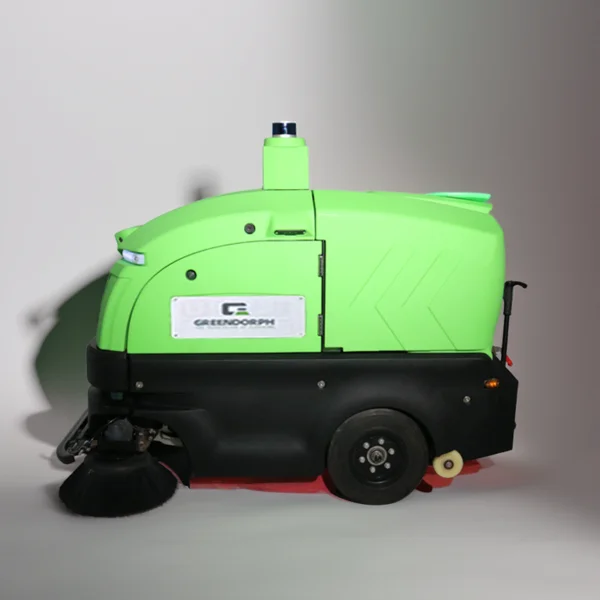
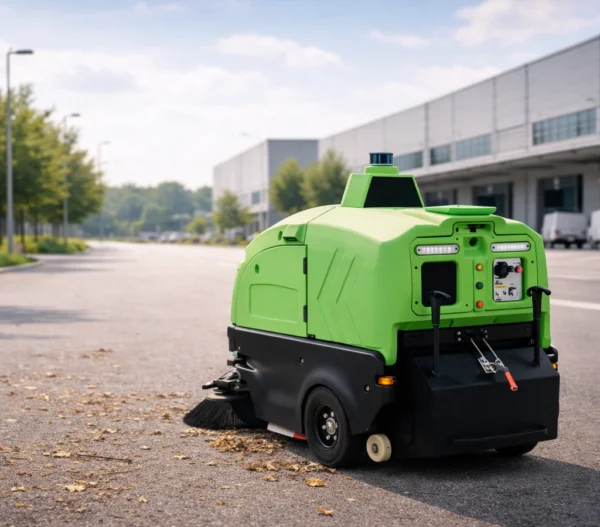
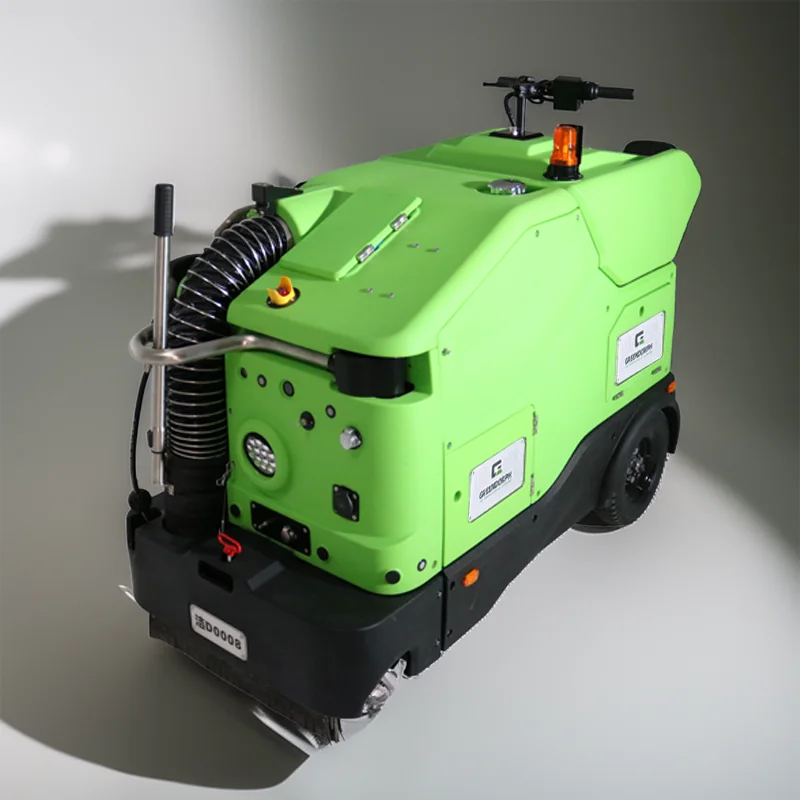
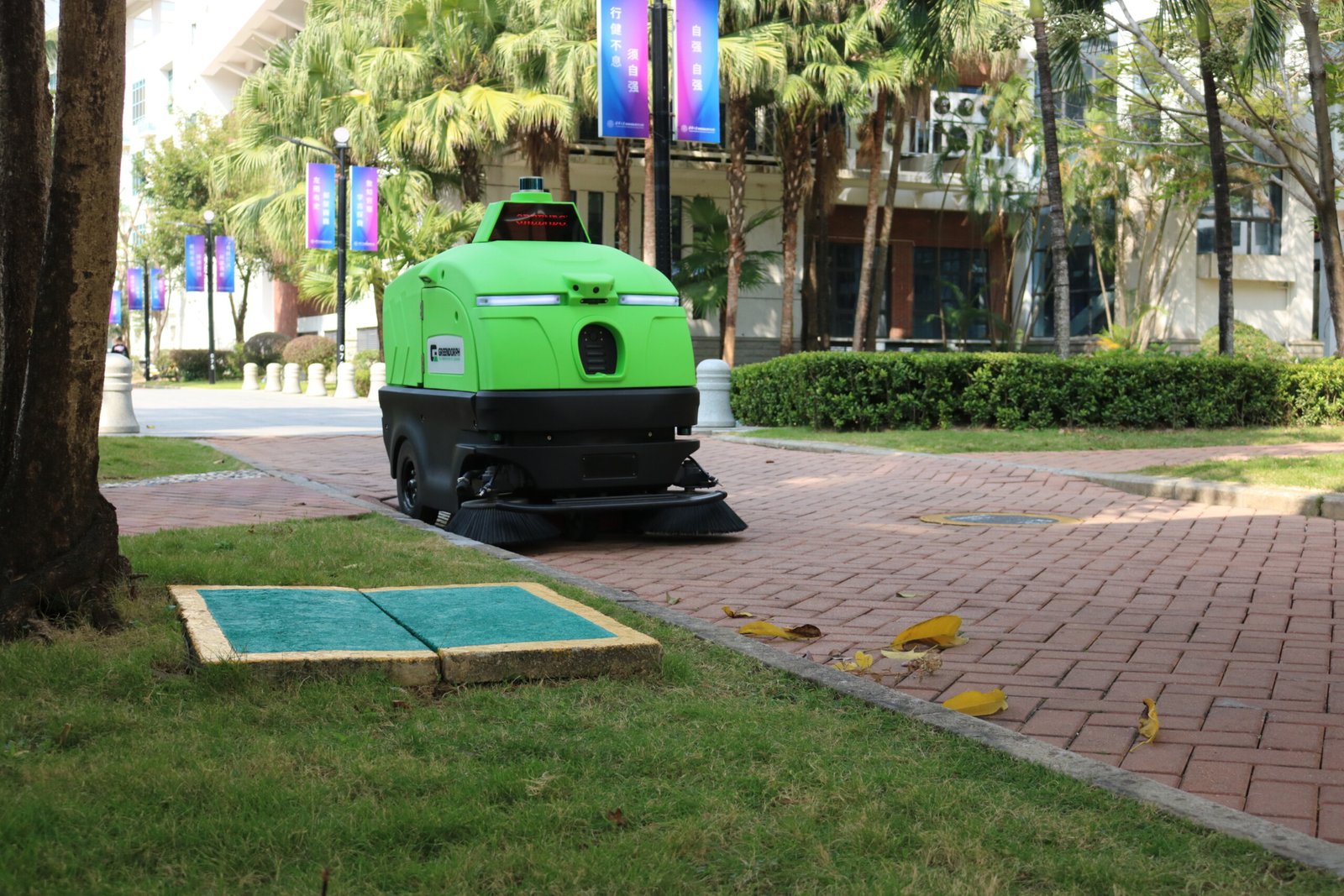
An autonomous street sweeper begins each mission without any pre-programmed map of obstacles or dynamic elements. Instead, it builds its understanding of the environment through sensor fusion. We equip our outdoor autonomous driving cleaning robot with a combination of solid-state LiDAR, high-dynamic cameras, and ultrasonic sensors that operate simultaneously. LiDAR provides a dense point cloud, capturing structural features of pedestrianised areas, building perimeters, and fixed infrastructure. Cameras add semantic context—distinguishing a pedestrian from a temporary sign or a pile of leaves. Ultrasonic sensors handle close-range detection near curbs and loading docks. The onboard computing unit fuses these data streams at millisecond intervals, creating a real-time occupancy grid. This means the autonomous street sweeper does not simply “see” obstacles; it categorizes them and predicts their movement. For example, when operating in a car park, the system identifies parked vehicles as static while tracking approaching cars with a separate motion model. This layered awareness forms the foundation for collision-free navigation without any human intervention.
Local Path Planning Balances Efficiency with Adaptability
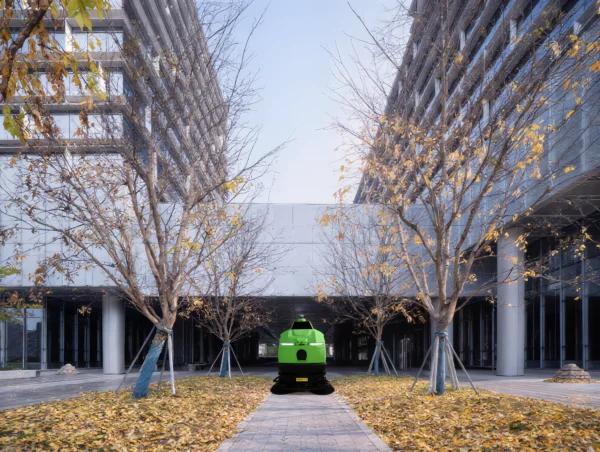
Once the environment is modeled, the machine must decide where to go and how to get there. Traditional automated guided vehicles follow fixed magnetic strips or QR codes, but those methods fail in large-scale outdoor scenarios where routes change daily due to construction, events, or seasonal landscaping. We designed our autonomous street sweeper with a dual-layer planning architecture. A global planner sets coverage goals based on the area to be swept—whether it is a semi-ride-on cleaning robot covering an industrial park or a fully autonomous unit handling a campus loop. A local planner then adjusts in real time, recalculating trajectories every 50 milliseconds to handle unexpected obstructions. If a delivery truck blocks a planned lane, the robot computes an alternative path without pausing the cleaning task. This local planning integrates with the vehicle’s mechanical controls, modulating brush speed and suction power based on proximity to edges and surface type. Field data from our deployments across more than 300 projects show that this approach reduces missed coverage areas by over 30 percent compared to schedule-based fixed-route systems. The autonomous street sweeper effectively becomes a problem-solving agent rather than a sequence executor.
Continuous Learning Through Cloud Connectivity
Navigation capability does not remain static after deployment. We integrate each unit with our AI smart cloud platform, which aggregates operational data from all machines in the field. When an autonomous street sweeper encounters an unusual scenario—such as a new temporary barrier layout or a surface change after resurfacing—the event is logged and analyzed. Over time, the fleet-wide learning model improves the path-planning algorithms for all units. This closed-loop system means that an autonomous street sweeper installed at a logistics hub benefits from experiences gained at university campuses or commercial complexes. Additionally, the cloud platform allows facility managers to set exclusion zones, priority areas, and cleaning schedules remotely. The result is a navigation system that improves continuously without requiring on-site programming expertise. For B2B clients managing multiple sites, this turns the autonomous street sweeper into a scalable asset where consistency does not depend on individual operator skill.
Autonomous navigation in outdoor environments is not achieved through a single breakthrough but through the integration of sensor fusion, adaptive path planning, and fleet-wide learning. We at Greendorph designed our systems to handle the complexity of real-world settings—from crowded pedestrianised areas to dynamic industrial parks—with a level of reliability that meets the operational demands of modern facilities. For organizations evaluating automation, the question shifts from whether a machine can navigate without intervention to how effectively it integrates into existing workflows. Our focus remains on delivering that integration through technology that learns, adapts, and delivers measurable efficiency.