
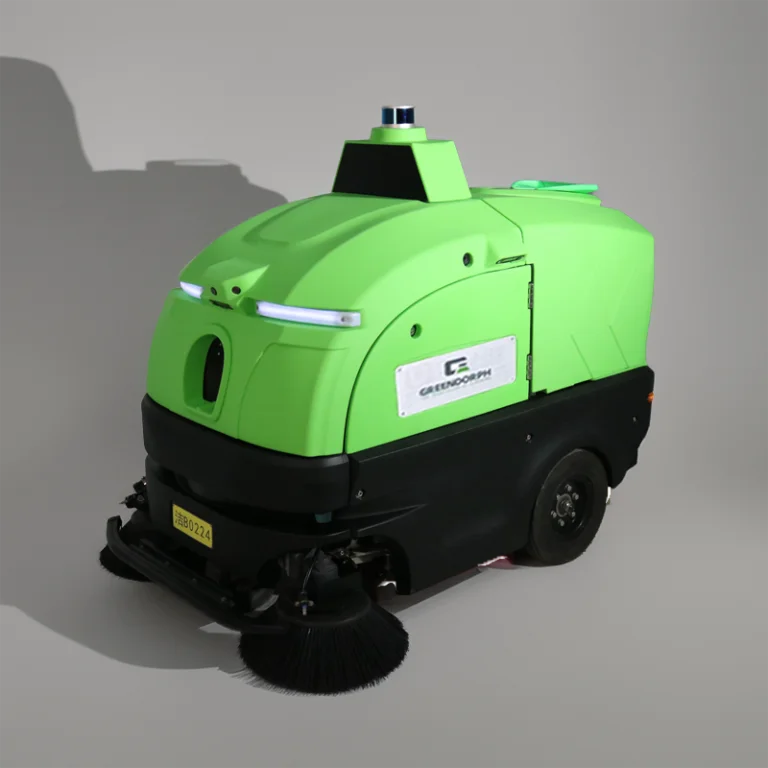
As businesses and municipalities seek to improve outdoor cleanliness, the debate between using outdoor robot vacuums and traditional manual sweeping has grown in prominence. Understanding the efficiency and effectiveness of these cleaning methods is essential for making informed decisions. This article will compare outdoor robot cleaners, such as Greendorph’s Auto Sweeper YJ130, with manual sweeping methods, focusing on efficiency, coverage, and operational costs.
Efficiency Metrics: Cleanliness and Time Management
When comparing outdoor cleaning methods, efficiency is a critical factor. Outdoor robot vacuums, particularly Greendorph’s models, offer impressive cleaning efficiencies, often exceeding 95%. The YJ130 operates continuously for 6-8 hours, making it ideal for maintaining cleanliness in large areas like industrial campuses, parks, and sidewalks.
In contrast, manual sweeping relies heavily on human labor, which can vary significantly in efficiency based on the operator’s experience and the working conditions. While a dedicated crew can achieve good results, they typically cannot match the consistent performance of an outdoor robot cleaner over a prolonged period. Data shows that while manual sweeping may clean areas thoroughly, it often does so at a slower pace, necessitating more time and labor resources to achieve the same standards of cleanliness.
Coverage and Versatility
Another area where outdoor robot vacuums shine is in coverage. The design of the YJ130 allows it to navigate large outdoor spaces autonomously, utilizing integrated features such as suction, airflow assistance, and misting spray to enhance cleaning effectiveness. Its capability to adapt to various terrains and obstacles eliminates the need for manual intervention and enables it to function efficiently in diverse environments.
Manual sweeping is traditionally limited by the physical capabilities of the operators and the equipment used. While a crew can adjust to different terrains, their coverage is often inconsistent, and they may require additional equipment to handle unique challenges (like debris accumulation in hard-to-reach places). Outdoor robot vacuums mitigate these issues by providing a consistent method of cleaning that can cover extensive areas without variation in performance.
Operational Costs and Resource Management
Cost-effectiveness plays a crucial role in determining the best outdoor cleaning solution for businesses. Outdoor robot cleaners, while requiring an upfront investment, significantly reduce ongoing labor costs. By automating the sweeping process, organizations can deploy fewer personnel, thereby redirecting valuable human resources to other critical tasks.
Additionally, the energy consumption of outdoor robot vacuums tends to be lower than the fuel costs associated with manual cleaning equipment, especially when operated in extensive areas. For example, the efficiency of Greendorph’s outdoor robot vacuum enables it to deliver superior results with minimal resource expenditure.
In contrast, manual sweeping can lead to higher labor and operational costs, especially when considering the need for breaks, increased staffing for more extensive areas, and potential inefficiencies in cleaning techniques. Over time, the financial advantages of using an outdoor robot vacuum become more apparent as labor and resource costs decrease.
Advancing Towards Efficient Cleaning Solutions
In summary, the efficiency comparison between outdoor robot vacuums and manual sweeping reveals significant advantages for automated systems. The high cleaning efficiency, extensive coverage, and cost-effectiveness of outdoor robot cleaners, such as Greendorph‘s Auto Sweeper YJ130, demonstrate their value in contemporary cleaning operations.
As businesses look to enhance their operational efficiency while maintaining cleanliness in outdoor spaces, investing in an outdoor robot vacuum emerges as a strategic choice. This technology not only optimizes cleaning processes but also promotes environmental sustainability through reduced labor and resource usage. In evolving urban landscapes, making the shift towards automated outdoor cleaning solutions is essential for progress in maintaining clean and safe environments.