The approach to parking lot maintenance has remained largely unchanged for decades: property managers contract with external service providers who deploy diesel-powered sweepers on scheduled routes. This model, while familiar, carries inherent constraints around scheduling flexibility, emissions compliance, and cost predictability. Across our global project deployments, we at Greendorph have observed a fundamental shift as facility owners increasingly evaluate whether to continue relying exclusively on external parking lot cleaning companies or to bring cleaning operations in-house with modern electric equipment. The distinction between these two models extends beyond equipment type—it represents a different philosophy of maintenance management, with implications for operational control, environmental impact, and long-term expense structures.
The Traditional Model: What Parking Lot Cleaning Companies Typically Provide
Engaging professional parking lot cleaning companies offers the advantage of turnkey service. Property managers define a scope of work—frequency, areas to be covered, debris types to be removed—and the service provider assumes responsibility for equipment, labor, and disposal. For organizations without in-house maintenance staff or those managing multiple geographically dispersed properties, this model reduces the need for internal equipment ownership and operator training.
However, the traditional approach also introduces variables outside the property manager’s direct control. Scheduling is dictated by the parking lot cleaning companies’ route optimization, meaning response times for unscheduled cleaning needs—such as post-event debris or unexpected spills—may be delayed. Additionally, the equipment used by many service providers consists of diesel-powered sweepers that generate emissions and noise, which can be particularly relevant for properties with strict environmental targets or those located near residential areas. From a cost perspective, contracts with parking lot cleaning companies typically represent a recurring operational expense with limited visibility into how labor and equipment hours are allocated across the contracted scope.
The Emergence of Electric Solutions for In-House Parking Lot Sweeper Operations
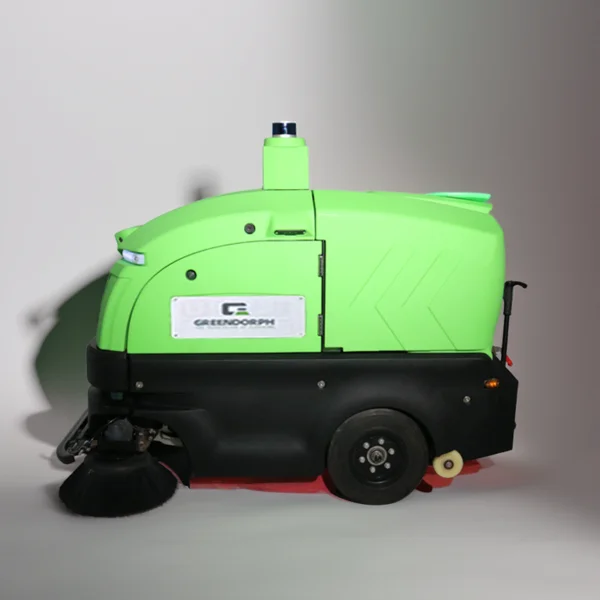
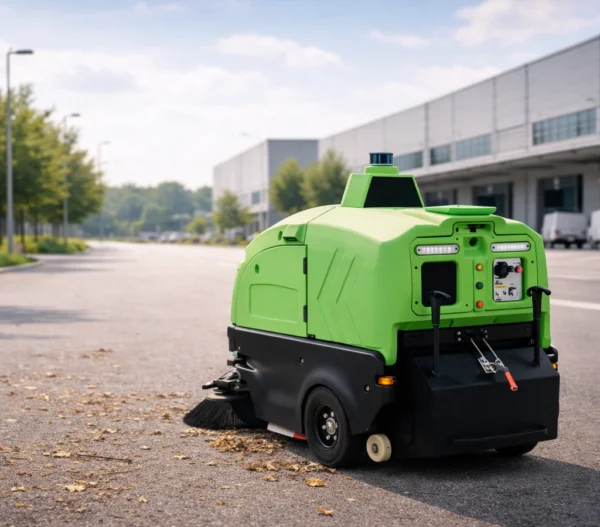
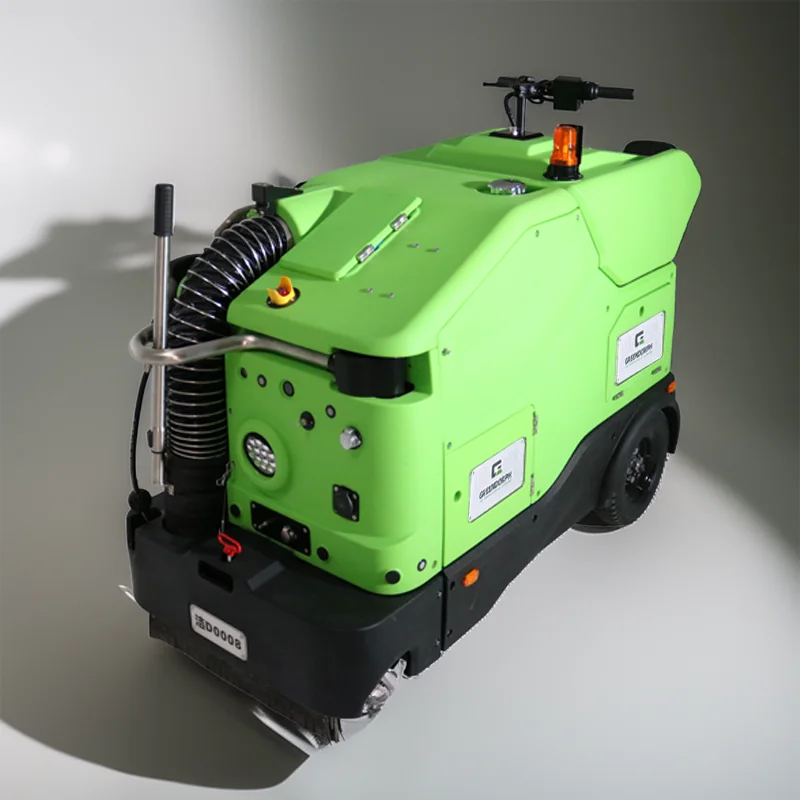
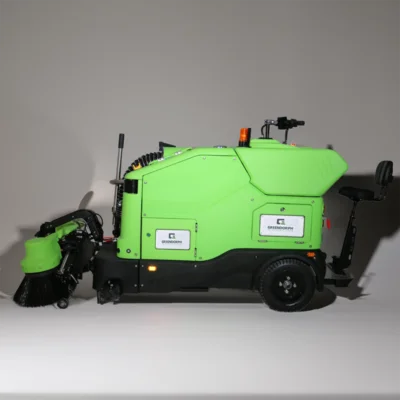
An alternative model has gained traction as electric equipment technology has matured. Property owners and facility managers are increasingly deploying their own electric parking lot sweeper units, taking direct control over cleaning schedules, quality standards, and operational data. This shift is enabled by advances in battery technology that allow electric parking lot sweeper models to achieve runtime sufficient for full-site coverage without mid-cycle charging.
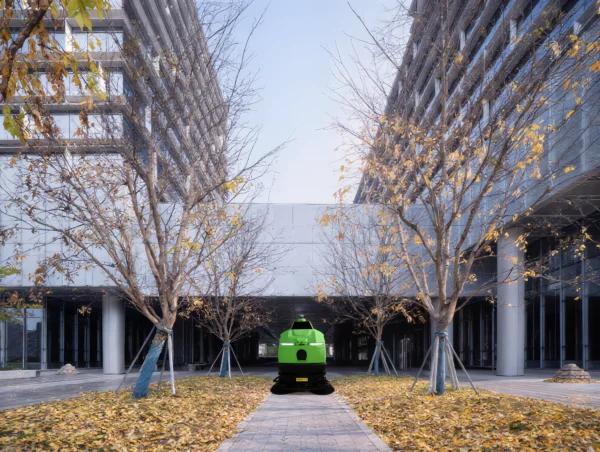
The advantages of this approach center on control and predictability. When a property owns its parking lot sweeper, cleaning can be scheduled around tenant needs, peak traffic hours, or special events with precision that external parking lot cleaning companies cannot match. Electric operation eliminates fuel costs and reduces noise complaints—a meaningful consideration for properties where cleaning occurs during early morning or evening hours. Furthermore, the absence of diesel emissions supports sustainability reporting and may assist properties in pursuing certifications such as LEED or other green building standards.
From a cost-structure perspective, owning a parking lot sweeper shifts the expense from a recurring service contract to a capital investment with predictable maintenance intervals. Over a five-year horizon, we have observed that properties with sufficient scale to utilize the equipment consistently often achieve lower total operating costs compared to contracting with external parking lot cleaning companies, particularly when factoring in the ability to respond immediately to cleaning needs without service call premiums.
Comparative Outcomes: Quality, Data, and Scalability
The difference between the two models extends to quality consistency and performance visibility. When cleaning is performed by third-party parking lot cleaning companies, quality verification typically relies on visual inspection after service completion. There is limited insight into whether the full contracted area received uniform coverage or whether specific zones requiring additional attention were addressed.
In-house electric parking lot sweeper operations equipped with telematics provide a different level of accountability. Route completion data, brush pressure readings, and debris collection volumes can be tracked and reviewed. This data enables property managers to verify that cleaning standards are being met and to adjust routes based on actual debris accumulation patterns rather than static schedules. For multi-property portfolios, centralized visibility into parking lot sweeper utilization supports benchmarking across sites and informs equipment replacement cycles.
Scalability also differs between the two approaches. Adding a new property to an existing contract with parking lot cleaning companies typically requires renegotiating scope and pricing. Expanding an in-house fleet with additional electric parking lot sweeper units follows a predictable capital procurement process with consistent operating procedures across all locations.
The choice between contracting with traditional parking lot cleaning companies and deploying in-house electric parking lot sweeper solutions depends on an organization’s priorities around control, cost structure, and environmental impact. The traditional model offers convenience and minimal internal resource commitment but limits scheduling flexibility and operational visibility. Electric in-house operations require upfront equipment investment and staff training but deliver predictable long-term costs, emissions reduction, and data-driven quality assurance. For property owners and facility managers evaluating these options, the decision ultimately rests on whether the benefits of direct operational control align with the scale and strategic objectives of the properties they manage.