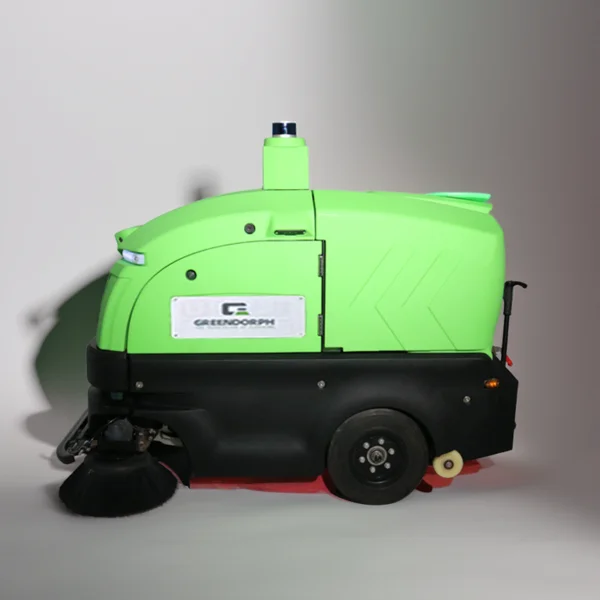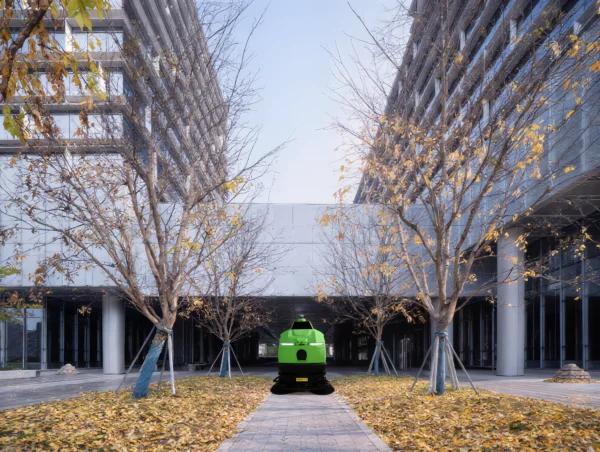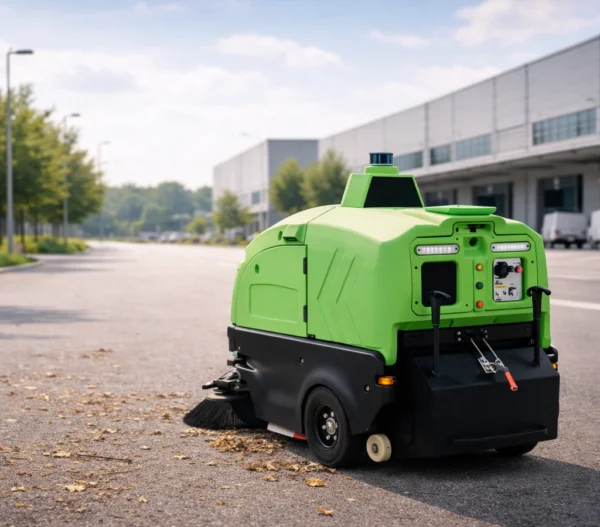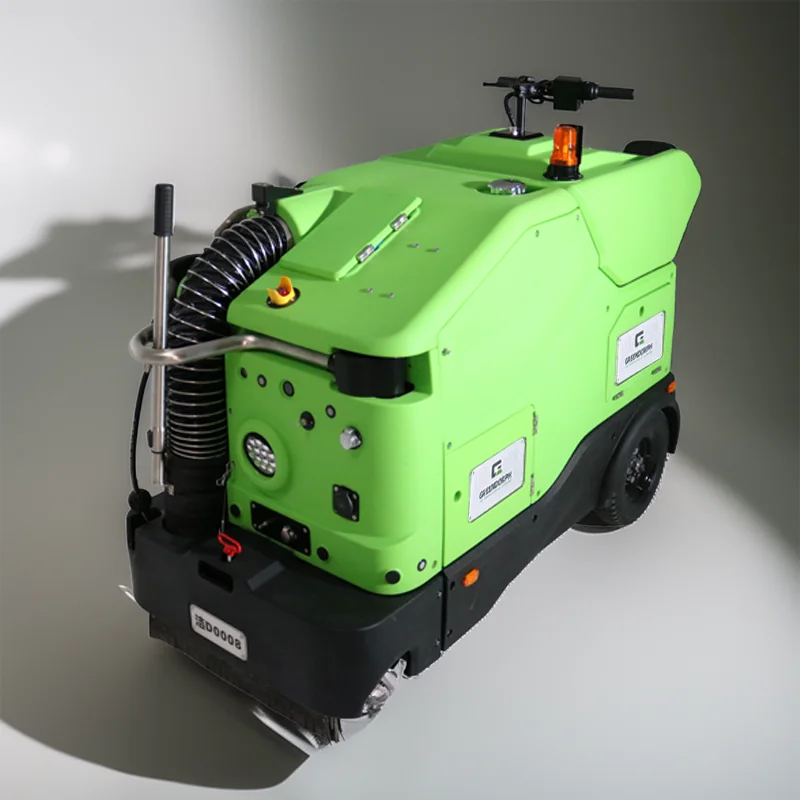
Underground parking facilities present a distinct set of cleaning challenges that surface‑level lots rarely encounter. Confined ramp geometry, low overhead clearances, restricted ventilation, and the constant presence of parked vehicles demand equipment that can maneuver precisely without compromising cleaning effectiveness. Over the course of deploying automated cleaning solutions across more than three hundred projects—including numerous multi‑level parking structures—we at Greendorph have observed that compact garage sweepers consistently outperform larger, traditional machines in these environments. Their size advantages translate into measurable operational benefits, from reduced downtime during cleaning cycles to improved safety margins. Below we examine the specific factors that make a well‑designed parking lot sweeper—when configured for compactness—the optimal choice for multi‑level underground applications.
Maneuverability Within Tight Geometric Constraints
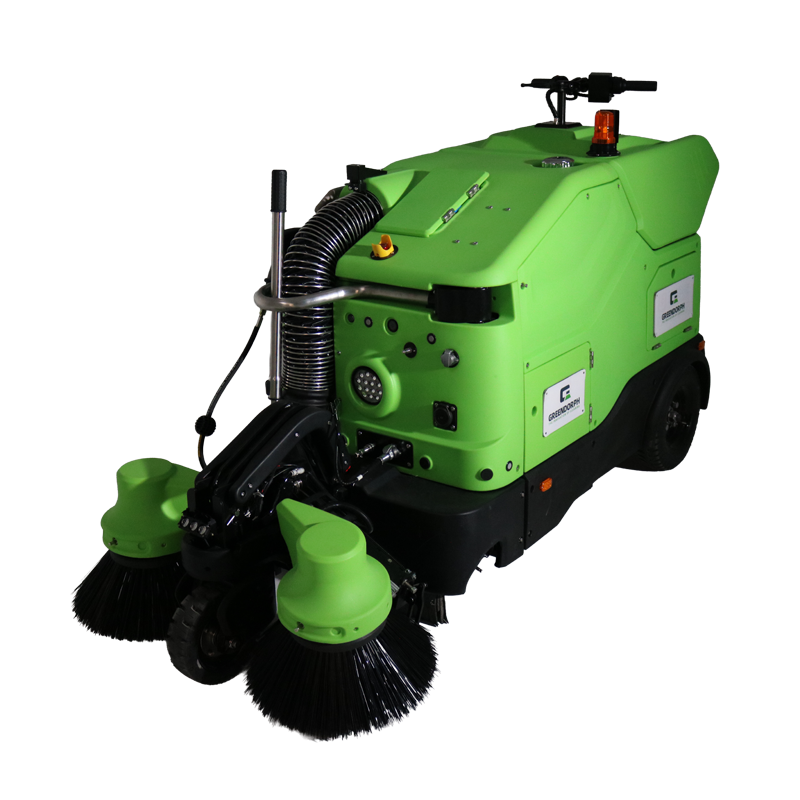
The architecture of underground parking imposes strict limits on turning radii, aisle widths, and ramp transitions. A full‑size parking lot sweeper designed for open‑air lots often exceeds the width of standard parking aisles, forcing operators to either leave sections uncleaned or repeatedly reposition the machine. In our field observations, facilities using oversized equipment typically achieved less than 70 percent coverage per pass, with the remainder requiring manual follow‑up. Compact garage sweepers, by contrast, are engineered with wheelbases and widths that align with typical parking stall dimensions and traffic lane widths. Their ability to execute zero‑radius turns allows operators to clean around columns, between parked vehicles, and along wall edges without disruptive shuttling. This geometric compatibility translates directly into higher effective cleaning rates: a compact unit can cover the same net area in 20 to 30 percent less time compared to a larger machine forced to navigate the same confined layout, while also reducing the risk of accidental contact with vehicles or structural elements.
Structural Load Considerations and Ventilation Constraints
Multi‑level parking structures are built with specific live‑load ratings that heavier equipment can approach or exceed, particularly on upper decks. A compact parking lot sweeper typically weighs significantly less than its full‑size counterpart, reducing cumulative stress on concrete decks and ramp joints. This weight advantage becomes especially critical in older underground facilities where load margins are narrower. Additionally, underground parking relies on mechanical ventilation systems that are not designed to handle high levels of exhaust emissions from internal combustion‑powered sweepers. Many compact garage sweepers are now available with lithium‑ion battery power and electric drive systems, producing zero tailpipe emissions. When we evaluated equipment options for a mixed‑use development with three underground levels, the transition to battery‑powered compact units eliminated the need to run ventilation fans at maximum capacity during nighttime cleaning shifts, reducing energy costs by an estimated 18 percent while maintaining air quality within safe thresholds. For facilities seeking to meet sustainability targets, the combination of lightweight construction and electric operation aligns with both structural safety and environmental goals.
Operational Flexibility During Active Hours
Unlike surface lots that can be fully closed for cleaning, underground parking must often remain partially accessible to residents, tenants, or shoppers during maintenance periods. Larger parking lot sweeper units, with their wide turning arcs and slower travel speeds, tend to cause significant traffic disruption and require larger temporary closures. Compact garage sweepers can be deployed in a phased manner, cleaning one zone while vehicles use an adjacent zone, thanks to their smaller footprint and lower perceived obstruction. Furthermore, the reduced noise output of compact electric sweepers—typically 10 to 15 decibels lower than comparable combustion‑powered units—minimizes disturbance during early morning or late night operations. In our project documentation, property managers who adopted compact units reported a 40 percent reduction in resident or tenant complaints related to cleaning disruptions compared to previous equipment. This operational flexibility also extends to emergency scenarios; a compact parking lot sweeper can be transported between levels using service elevators if ramp access is temporarily blocked, a logistical option rarely feasible with larger machinery.
Compact garage sweepers are not merely a scaled‑down alternative to conventional equipment; they represent a purpose‑built solution for the spatial, structural, and operational realities of multi‑level underground parking. Their superior maneuverability, favorable weight profile, zero‑emission capabilities, and minimal disruption during active hours make them the logical choice for facility managers who prioritize both cleaning quality and operational continuity. At Greendorph, we have seen that selecting the right parking lot sweeper for underground environments involves looking beyond raw cleaning width or hopper capacity—instead, the most impactful specifications are those that match the machine to the physical constraints of the facility. For underground parking operators seeking to raise cleanliness standards without compromising safety or convenience, compact equipment delivers the ideal balance of performance and adaptability.