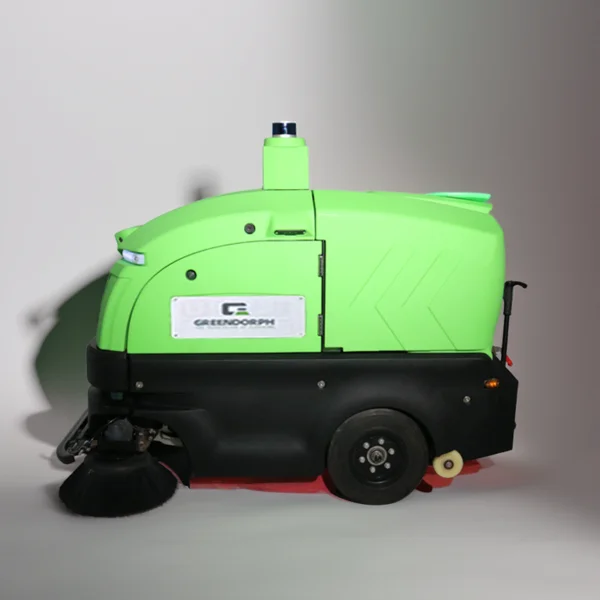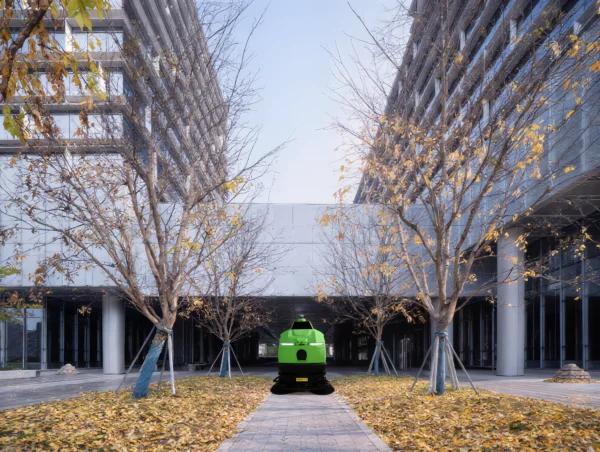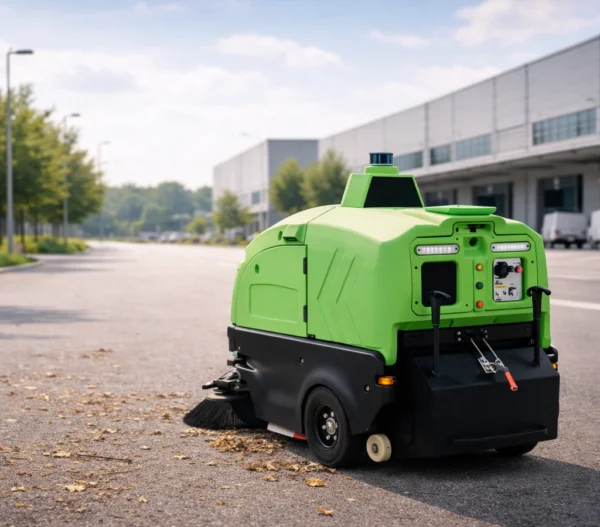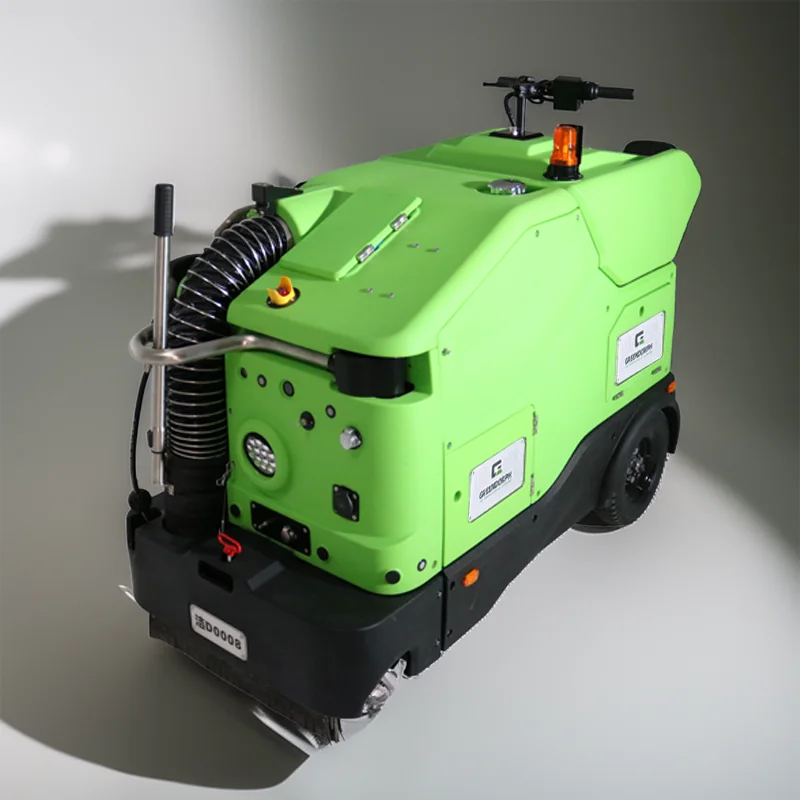
We operate at Greendorph as a developer of intelligent sanitation equipment designed for large-scale outdoor and semi-controlled environments, where precision navigation is becoming just as important as cleaning performance. As operational demands increase across logistics parks, industrial campuses, and distribution hubs, the role of the warehouse sweeper has evolved far beyond basic surface cleaning. Today’s warehouse sweeper machine must combine environmental awareness, autonomous decision-making, and consistent cleaning efficiency. Among the most critical technologies enabling this shift is LiDAR navigation, which allows every warehouse sweeper machine to interpret its surroundings with high accuracy and respond in real time to complex spatial conditions.
LiDAR Mapping and Environmental Awareness in Dynamic Spaces
LiDAR technology functions as the “eyes” of a modern warehouse sweeper machine, emitting laser pulses to generate precise 3D maps of surrounding environments. This enables a warehouse sweeper to detect obstacles, measure distances, and continuously update spatial models even in changing conditions such as moving forklifts or temporary storage layouts. We design our systems at Greendorph to ensure that each warehouse sweeper maintains stable navigation performance even in high-traffic zones. Unlike traditional systems, LiDAR allows a warehouse sweeper machine to reduce reliance on fixed routes, instead adapting dynamically to real-time environmental data. This significantly improves safety and operational efficiency in complex industrial environments where manual intervention must be minimized.
Integration of Intelligent Cleaning Systems in the YJ130 Platform
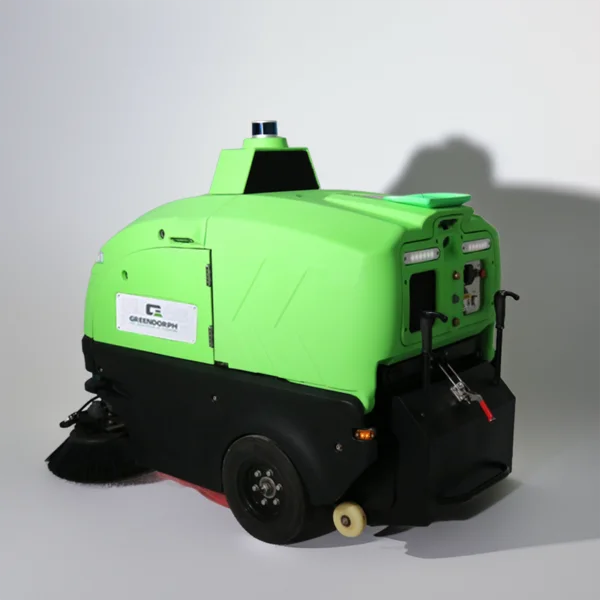
Our Auto Sweeper YJ130 demonstrates how LiDAR-based navigation integrates with high-performance cleaning functions in a modern warehouse sweeper machine. This fully autonomous system combines a primary cleaning mechanism with three auxiliary systems—suction, airflow-assist, and misting spray—ensuring that each warehouse sweeper delivers over 95% cleaning efficiency. With a runtime of 6–8 hours, the YJ130 is engineered for continuous operation across large outdoor areas such as industrial campuses, parks, sidewalks, and school environments. By combining LiDAR guidance with multi-function cleaning architecture, the warehouse sweeper machine achieves both precision movement and comprehensive surface treatment, reducing overlap and missed zones during operation.
Enhancing Operational Intelligence Through Sensor Fusion
Beyond LiDAR alone, we integrate sensor fusion technology to enhance the decision-making capabilities of every warehouse sweeper machine. This approach allows a warehouse sweeper to combine visual data, motion detection, and spatial mapping for improved obstacle avoidance and route optimization. In practice, this means the warehouse sweeper can operate safely alongside human workers and moving equipment without compromising cleaning performance. For facility managers, the reliability of a warehouse sweeper machine directly translates into reduced downtime and lower operational costs, especially in large-scale cleaning cycles where consistency is essential.
Driving Next-Generation Autonomous Cleaning Performance
Through the integration of LiDAR navigation, sensor fusion, and high-efficiency cleaning systems, we continue to redefine what a warehouse sweeper machine can achieve in modern industrial environments. At Greendorph, we focus on delivering intelligent solutions that allow every warehouse sweeper to operate autonomously, safely, and efficiently under real-world conditions. The YJ130 platform reflects our commitment to advancing automation in sanitation technology, ensuring that each warehouse sweeper machine provides long-term value, adaptability, and measurable performance improvements for large-area cleaning operations.