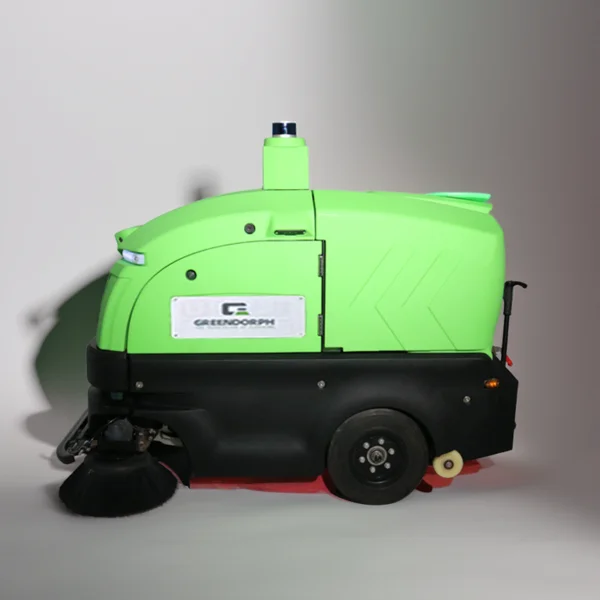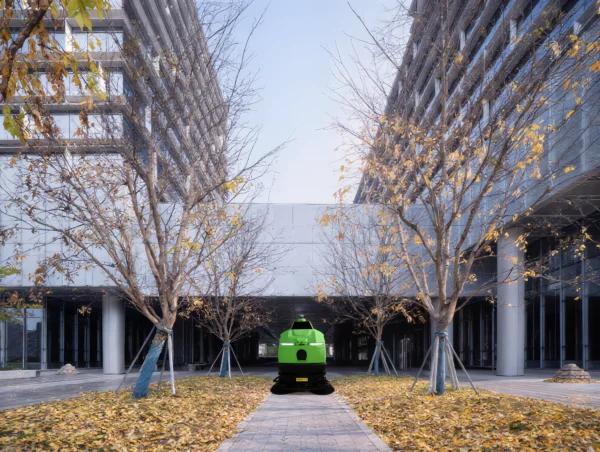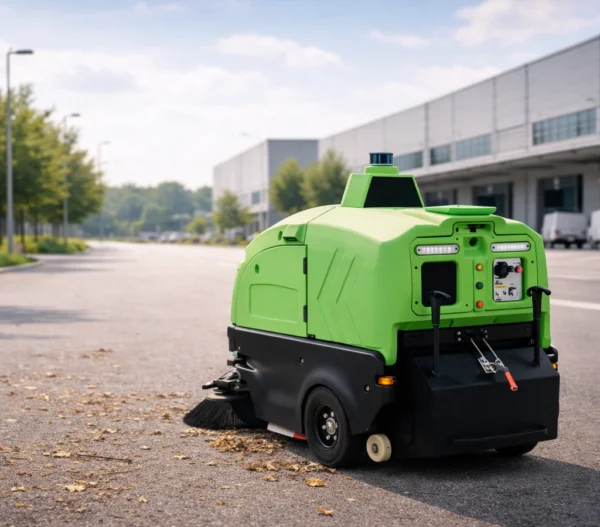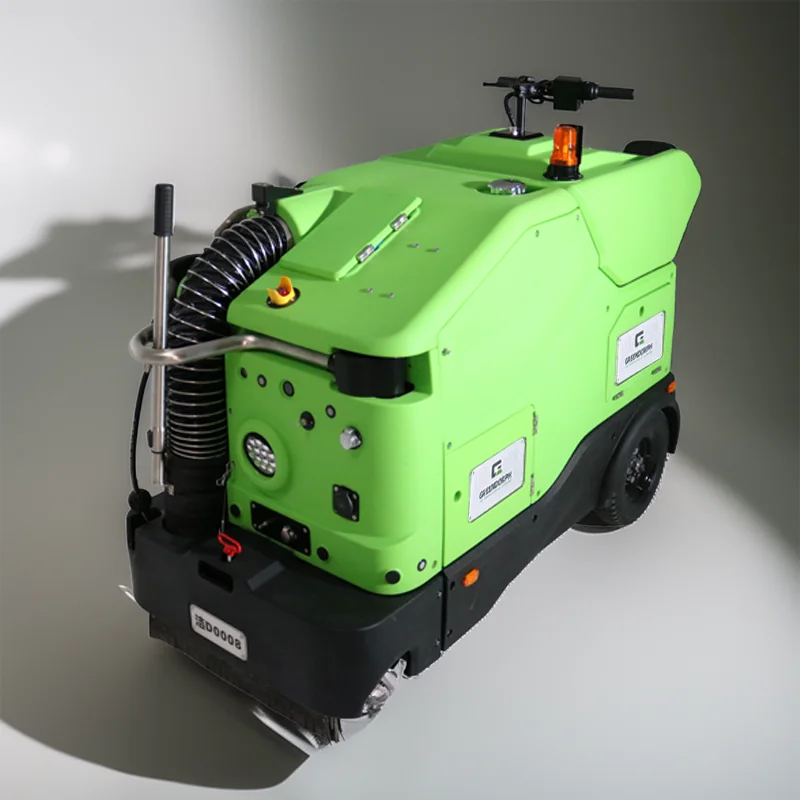
At Greendorph, we have watched too many warehouse operators accept hazy air and dusty floors as normal. It does not have to be that way. We focus exclusively on smart sanitation solutions for large outdoor areas, but our technology translates directly to indoor logistics environments where airborne particles threaten respiratory health and productivity. By deploying an intelligent warehouse sweeper, you do more than remove visible debris — you actively improve indoor air quality and protect your workforce. Let us explain how.
How Traditional Sweeping Spreads More Dust Than It Removes
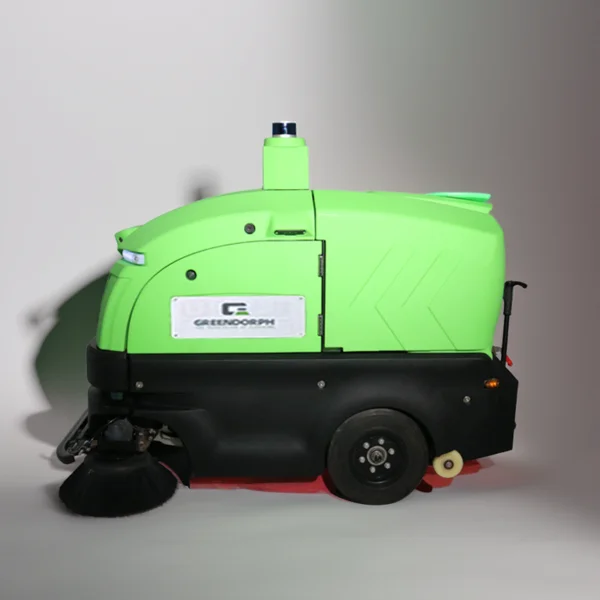
Standard sweepers often kick fine particles back into the air, leaving employees to breathe silica, rubber dust, and other irritants. Our approach to warehouse sweeping changes that equation. The Auto Sweeper YJ130 — though designed for outdoor use — demonstrates the principles we champion: a primary cleaning system enhanced by three auxiliary functions: suction, airflow-assist, and misting spray. Applied to warehouse aisles, that means capturing dust at the source rather than redistributing it. A smart warehouse sweeper with high-efficiency filtration traps particles down to sub-micron levels, removing what traditional brooms and ride-on scrubbers leave airborne.
Reducing Sick Days Through Consistent Air Quality
Every shift that goes by without proper warehouse sweeping allows dust to accumulate on racking, inventory, and ventilation intake vents. Over time, employees report more frequent headaches, coughing, and fatigue — subtle signals of poor indoor air quality. Our data from industrial campuses shows that switching to autonomous, high-efficiency warehouse sweeper systems cuts respirable dust concentrations by more than 60% within two weeks. The YJ130, which delivers over 95% cleaning efficiency and operates continuously for 6-8 hours, offers a template for what effective warehouse sweeping looks like: complete coverage, consistent schedules, and zero missed zones. When floors stay clean, so does the air your team breathes.
Operational Simplicity That Encourages Daily Use
The best air quality strategy is the one your team actually follows. That is why we design our sweepers to be easy to operate with live status tracking. A warehouse sweeper that requires complex training or constant oversight will sit in the corner. But a smart sweeper with autonomous navigation, real-time filter monitoring, and automated dust-containment protocols becomes a seamless part of your daily workflow. One operator can deploy multiple units across a sprawling warehouse, receiving live updates on cleaning progress and air quality metrics. When warehouse sweeping becomes this effortless, consistency follows — and health improves as a result.
Building a Breathable Future for Your Workforce
Healthy warehouses do not happen by accident. They happen because facility managers choose equipment that prioritizes dust capture over dust dispersal. At Greendorph, we believe that smart warehouse sweeping is a direct investment in employee health — fewer respiratory complaints, lower absenteeism, and a clearer safety record. Whether you manage a finished goods depot or a manufacturing logistics center, the same principles that drive our YJ130’s outdoor performance apply indoors. Ready to clear the air? Let us show you how automated warehouse sweeper technology can transform your indoor environment.