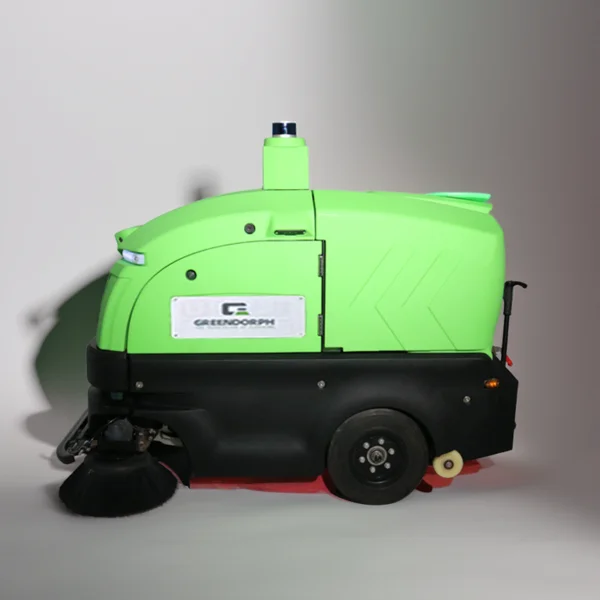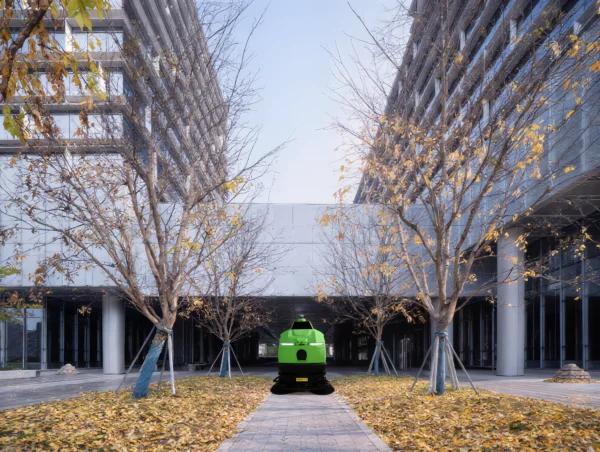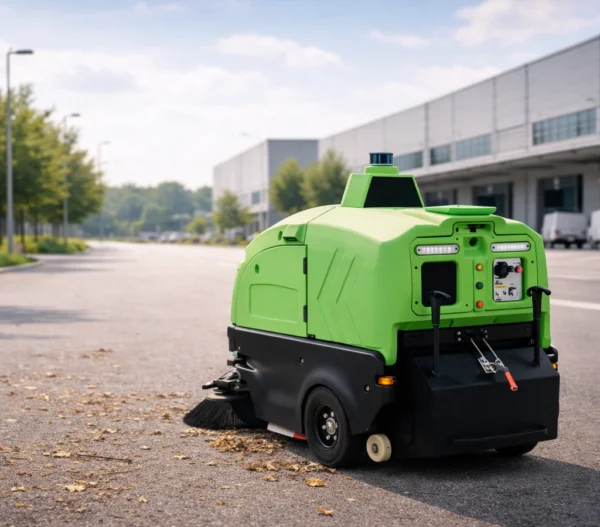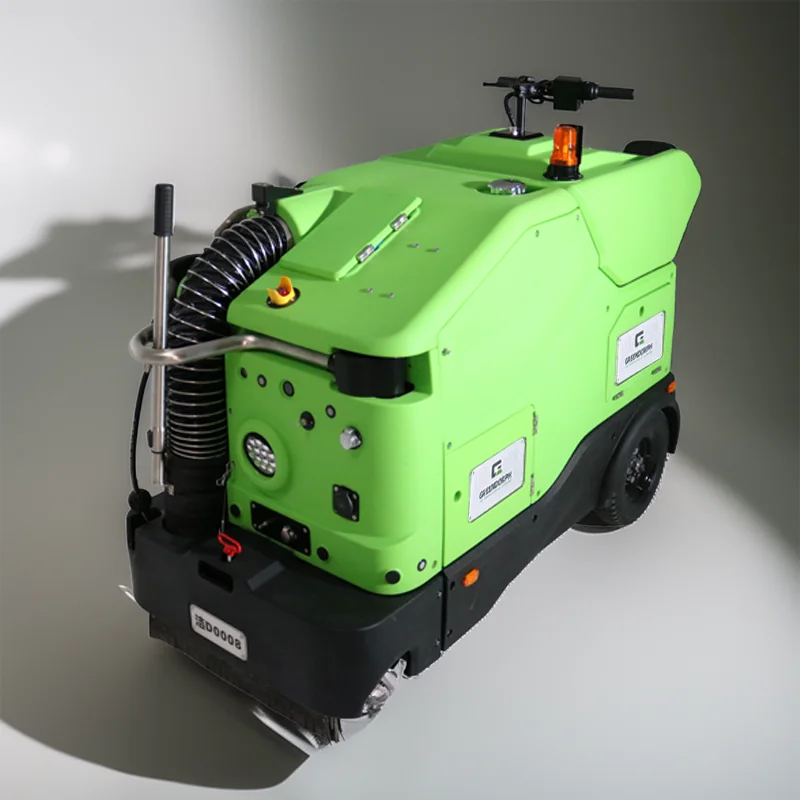
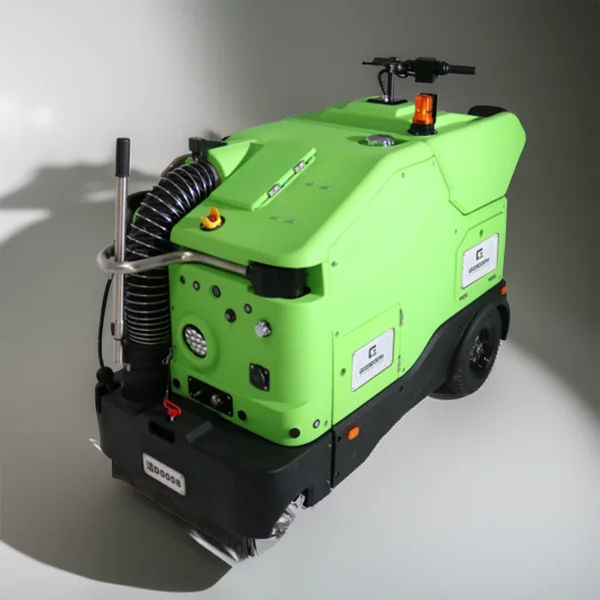
At Greendorph, we focus exclusively on smart sanitation solutions that address industry pain points like occupational hazards and heavy workloads. Electronics storage facilities face a unique challenge: fine dust particles that can damage sensitive components, cause static discharge, or corrupt circuit boards. Standard sweeping methods often recirculate dust instead of removing it. That is why we engineered a different approach. Our Omniclean Urban Street Vacuum YJ80—a multi-functional unit with three intuitive control modes (manual ride-on, auto-following, and towed traction)—demonstrates how a purpose-built warehouse vacuum sweeper transforms fine dust management. Let us examine the critical features.
The Problem with Fine Dust in Electronics Storage
Particles smaller than 10 microns settle into crevices, lift during foot traffic, and cling to electrostatic surfaces. A conventional warehouse sweeper using rotating brushes can actually suspend dust back into the air. For electronics storage, this creates contamination risks that lead to product rejects or equipment failures. What facility managers need is not just sweeping but true vacuum-based extraction. A warehouse vacuum sweeper differs fundamentally: it relies on negative pressure to capture dust at the point of contact, preventing secondary dispersion. The YJ80’s powerful negative-pressure suction system exemplifies this principle, drawing particulates directly into a sealed collection chamber.
Five Integrated Functions That Work Synergistically
Capturing fine dust requires more than raw suction. The YJ80 integrates five functions that work together: high-pressure surface flushing, water-spray cleaning, turbine-speed airflow blowing, targeted vacuum-tube collection, and intelligent dust-suppression misting. For electronics storage, water-spray cleaning and misting are used sparingly; instead, the turbine-speed airflow blowing dislodges stubborn dust from pallet edges and rack bases, while the targeted vacuum-tube collection allows operators to reach tight spaces between storage bins. This combination effectively consolidates six traditional machines into one warehouse sweeper system. As a result, your team spends less time switching equipment and more time maintaining a contaminant-free environment.
Runtime, Noise, and Safety Considerations
Electronics storage often operates near sensitive testing or assembly areas. A loud, fume-emitting machine is unacceptable. The YJ80 delivers eight hours of continuous runtime with near-silent, 100% electric operation—zero CO2 emissions and minimal operator fatigue. This means you can schedule warehouse vacuum sweeper runs during active shifts without disrupting precision work. The auto-following mode further reduces physical strain, allowing one operator to guide the unit through narrow aisles while keeping hands free for inspection tasks.
Protecting Your Inventory Starts with the Right Equipment
Fine dust in electronics storage is not a minor inconvenience; it is a direct threat to product quality. A standard warehouse sweeper may handle visible debris, but only a dedicated warehouse vacuum sweeper with negative-pressure suction and multi-functional integration removes hazardous subvisible particles. At Greendorph, we build solutions like the YJ80 to simplify maintenance workflows while enhancing hygiene. For electronics facilities, that means fewer rejects, longer equipment life, and a safer environment for both workers and inventory. Choose a sweeper that vacuums—not just sweeps. Your components will show the difference.