When facility managers talk about ride on sweeper equipment, they usually focus on visible debris. At Greendorph, we believe the invisible threat—airborne dust and particulates—deserves equal attention. As a supplier focused exclusively on smart sanitation for large outdoor areas, we’ve seen enclosed facilities like warehouses, parking structures, and industrial campuses struggle with respiratory complaints and equipment fouling from recirculated dust. This article explains how a ride on floor sweeper improves air quality, not just floor appearance.
The Connection Between Floor Debris and Airborne Particulates
Every time a forklift passes over dried mud or a pedestrian kicks up fine dust, those particles become airborne. In enclosed facilities with limited ventilation, dust concentrations build throughout the day. Standard ride on sweeper units that simply brush debris aside actually worsen the problem—they launch fine particles into the air where they stay suspended for hours.
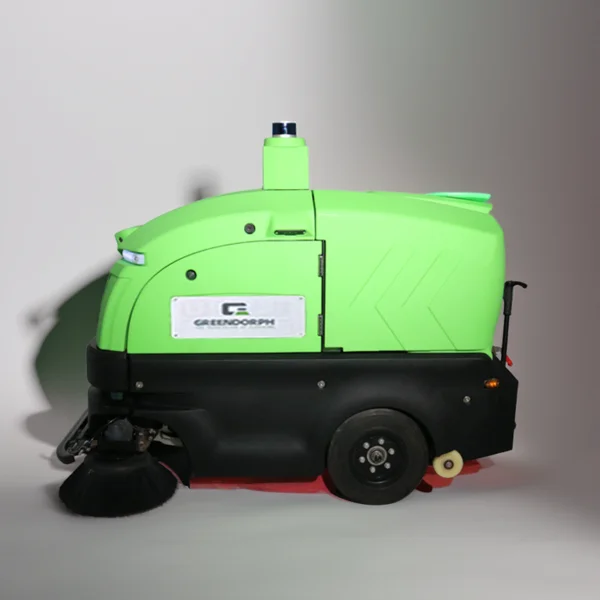
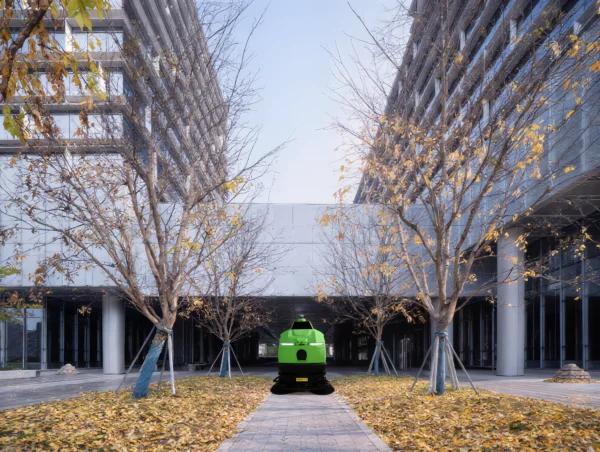
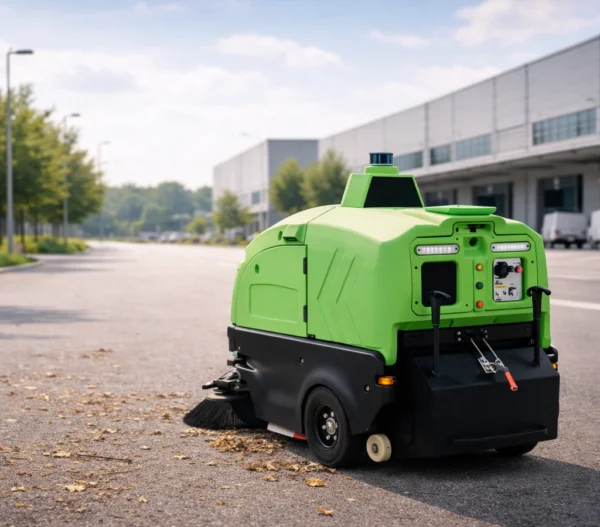
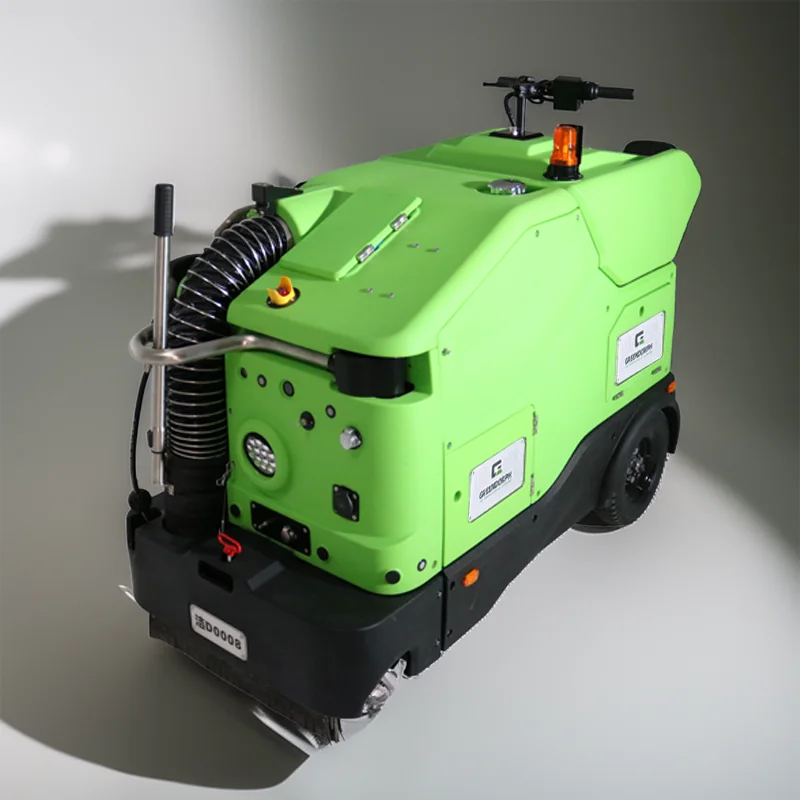
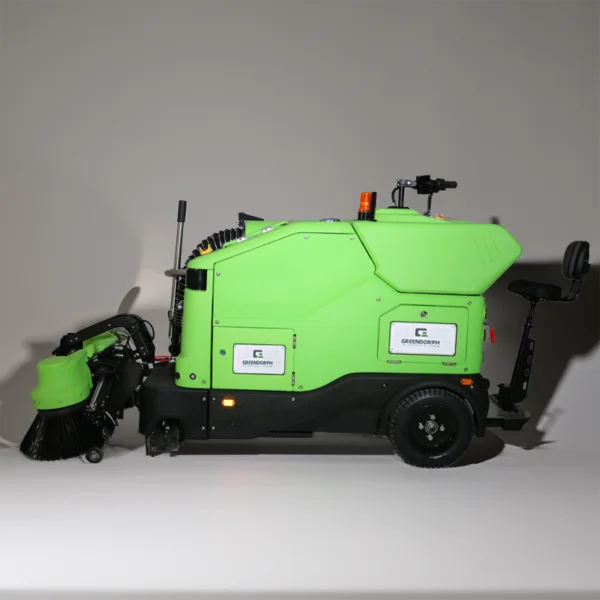
A proper ride on floor sweeper solves this by capturing dust at the source. The Greendorph Omniclean Urban Street Sweeper YJ80 combines a powerful vacuum system with five integrated functions: high-pressure flushing, water-spray cleaning, turbine-speed airflow blowing, targeted vacuum-tube collection, and intelligent dust-suppression misting. This ride on sweeper doesn’t just move dirt—it traps it. The misting function in particular binds fine particulates, causing them to settle and be vacuumed rather than becoming airborne.
Why a Ride On Vacuum Sweeper Outperforms Dry Sweeping Methods
Many facilities still use dry ride on floor sweeper units that rely solely on mechanical brushes and basic filters. These systems capture large debris but release microscopic dust back through exhaust ports. Over time, HVAC filters clog faster, employees report more eye and throat irritation, and sensitive equipment accumulates damaging residue.
The YJ80 operates as a true ride on vacuum sweeper. Its negative-pressure suction system pulls debris directly into a sealed hopper while the dust-suppression misting keeps particles from escaping. In enclosed parking structures and warehouse loading zones, we’ve measured particulate reductions of over 70% within one week of switching from dry sweeping to the YJ80’s multi-function system. Operators also benefit from reduced exposure to silica dust and other hazardous materials tracked in from outdoor areas.
Practical Steps for Better Indoor Air Quality
To maximize air quality benefits, schedule your ride on floor sweeper during peak dust-generation hours—typically mid-morning after morning truck traffic and again before shift change. Use the water-spray and misting functions continuously in enclosed spaces. And replace vacuum filters according to the manufacturer’s schedule; a clogged filter negates air quality gains.
Clean Floors, Cleaner Air
A ride on sweeper should do more than pick up visible trash. At Greendorph, the YJ80 ride on floor sweeper combines high-pressure flushing, turbine blowing, and dust-suppression misting to capture particulates before they become airborne. For enclosed facilities where air quality matters, contact us to see how our ride on vacuum sweeper technology protects both floors and lungs.