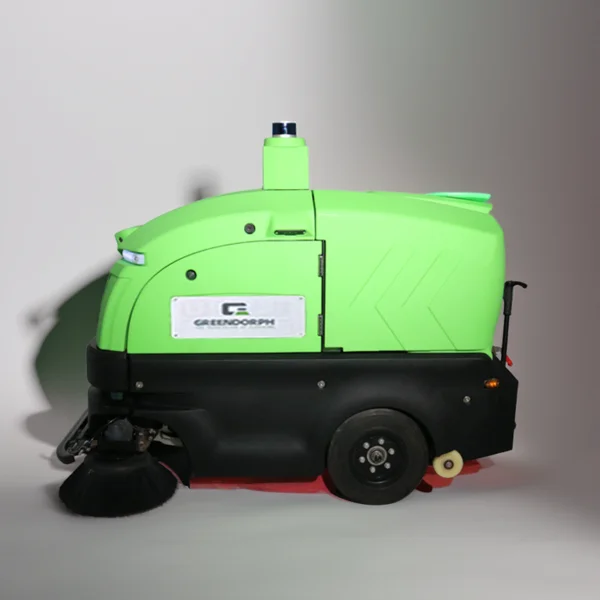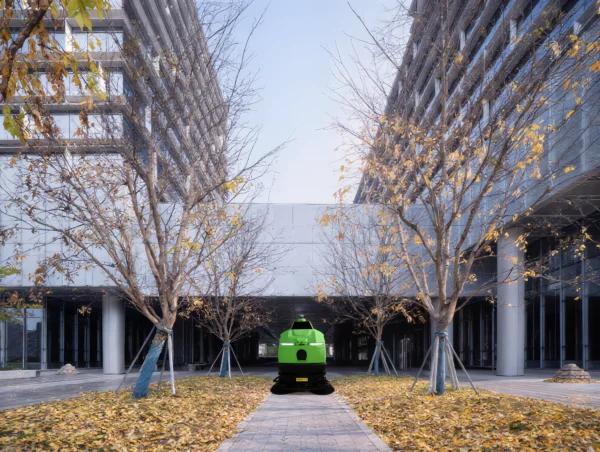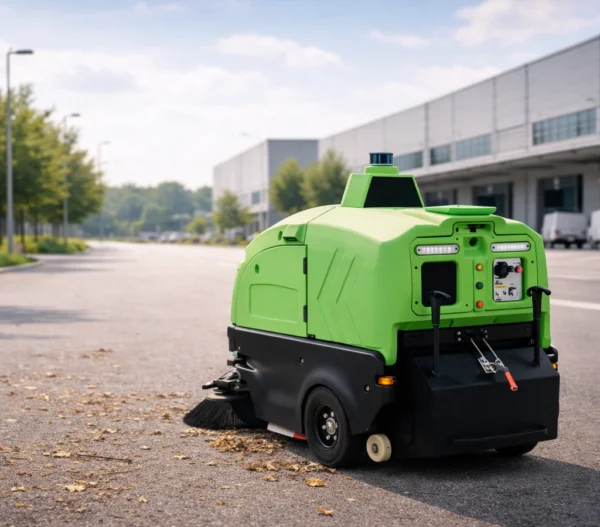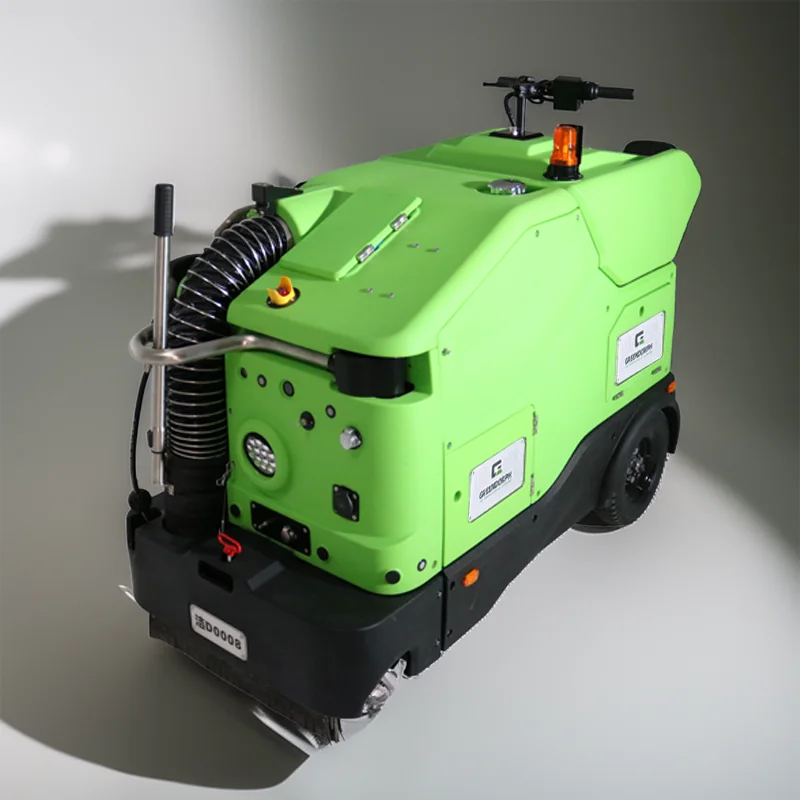
Urban sanitation requirements have evolved dramatically as cities expanded and environmental standards became more demanding. Businesses and municipalities now require advanced equipment capable of improving cleanliness while reducing emissions, labor intensity, and operational inefficiencies. At Greendorph, we focus on developing intelligent sanitation systems that support modern outdoor maintenance operations. Our YJ80 street vacuum cleaner represents how today’s technology combines powerful suction performance, electric operation, and dust-control innovation to redefine urban cleaning standards.
Early Mechanical Sweeping and the Rise of Street Vacuum Systems
Traditional street cleaning methods relied heavily on mechanical brushes and manual labor. While these early machines improved cleaning speed compared to hand sweeping, they struggled with fine dust control and debris collection efficiency. As urban environments became denser, the need for more advanced street vacuum solutions increased significantly.
The introduction of negative-pressure suction technology marked a major turning point in the industry. Compared with older mechanical systems, a street vacuum cleaner could capture smaller particles more effectively while minimizing airborne dust. Municipalities and facility managers began adopting vacuum-assisted equipment to improve street hygiene and comply with stricter environmental expectations. These advancements laid the foundation for modern street vacuum cleaning technology used across commercial and public infrastructure today.
Transition Toward Electric and Multi-Function Street Vacuum Cleaner Systems
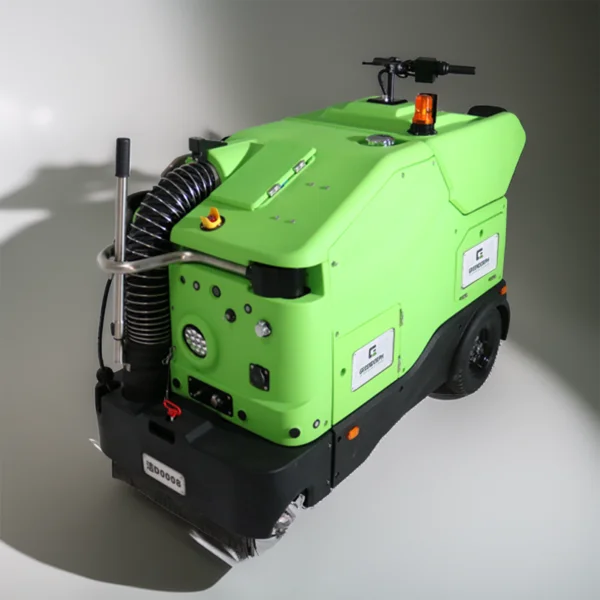
The next stage of industry evolution focused on sustainability and operational versatility. Electric-powered street vacuum cleaner systems emerged as a practical alternative to fuel-powered equipment, helping organizations reduce noise pollution and eliminate direct emissions. At Greendorph, we engineered the YJ80 Vacuum Street Sweeper specifically for demanding urban environments where dust suppression and surface hygiene are critical.
The YJ80 street vacuum integrates a high-performance negative-pressure suction system with high-pressure washing and intelligent misting technology in one compact electric platform. Designed for streets, transit hubs, parks, and urban plazas, this street vacuum cleaner delivers coverage of up to 10,800 m²/h while maintaining efficient dust control throughout operation.
Modern street vacuum systems also evolved to combine multiple cleaning functions within a single machine. Instead of relying on separate equipment for washing, sweeping, and dust suppression, operators can now complete these tasks simultaneously using one integrated street vacuum cleaner. This approach improves operational efficiency while reducing fleet complexity and maintenance costs.
Intelligent Technology and the Future of Urban Cleaning
Recent innovations continue to transform the capabilities of street vacuum equipment. Smart monitoring systems, electric drive platforms, and automated cleaning controls are becoming increasingly important for large-scale sanitation management. Businesses now prioritize street vacuum cleaner systems that deliver reliable performance with lower operational costs and improved sustainability.
At Greendorph, we believe the future of urban sanitation depends on intelligent, environmentally responsible equipment. Our YJ80 street vacuum demonstrates how advanced suction technology, electric operation, and integrated cleaning systems can support cleaner and healthier public spaces while simplifying daily maintenance operations.
Advancing Urban Sanitation with Greendorph
Greendorph remains committed to developing next-generation street vacuum cleaner solutions for municipalities, contractors, and facility managers. By combining powerful street vacuum performance with electric efficiency and intelligent dust-control systems, we help organizations meet modern sanitation demands with greater reliability and long-term operational value.