At Greendorph, we have watched industrial cleaning machine technology transform from purely manual equipment to fully autonomous systems. As a supplier focused exclusively on smart sanitation for large outdoor areas, we believe understanding this history helps facility managers appreciate what modern autonomous industrial cleaning robot platforms can actually deliver. This brief history traces the key developments that brought us to today’s intelligent machines.
The First Generation: Manual and Ride-On Industrial Floor Sweepers
For most of the twentieth century, industrial cleaning machine meant a push broom or a basic ride-on sweeper with mechanical brushes. These machines required constant human operation, offered no debris sensing, and simply pushed dirt into a hopper. Fine dust escaped into the air, creating secondary contamination that harmed worker respiratory health. Facilities tolerated this because no better option existed. The first industrial cleaning machine improvements came in the 1980s with vacuum-assisted systems, but autonomy remained decades away.
The Rise of Sensor-Guided Autonomous Industrial Cleaning Robots
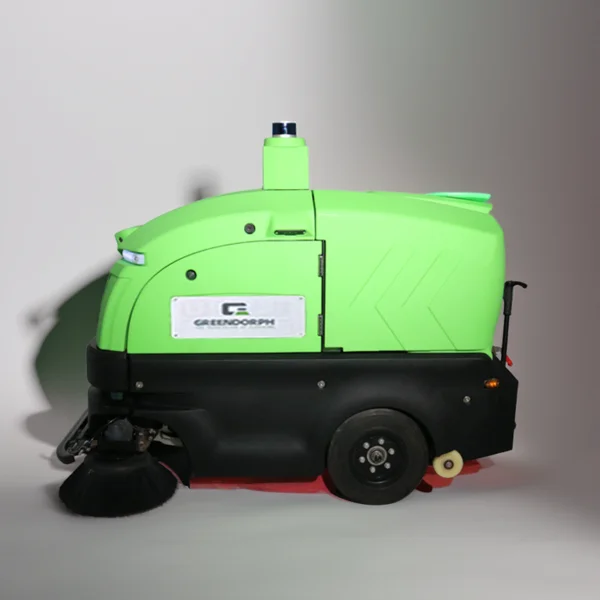
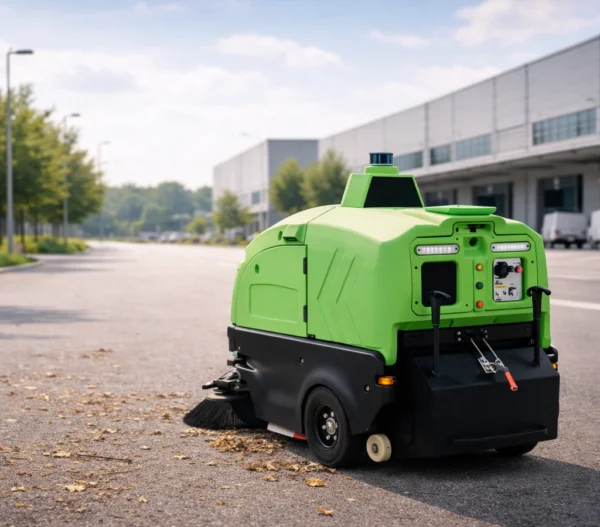
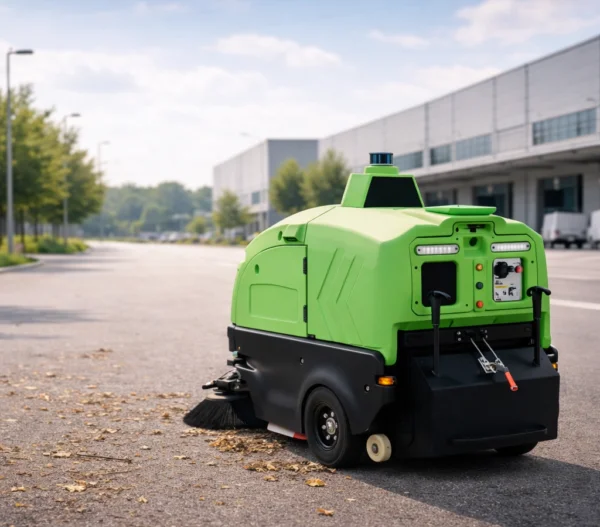
The real shift began when LiDAR and camera technologies became affordable for commercial equipment. Early autonomous industrial cleaning robot models could follow programmed paths but struggled with dynamic obstacles like forklifts or pedestrians. They stopped or errored out, requiring human intervention. Modern autonomous industrial cleaning robot systems—like the Greendorph YJ130—solve this with 3D perception cameras that detect vehicles and yield instantly, keeping logistics traffic moving smoothly while continuing to clean.
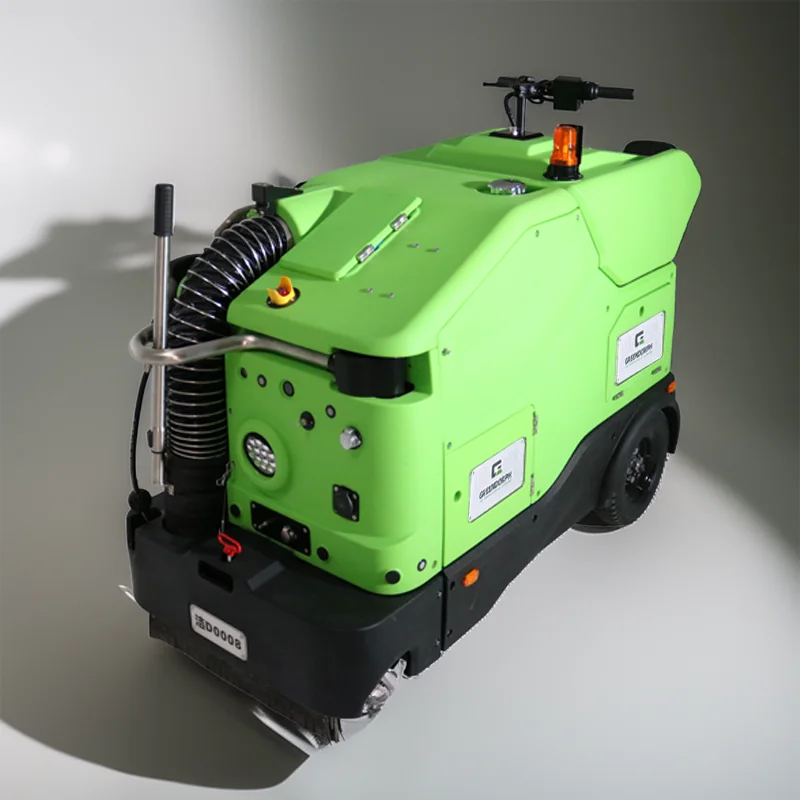
This generation of industrial cleaning machine also addressed dust containment. The YJ130’s negative-pressure collection system combined with active water misting traps silica dust at the source, preventing the airborne contamination that plagued first-generation equipment. For facilities managing concrete dust or fine particulates, this feature alone justifies the upgrade to autonomy.
Today’s Capabilities: Heavy Debris and All-Terrain Mobility
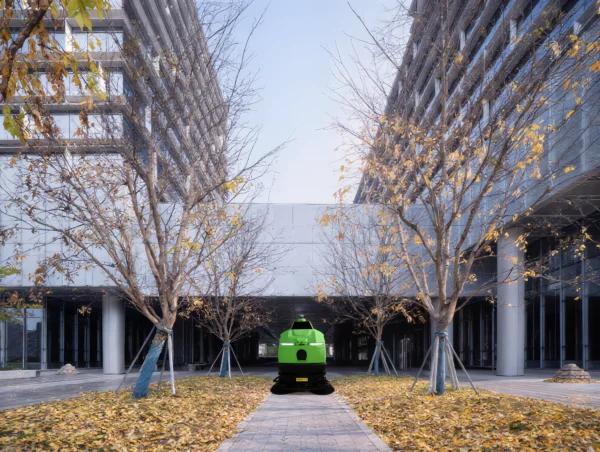
Current autonomous industrial cleaning robot platforms handle conditions that would disable older units. The YJ130’s reinforced intake manages 50mm stones and brick shards—debris that destroys standard sweeper brushes and causes forklift tire punctures. With 20% gradeability, this industrial cleaning machine transitions seamlessly between indoor floors, outdoor yards, and loading dock ramps. No terrain is off-limits. This all-terrain capability means a single autonomous industrial cleaning robot can replace separate machines for indoor and outdoor zones.
What the History Teaches Us
The evolution from manual push brooms to today’s autonomous industrial cleaning robot is really a story about reducing human exposure to hazards. At Greendorph, the YJ130 represents the latest chapter: dust containment, safety coexistence with vehicles, heavy debris intake, and all-terrain mobility. When you evaluate an industrial cleaning machine, ask whether it meets these four modern benchmarks. Contact us to see how far autonomous industrial cleaning robot technology has come—and where it is going next.