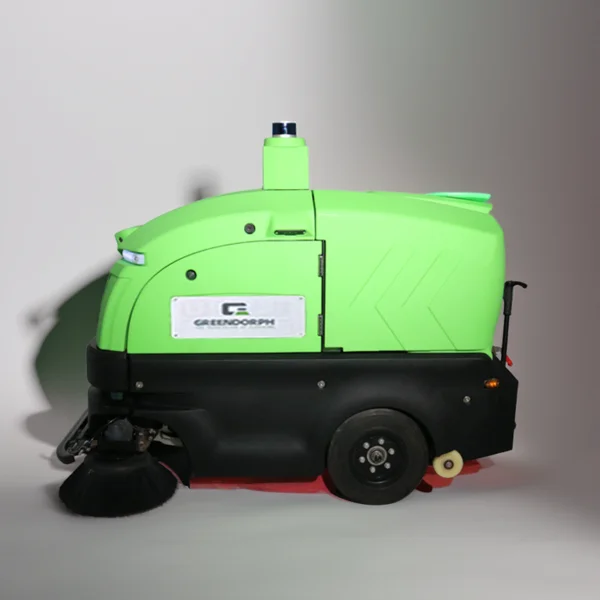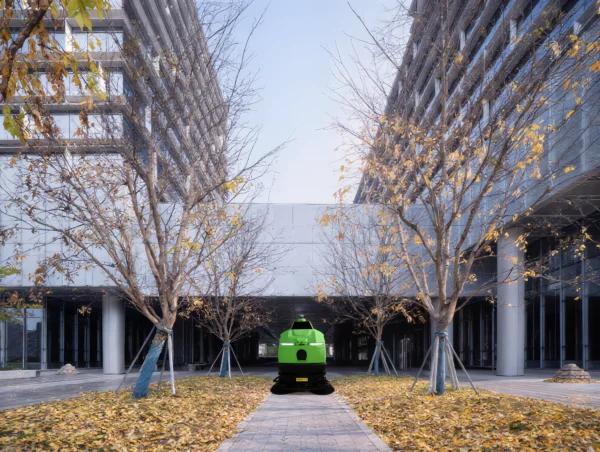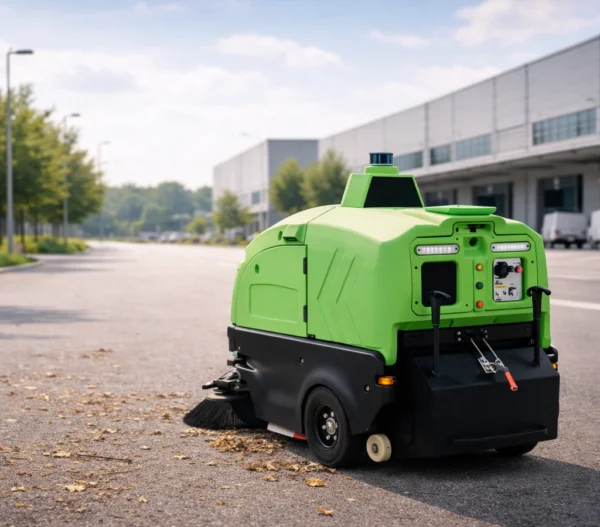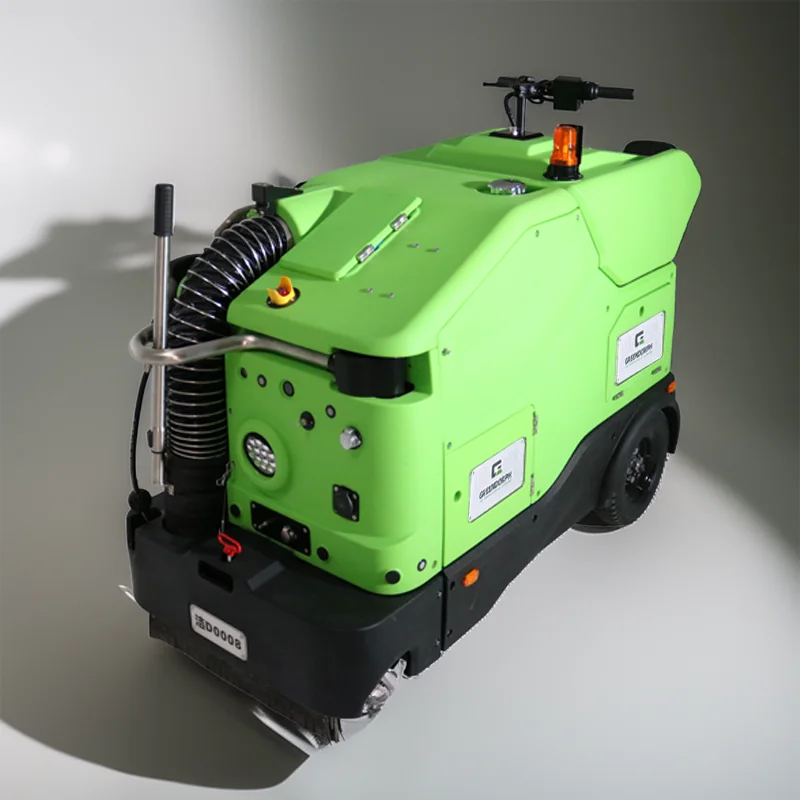
At Greendorph, we have helped facility managers at universities, corporate parks, and medical campuses select cleaning equipment for years. One mistake we see repeatedly: choosing a generic industrial cleaning machine designed for warehouses and applying it to campus environments. Campuses present unique challenges — pedestrian traffic, vehicle coexistence, varied debris types, and strict air quality standards. Selecting the right industrial vacuum cleaners for these settings requires a different framework. Here is what we recommend evaluating.
Safety Coexistence Between Machines and People
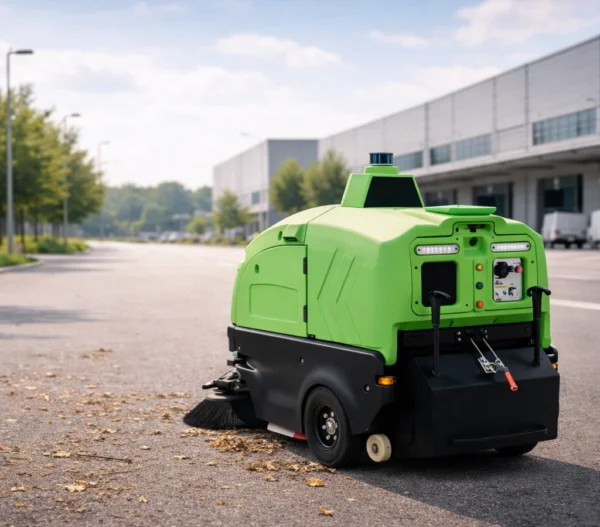
A campus is a living environment, not a closed factory floor. Students walk between classes, delivery vans load near dining halls, and maintenance vehicles share paths with joggers. Any industrial cleaning machine you deploy must operate safely alongside this activity. The YJ130 from Greendorph is equipped with LiDAR and 3D perception cameras, enabling this industrial floor sweeper to detect forklifts and heavy vehicles, yielding instantly to keep logistics traffic moving smoothly. For campus settings, the same technology protects pedestrians. When comparing industrial vacuum cleaners, ask about obstacle detection range, response time, and whether the unit distinguishes between static objects (benches, bollards) and moving ones (people, bicycles). A machine that cannot yield will create liability risks.
Dust Control That Protects Respiratory Health
Campus facilities accumulate more than visible litter. Playgrounds generate silica dust from decomposed granite. Parking structures collect brake dust. Walkways trap pollen and soil particulates that become airborne when disturbed. A proper industrial cleaning machine for campus use must trap these fines, not redistribute them. The YJ130 features a negative-pressure collection system combined with active water misting, trapping silica dust at the source — preventing secondary airborne contamination and maintaining a safe environment. Industrial vacuum cleaners without active dust suppression will blow particulates into the air, where students, staff, and visitors breathe them. Verify that any unit you consider includes either water misting or HEPA filtration as a standard feature, not a paid upgrade.
Heavy Debris Intake for Varied Campus Surfaces
Campuses generate unpredictable debris. A broken planter spills ceramic shards. Construction near the science building leaves gravel. Storm runoff deposits stones onto walkways. Standard industrial vacuum cleaners choke on these larger items, causing jams and downtime. The YJ130 features a reinforced intake that handles 50mm stones and brick shards, clearing transport paths and protecting forklift tires from premature wear. For campus facilities without forklifts, the same capability protects maintenance carts, service vehicles, and even pedestrian shoes from puncture hazards. When evaluating any industrial cleaning machine, ask about maximum debris size and whether the intake path is straight or angled. Straight paths handle irregular objects more reliably.
Making a Smart Investment for Campus Longevity
The right industrial vacuum cleaners reduce liability, improve air quality, and extend the life of your campus surfaces. At Greendorph, we engineer every industrial cleaning machine for real-world campus conditions — because we know that facility managers need reliability, not marketing claims. Ready to evaluate options for your university or corporate campus? Let us walk you through a site-specific assessment of debris types, traffic patterns, and air quality goals.