We at Greendorph focus on helping cities and facility operators improve surface cleanliness with efficient equipment designed for real working environments. As urban areas expand, cleaning public roads becomes more demanding in terms of labor, time, and consistency. This is where a street vacuum system becomes an essential alternative to traditional manual sweeping. Understanding how these solutions compare with manual brooms helps organizations make more practical decisions for long-term road maintenance.
Manual Brooms: Flexible but Labor-Intensive
Manual sweeping has been used for decades due to its simplicity and low initial cost. Workers can clean small areas, tight corners, and irregular surfaces without needing complex equipment. However, its performance depends heavily on human effort and environmental conditions.
In large-scale environments such as industrial parks, highways, or municipal roads, manual sweeping struggles with consistency. Dust, sand, and debris often require repeated passes, and fine particles are difficult to fully remove. Over time, this leads to higher labor costs and slower cleaning cycles.
Street Vacuum Technology: Efficiency Through Mechanical Suction
A street vacuum system introduces mechanical suction to replace repetitive manual brushing. Instead of relying only on physical force, it uses airflow and filtration systems to collect debris directly from road surfaces. According to industry applications, vacuum-based cleaning significantly improves debris collection consistency while reducing operator fatigue and cleaning time.
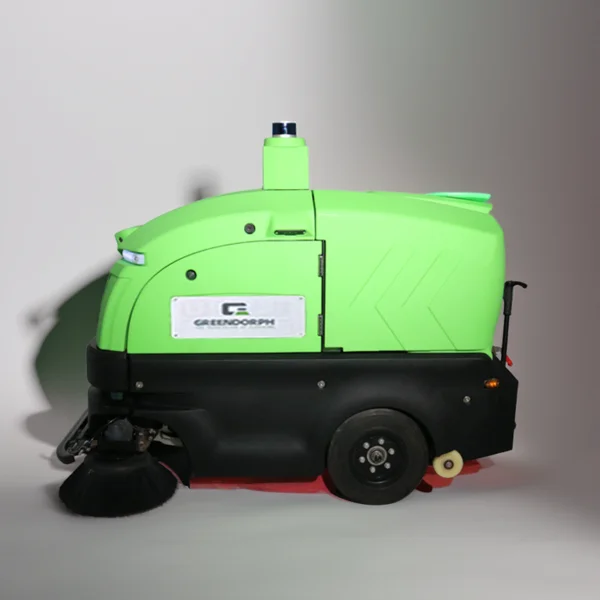
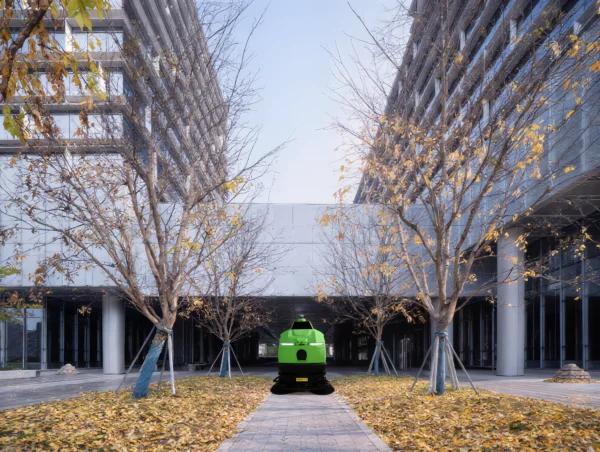
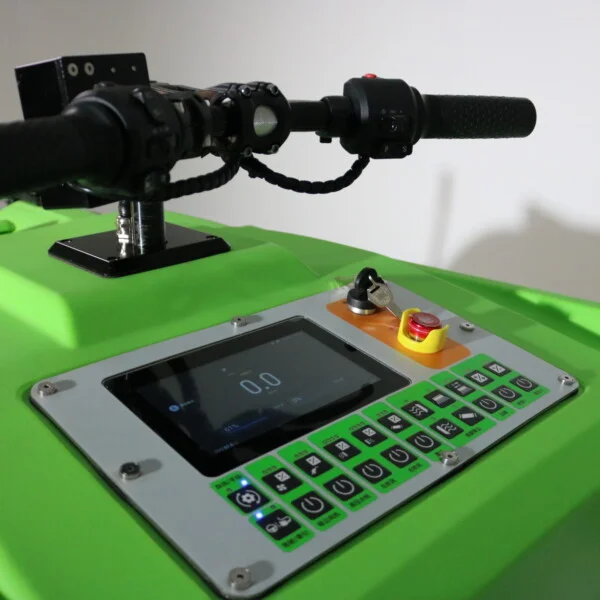
In Greendorph solutions such as the Omniclean series, vacuum technology is combined with brushing and dust-suppression systems, allowing cleaner roads with fewer passes. This makes it suitable for environments like sidewalks, parks, and transportation hubs where continuous cleanliness is required.
Road Vacuum Cleaner Machine: Scaling Cleaning for Large Areas
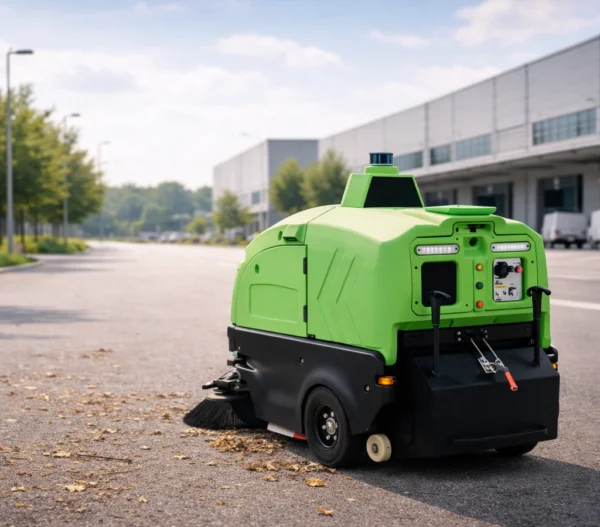
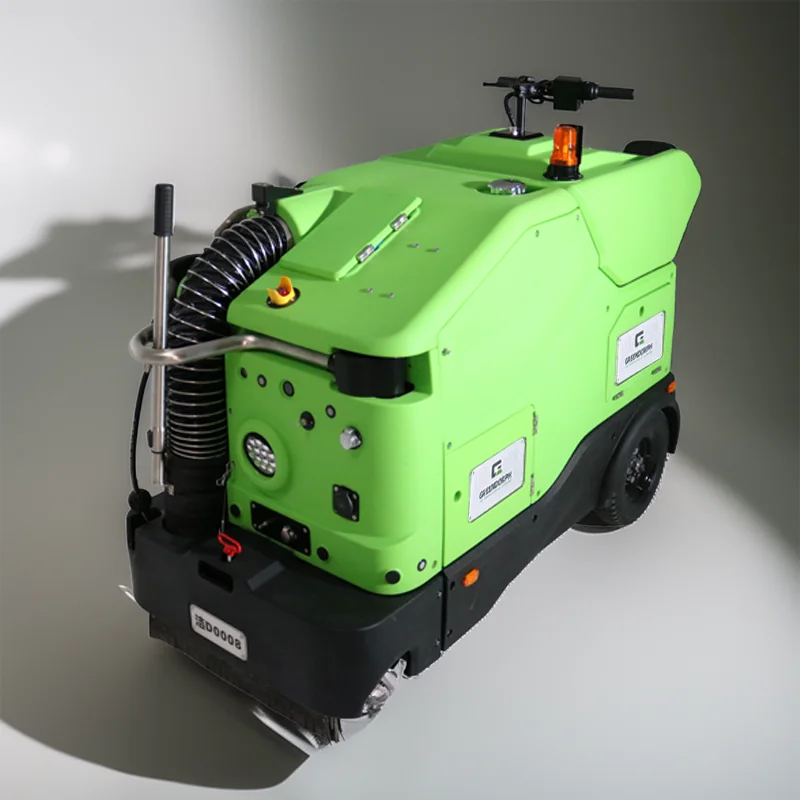
A road vacuum cleaner machine is designed for broader operational efficiency. Unlike manual sweeping, it integrates suction systems, rotating brushes, and debris storage units into one mechanized platform. These machines are commonly used in municipalities and industrial zones because they can cover significantly larger areas in a shorter time while maintaining stable cleaning quality.
Greendorph’s road cleaning solutions are engineered with multi-mode operation, allowing flexibility between manual control, assisted movement, and automated cleaning patterns. This reduces dependency on labor while improving operational continuity across long road segments.
Efficiency Comparison: Manual vs. Mechanized Cleaning
When comparing both approaches, the difference is most visible in three areas: speed, consistency, and resource use.
Manual brooms require multiple workers to cover large areas and often leave fine dust behind. In contrast, vacuum-based machines maintain steady suction power and uniform cleaning coverage. Industry data shows mechanized sweepers can replace the workload of multiple manual workers while completing tasks in a fraction of the time.
From an operational perspective, road vacuum systems also reduce long-term labor dependency, which is particularly important for cities managing large public infrastructures.
Greendorph Approach to Urban Cleaning
We design Greendorph cleaning systems with a focus on practical deployment in real urban conditions. Our equipment is built to support municipal teams, industrial park managers, and contractors who need reliable cleaning performance without increasing operational complexity. By combining suction technology with adaptable control modes, we aim to support cleaner and safer public environments.
Conclusion
Manual sweeping still has value for small or localized cleaning tasks, but it becomes less efficient as scale increases. Both street vacuum systems and road vacuum cleaner machines offer a more structured and efficient approach for modern urban environments. For organizations managing large road networks or industrial spaces, mechanized cleaning provides a more consistent and time-efficient solution that better aligns with today’s operational demands.