Heavy daily transit across busy distribution hubs, shipping docks, and manufacturing plants continuously deposits abrasive sand, packaging fibers, and tire residues onto concrete floors. Leaving this fine grit unmanaged allows heavy forklift tires to grind the particles deep into the substrate, accelerating concrete wear and damaging protective topical sealants. Relying on slow manual push brooms is highly inefficient for expansive zones and often kicks up thick dust clouds that settle onto stored inventory. Incorporating a robust warehouse sweeper into your daily routine offers facilities managers a predictable, highly systematic framework to control industrial soil accumulation.
Every complex logistical layout presents unique spatial challenges, from wide-open transit lanes to tight racking aisles where inventory turnover is constant. Traditional combustion engine cleaning platforms are often too loud and emit harmful fumes, making them less unsuitable for enclosed, poorly ventilated indoor storage spaces. By evaluating key mechanical parameters—such as mechanical brush pressure, negative-pressure vacuum extraction, and low-emission battery runtime—procurement teams can select highly reliable hardware.
Mitigating Fine Dust Dispersion and Safeguarding Indoor Air Quality
Dry sweeping across high-density storage bays can easily launch massive particulate clouds, exposing logistics workers to harmful breathing hazards. Effective industrial dust management relies on multi-stage filtration systems working alongside high-pressure water misting nozzles to bind small particles together right before vacuuming. This wet-suppression mechanism traps fine concrete dust securely inside the collection hopper, preventing it from venting back into the facility.
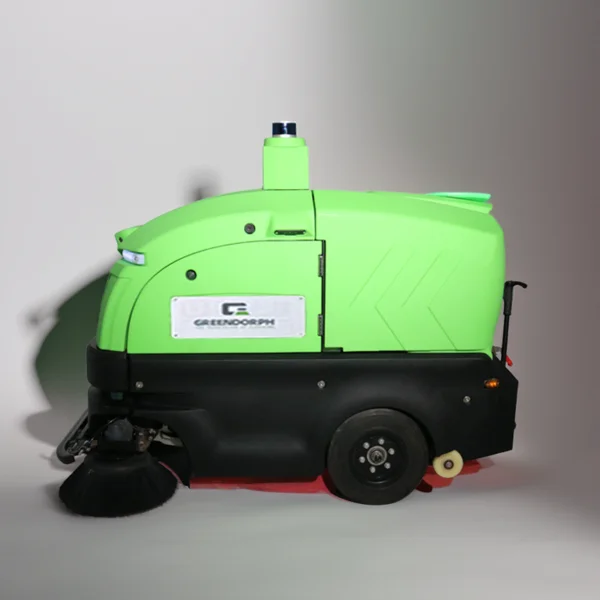
Deploying an advanced warehouse sweeper secures that fine dust is captured cleanly without creating airborne hazards along local walkways. High-efficiency fabric filters prevent fine particulate matter from escaping back into the public air during long cleaning shifts. Our engineering projects prioritize these sealed air pathways to protect local urban environments and safeguard residential neighborhoods from airborne dust.
Industrial Warehouse Floor Sweeper Targeted Slurry Recovery Guards Warehouse Ground and Vehicle Safety
Dirty standing wastewater scattered on warehouse operating floors and loading platforms will gradually corrode concrete ground foundations and raise slip risks for staff and forklift drivers. Stable on-site dewatering relies on matched heavy-duty rubber squeegees and high negative-pressure suction motors to realize synchronous cleaning and sewage extraction.
The high-performance industrial warehouse floor sweeper evenly distributes cleaning water and cleaning agents for rough concrete ground. Custom high-speed vacuum equipment extracts residual sewage trapped inside concrete expansion gaps. Timely sewage collection avoids accidental slips during cargo handling and guarantees unimpeded movement for forklifts and walking personnel inside the logistics warehouse.
Navigating Restrictive Racking Corridors with Walk-Behind Utility Designs
Narrow storage aisles and busy shipping entrances present major physical navigation obstacles for oversized sweeping machinery. Large cleaning vehicles risk striking structural support columns, damaging delicate inventory racks, or blocking active pathways during peak operational hours. Logistics teams require compact, highly agile utility platforms engineered to navigate around delicate equipment and unexpected path barriers smoothly.
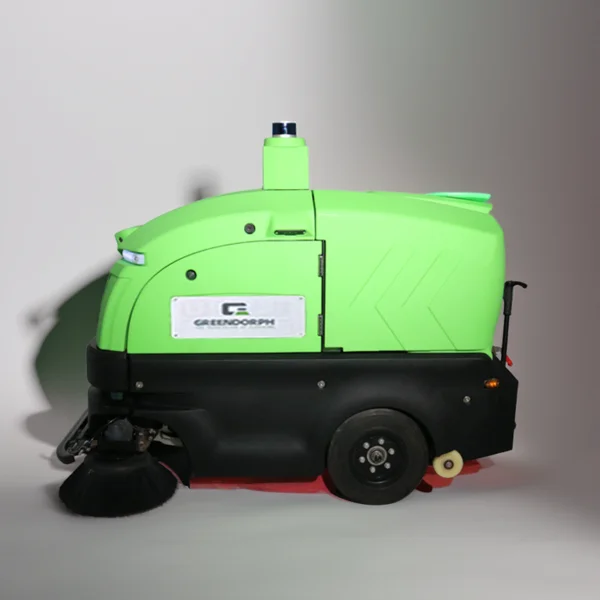
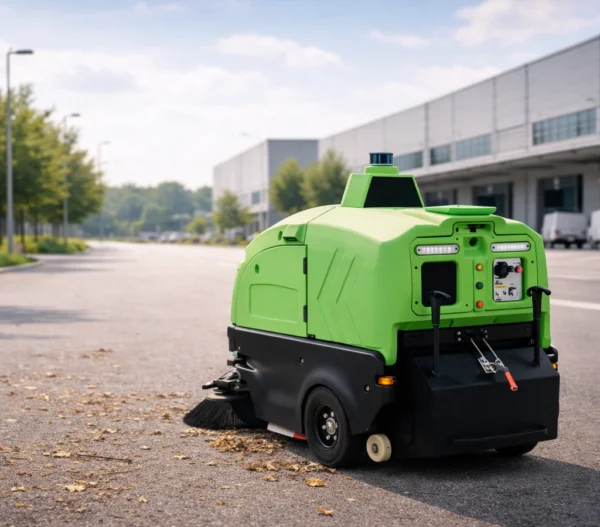
For highly demanding indoor spaces, utilizing specialized, compact walk-behind machinery is often the most practical choice. Our recommended model YJ130 is best for large warehouses, high-traffic zones, featuring a battery-powered, walk-behind operation that handles tight layouts easily. This nimble design allows our specialized warehouse sweeper to turn inside restricted spaces safely without disrupting the daily flow of local warehouse traffic.
Round-the-Clock Sanitation Adaptability Matches Warehouse Nonstop Operation Needs
Warehouse production and cargo sorting run around the clock, yet fuel-powered cleaning vehicles cannot operate inside closed storage areas due to loud running noise and exhaust gas accumulation. High-capacity battery electric drive breaks the usage limitations of traditional cleaning equipment on working time and indoor scenarios.
A single full charge supports up to 8 hours of continuous operation to finish large-area indoor warehouse cleaning tasks without pause. Greendorph low-noise electric sweepers adapt to day-and-night warehouse operation schedules, cut long-term facility power spending and curb carbon output generated by internal warehouse cleaning operations.
Electric Integrated Design Cuts Warehouse Equipment Idle Losses
Warehouse logistics operations cannot afford prolonged equipment downtime, as suspended aisle cleaning will lead to rapid accumulation of tire debris and packaging waste and disrupt forklift circulation. Conventional combustion sweepers consist of scattered mechanical assemblies; any wear failure of belts, hydraulic pipelines or engine accessories will force the whole machine to stop working for overhaul.
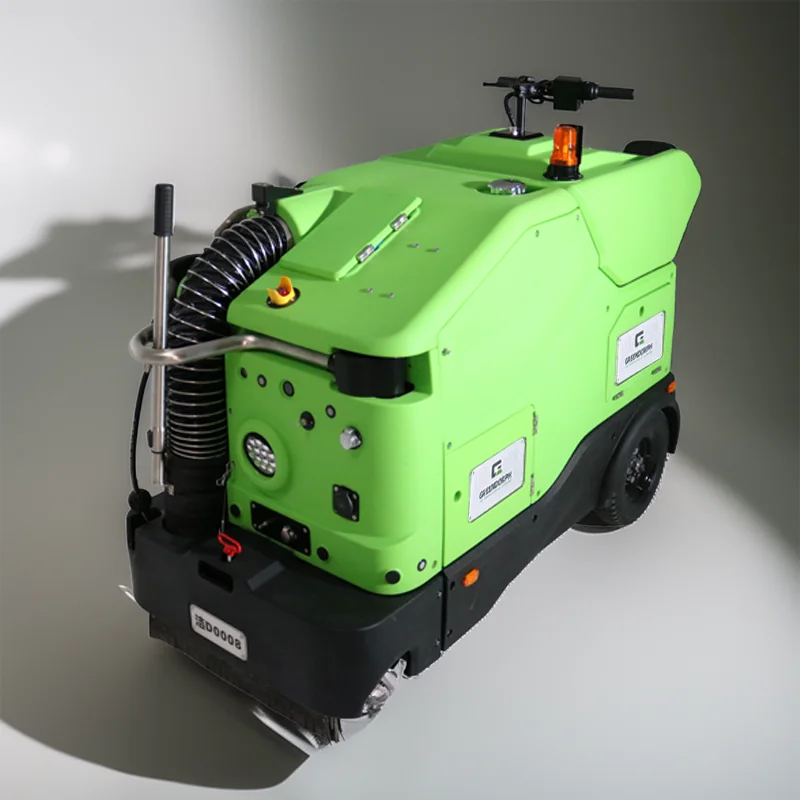
Our industrial warehouse floor sweepers adopt brushless direct-drive integrated electric design to reduce vulnerable movable parts across the whole machine. The integrated power unit supports quick disassembly and on-site replacement, greatly shortening equipment maintenance time on site. Fast recovery of cleaning equipment maintains continuous purification of cargo access aisles, avoids ground grit abrasion to the warehouse concrete floor, and stabilizes the overall asset operation cost of the warehouse.
Conclusion
Upgrading public space maintenance to automated electric systems delivers measurable results: lower labor costs, reduced repairs, and no tailpipe emissions. Quiet warehouse sweepers control fine dust and moisture hazards while protecting pavements with consistent performance across large areas. Our team is committed to engineering robust, sustainable electric tools that support grounds crews and maintain pristine smart cities worldwide.