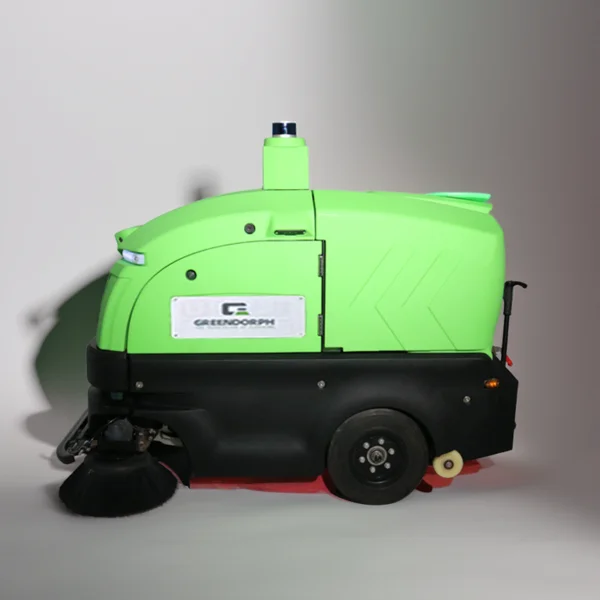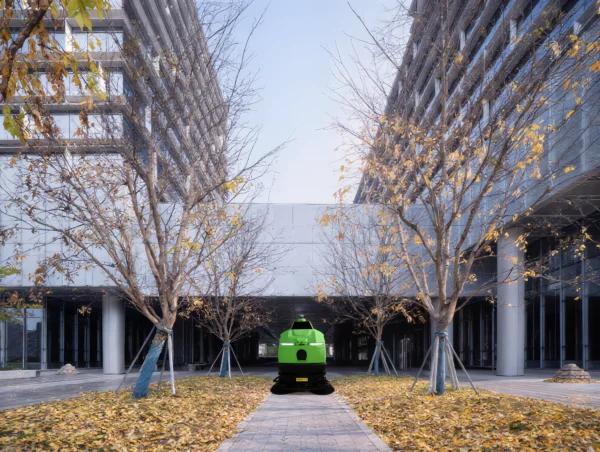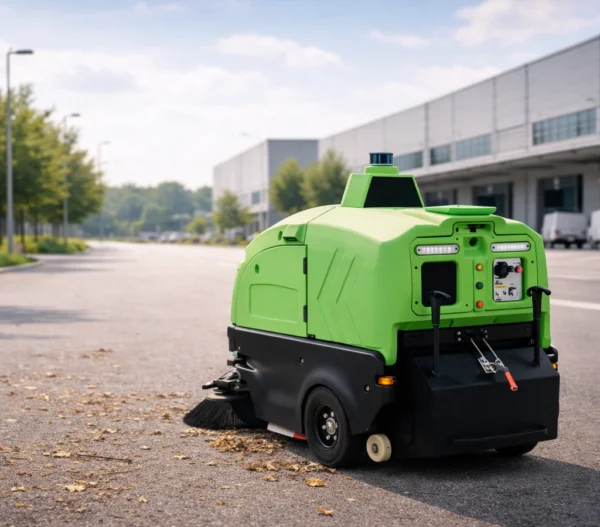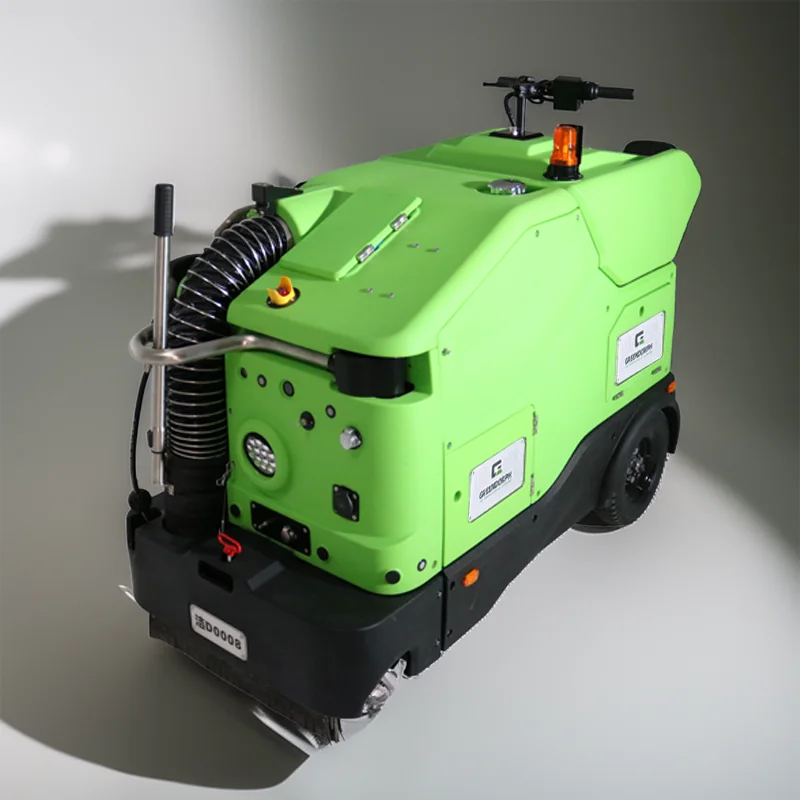
Maintaining safe concrete surfaces inside enclosed garages, underground transit hubs, and multi-level parking decks requires a focused strategy to control fine dust settlement, oil drippings, and tire carbon. Heavy daily vehicle traffic continually grinds coarse grit and outdoor sand deeply into the concrete substrate, accelerating surface cracks and wearing away protective coatings. Relying on manual push brooms is highly ineffective across massive parking footprints and often kicks up thick dust clouds that settle onto vehicles and building ventilation intakes. Implementing a high-efficiency parking lot sweeper into daily operations offers building managers a systematic, highly predictable framework to control particulate buildup.
Underground driving lanes present unique architectural challenges, including low concrete ceilings, tight corner ramps, and highly restricted airflow. Traditional internal combustion sweeping trucks generate toxic carbon monoxide emissions and loud mechanical noise, making them less unsuitable for enclosed, poorly ventilated spaces. By evaluating key engineering parameters—such as mechanical brush downpressure, advanced water-misting dust suppression, and clean battery-powered electric drivetrains—procurement teams can select highly reliable hardware.
Resolving Spatial and Exhaust Challenges in Low-Clearance Decks
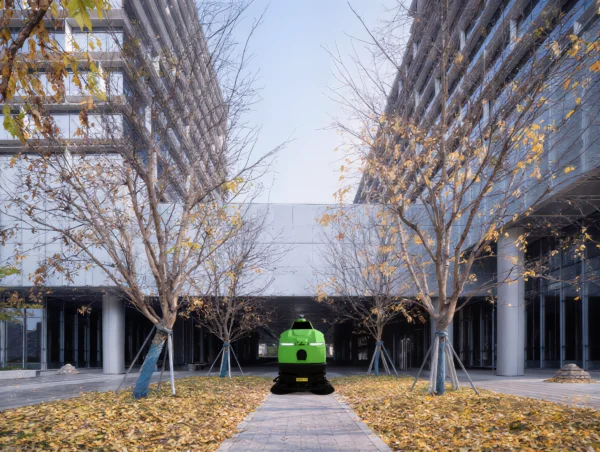
Low concrete beams, tight turning ramps, and concrete support pillars present constant collision risks for standard-sized municipal utility vehicles. Large cleaning trucks can easily strike overhead sprinkler lines or block active driving lanes, causing costly structural damage and traffic delays. Operations teams require compact, highly agile sweeping platforms designed to navigate restricted spaces safely and cleanly.
Our compact electric chassis configurations are engineered specifically to work under low-ceiling clearances without sacrificing sweeping width or debris hopper capacity. Eliminating tailpipe emissions makes electric-powered sweeping platforms the safest operational choice for unventilated subterranean parking decks. This low-carbon design allows facilities to run thorough cleaning shifts without compromising indoor air quality for workers or visitors.
Understanding the Physics of Fine Dust Capture in Closed Spaces
Dry sweeping across dry underground lanes can launch massive particulate clouds, exposing facility users to harmful breathing hazards. Modern dust containment relies on a balanced system that uses high-pressure water misters to bind small particles together right before vacuuming. This wet-suppression mechanism traps fine concrete dust securely inside the collection hopper instead of venting it back into the facility.
The high-capacity parking lot sweeper reliably confines collected fine particulate matter inside the equipment throughout lengthy working periods. High-efficiency fabric filters prevent fine particulate matter from escaping back into the public air during long cleaning shifts. At Greendorph, we prioritize these sealed air pathways to protect indoor air quality and safeguard workers from inhaling fine airborne dust.
Maximizing Surface Safety and Eliminating Moisture Hazards
Standing sewage on busy warehouse floors and loading platforms raises slip risks for operators and gradually erodes concrete ground structures. Effective on-site dewatering relies on heavy-duty squeegees paired with high negative-pressure suction motors to work in tandem. The integrated system rapidly removes muddy wastewater in one pass, delivering dry pavement ready for forklift movement and staff walking right after cleaning.
Utilizing specialized garage sweepers secures that washing water and active detergent are recovered effectively from textured concrete surfaces. Our high-velocity vacuum channels pull moisture even from deep expansion joints and rough surface crevices, preventing slip-and-fall accidents. Keeping public pathways dry and safe during peak hours reduces facility liability and keeps traffic moving smoothly.
Simplifying Fleet Logistics to Optimize Annual Utility Budgets
Persistent staffing shortages and rising operational costs make it increasingly difficult for grounds crews to clean expansive paved areas by hand. Pushing heavy waste bins across multi-level parking structures is slow and exhausting, leading to inconsistent cleaning patterns and missed corners. Transitioning to specialized mechanical sweepers allows facilities to cover massive areas in a fraction of the time with minimal physical effort.
As one of the parking lot sweeper companies, Greendorph sweepers provide fast, cost-effective cleaning, long-lasting performance, and easy operation, helping your team maintain professional and hazard-free parking areas with minimal effort. Our specialized parking lot sweeper models are sold directly, providing better value and reliable performance for commercial parking lot cleaning. This direct manufacturer model helps facility directors secure robust, high-performance maintenance equipment while keeping procurement budgets fully optimized.
Eliminating Mechanical Complexity to Lower Repair Overheads
Traditional sweeping vehicles with internal combustion engines feature complex hydraulic lines, direct drive belts, and delicate fluid pumps that require regular, specialized maintenance. Dusty operating conditions accelerate wear on these moving parts, leading to sudden hydraulic leaks and expensive workshop repair bills. Direct-drive electric motors simplify the underlying mechanical layout, reducing these common failure points and reducing upkeep costs.
Our advanced garage sweepers use brushless electric motors to drastically lower your weekly maintenance checklists. Removing complex mechanical drives reduces the risk of sudden breakdown during busy cleaning shifts, keeping your fleet highly productive. This mechanical simplicity bolsters maximum vehicle uptime, helping you keep your parking facilities clean while protecting your annual repair budget.
Conclusion
Preserving subterranean and multi-level parking decks requires replacing manual cleanup tools with specialized, low-emission electric utility systems. Implementing an agile, high-precision parking lot sweeper allows facility managers to protect structural concrete, control fine dust, and reduce moisture hazards quietly. These compact, battery-powered vehicles deliver exceptional cleanliness consistency across expansive public plazas while reducing annual repair and labor expenses. At Greendorph, we remain fully dedicated to engineering the robust, sustainable electric tools required to support grounds crews and keep global facilities pristine.