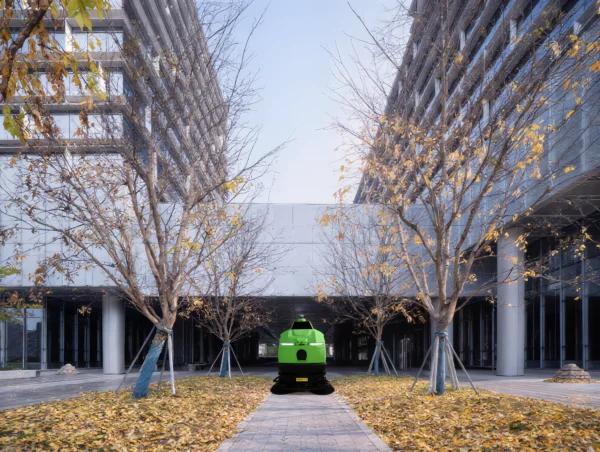
Commercial complexes, university campuses, and municipal parkways struggle daily with a steady influx of heavy sand, loose windblown paper, and fallen leaves. Neglecting these abrasive materials allows them to collect in paving cracks, where they wear down protective concrete seals and speed up surface erosion. Relying on traditional manual labor often leads to unpredictable cleaning schedules and rising operational overhead. Utilizing an advanced, autonomous outdoor robot cleaner offers property managers a highly predictable and structured method to preserve physical assets.
Deciding to invest in heavy-duty automated sweeping platforms requires a detailed assessment of battery runtimes, mechanical collection physics, and navigational safety systems. Traditional manual push broom sweeping is far too slow and physically exhausting to handle large-scale debris drops uniformly. By analyzing core engineering parameters—such as mechanical brush downpressure, advanced multi-sensor mapping, and wet suppression systems—facility teams can secure reliable long-term investments. Finding a durable outdoor vacuum sweeper built with high-quality materials protects capital budgets and keeps paths immaculate.
Deciphering the Engineering Behind Automated Debris Collection
A highly capable collection system must combine physical brush friction with balanced negative air pressure to trap diverse debris profiles in a single pass. Standard light-duty sweepers often struggle to lift wet, compacted leaves or heavy gravel out of deep pavement joints. Integrating robust rotating bristles with high-velocity airflow channels enables that stubborn dirt is loosened and suctioned effectively.
Operating a high-performance outdoor robot cleaner allows your facility team to maintain pristine walkways with minimal daily oversight. These advanced mechanical configurations deliver deep, consistent particulate capture across uneven terrains and diverse pavement tiles. At Greendorph, we design our sweeping mechanisms to process heavy organic waste alongside fine silica sand smoothly and efficiently.
Leveraging Multi-Functional Clean Systems for Complete Coverage
Textured walkways, porous asphalt roads, and concrete plazas present varied physical surfaces that require dynamic cleaning modes. Standard sweeping vehicles with a single function often spread fine dust back into the air or fail to capture heavy trash items cleanly. Modern, high-performance designs incorporate primary sweeping assemblies with auxiliary features to manage different debris profiles at the same time.
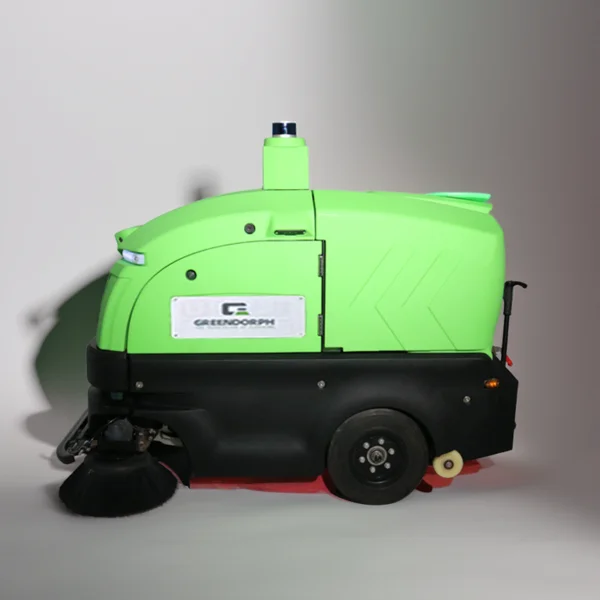
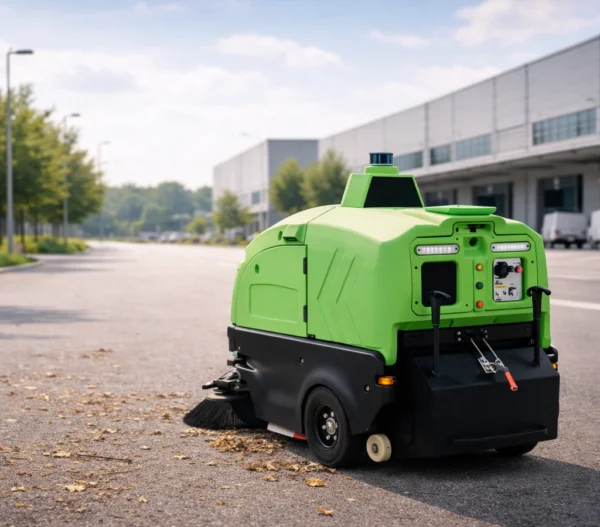
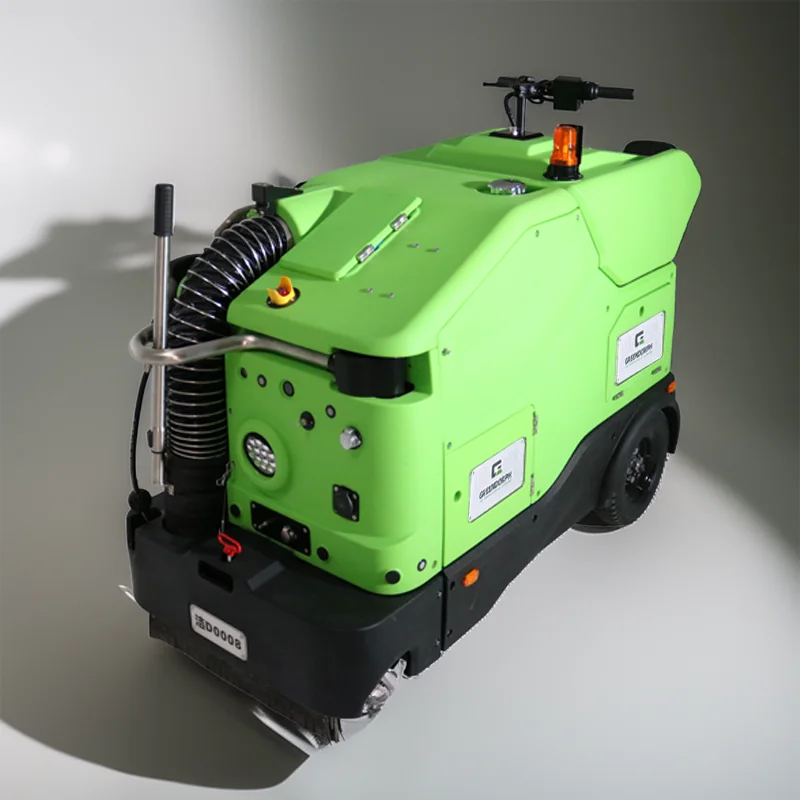
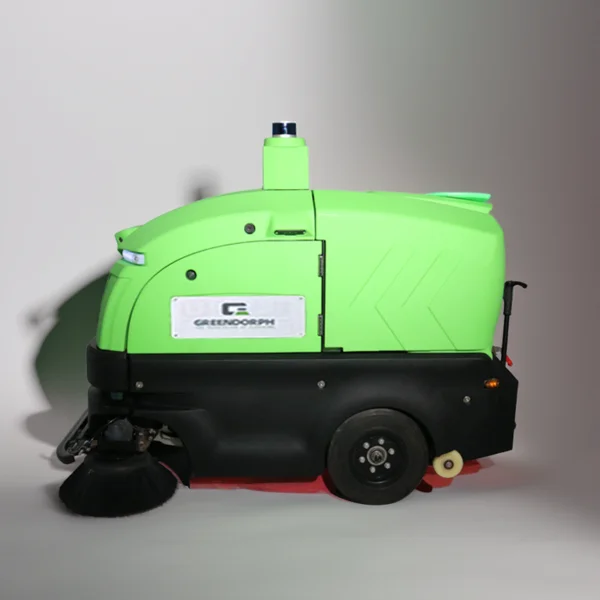
Our advanced Auto Sweeper YJ130 showcases this multi-functional design, acting as a fully autonomous outdoor sweeper featuring a primary cleaning system enhanced by three auxiliary functions: suction, airflow-assist, and misting spray. Delivering over 95% cleaning efficiency, it operates continuously for 6-8 hours, making it ideal for large-area outdoor sanitation across parks, industrial campuses, sidewalks, schools, and similar environments. At Greendorph, we calibrate these systems to tackle diverse soils smoothly.
Optimizing Particulate Control via Liquid Suppression Channels
Dry sweeping across expansive public plazas can easily launch dense clouds of fine silica dust, creating immediate respiratory discomfort for pedestrians. Advanced dust management relies on a balanced system that uses fine water misters to bind small particles together right before vacuuming. This wet-suppression mechanism traps fine concrete dust securely inside the collection hopper instead of venting it back into the neighborhood air.
High-performance outdoor vacuum sweeper helps municipal projects and industrial facilities keep passageways tidy with minimal dust and good safety even during peak operation periods. High-efficiency fabric filters prevent fine particulate matter from escaping back into public environments, keeping the local air quality clean and healthy. Our design team prioritizes these sealed filtration paths to safeguard municipal environments and sensitive neighborhood zones.
Evaluating Structural Longevity and Long-Term Technical Support
Heavy-duty cleaning machinery undergoes intense daily stress while operating across rough concrete decks, asphalt roads, and stone walkways. Minor structural failures or delayed spare part shipments can easily halt your cleaning schedule, leading to dirty paths and safety hazards. Evaluating the warranty terms and spare parts availability of potential equipment manufacturers is vital to keeping your fleet running.
Selecting an advanced outdoor robot cleaner built with long-lasting structural steel frames maintains high reliability and minimizes monthly repair budgets. Brushless electric motors significantly lower the number of moving parts inside our advanced sweeping equipment, making the machinery incredibly dependable. Keeping the underlying mechanical architecture simple achieves maximum vehicle uptime, keeping your fleet active on the ground.
Transitioning to Clean Battery Power for Low-Emission Shifts
Running loud combustion-engine utility trucks during overnight shifts can create major noise disruptions for nearby residential properties. These high decibel levels often trigger resident complaints, forcing property managers to delay essential cleanings and disrupt daily schedules. Shifting to advanced, battery-powered electric drivetrains helps communities run quiet, eco-friendly cleaning shifts at any hour of the day or night.
Low-noise outdoor vacuum sweepers greatly lower operating noise, enabling ground cleaning for yards to be arranged during low-noise evening periods. Electric-driven cleaning equipment effectively cuts annual electricity spending and lowers carbon emissions produced on-site at the facility. Our optimized electric drive system elevates overall energy efficiency, supporting stable daily cleaning routines with quiet operation and low pollution.
Conclusion
Preserving sprawling public hardscapes and commercial access paths requires replacing manual cleanup routines with specialized, automated electric utility equipment. Utilizing quiet, low-emission autonomous vehicles allows facility managers to protect floor coatings, control fine dust, and reduce moisture hazards. These compact, battery-powered machines deliver exceptional cleanliness consistency across expansive public plazas while reducing annual repair and labor expenses. Our team remains fully dedicated to engineering the robust, sustainable electric tools required to support grounds crews and keep global facility assets pristine.