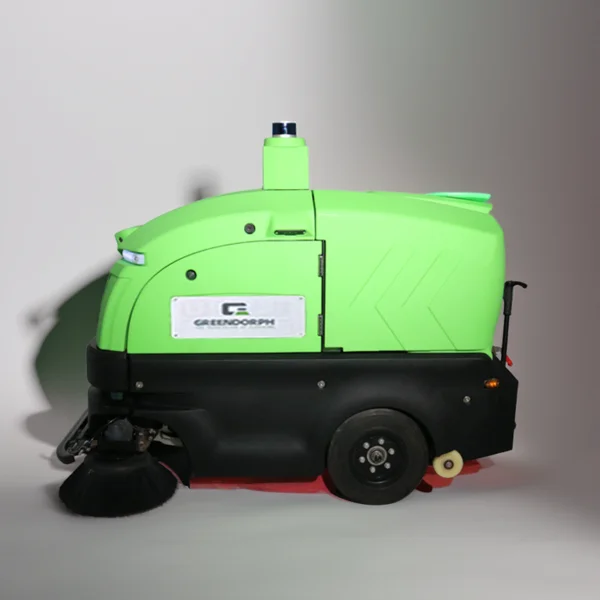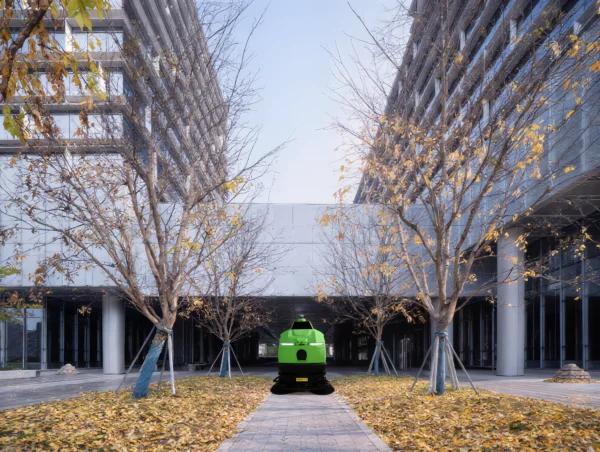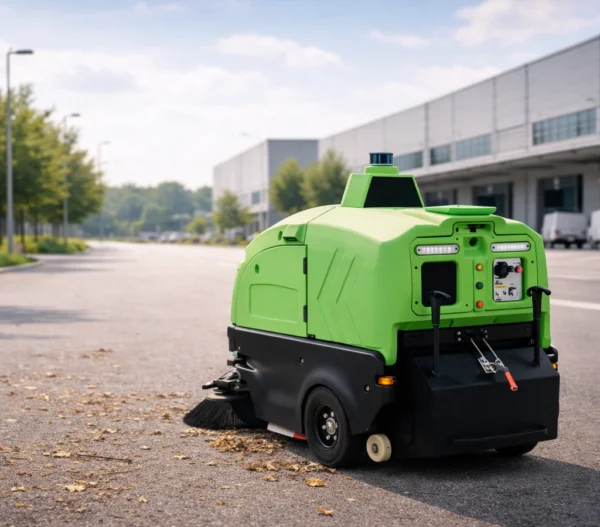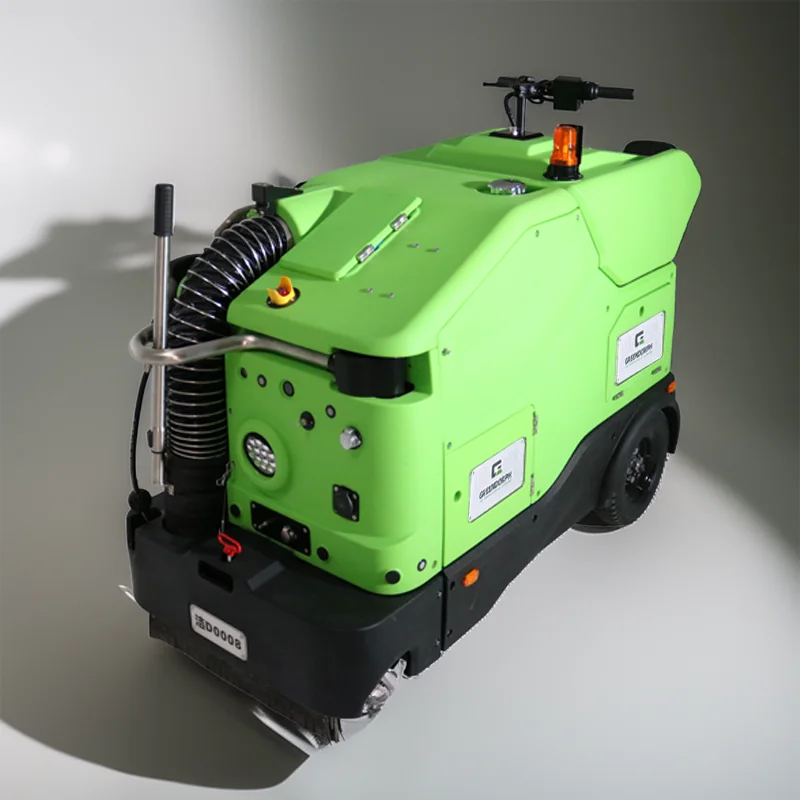
Preserving public pathways, outdoor plazas, and commercial walkways during quiet hours requires a careful balance between cleanliness standards and community acoustic comfort. Traditional cleaning practices often generate intense, localized noise that disrupts residential sleep patterns and violates strict municipal sound-level restrictions. Using a high-efficiency outdoor robot cleaner allows facility managers to clean expansive hardscape areas quietly and thoroughly during low-activity night shifts.
Selecting the right utility equipment involves looking beyond standard brush setups to study the physics of noise reduction and air movement. Heavy-duty vacuum motors and high-torque brush drives are the primary sources of noise in older, combustion-powered sanitation fleets. Transitioning to an advanced outdoor floor sweeper with electric motor controls helps public works directors lower their noise impact while keeping paths clean. Analyzing these physical and acoustic parameters facilitates that your municipal cleaning programs run quietly and efficiently every day.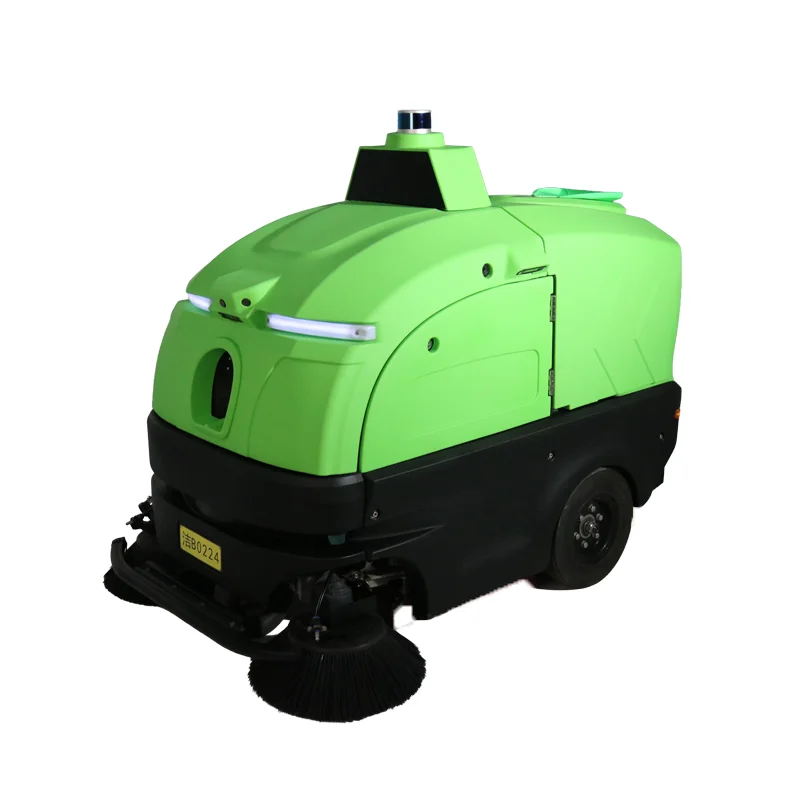
Understanding the Physics of Sound Waves in Urban Canyons
Tall brick buildings, concrete pavements, and glass storefronts create challenging acoustic environments that easily reflect and amplify loud engine sounds. Standard utility trucks with heavy diesel engines generate deep vibrations that bounce off hard building surfaces, carrying noise far into nearby residential rooms. This acoustic reflection often triggers noise complaints, forcing facility managers to delay essential cleanings and disrupt daily schedules.
Using specialized electric drive systems helps prevent these structural sound reflections, keeping your maintenance runs quiet and unnoticeable. Modern electric motors run without the loud piston explosions of gas engines, keeping noise levels well below typical neighborhood background sounds. Our team focuses closely on these physical acoustics to help communities design highly efficient, quiet cleaning programs.
Mitigating Fine Dust Dispersion with Silent Liquid Suppression
Dry sweeping across concrete plazas can easily launch massive particulate clouds, creating immediate breathing hazards for nearby residents. Effective dust management relies on multi-stage filtration networks working alongside fine water misting systems to trap micro-particles instantly. This wet-suppression mechanism binds fine silica dust inside the collection hopper, preventing it from venting back into the community.
Operating a high-capacity outdoor robot cleaner secures that fine dust is captured cleanly without creating airborne hazards along local walkways. High-efficiency fabric filters prevent fine particulate matter from escaping back into the public air during long cleaning shifts. Our engineering designs prioritize these sealed air pathways to protect local air quality and keep shared neighborhood walkways clean.
Lowering Engine Complexity to Control Fleet Noise Levels
Traditional sweeping vehicles with internal combustion engines feature complex hydraulic lines, direct drive belts, and fluid reservoirs that generate constant vibration. This mechanical friction creates high-frequency squeals and rattling noises that easily disrupt quiet residential areas. Transitioning to direct-drive electric systems simplifies the mechanical footprint, reducing these common noise sources and reducing overall vibration.
Using a highly efficient outdoor floor sweeper equipped with brushless electric motors drastically cuts down operational noise levels. Our technical design team removes unnecessary drive belts, making the machinery incredibly reliable and quiet during long night shifts.
Deploying Fully Automated Navigation for Independent Cleaning Cycles
Managing expansive properties with a lean maintenance workforce requires a thoughtful shift toward fully automated cleaning cycles. Traditional human-guided sweepers often skip pathways or fail to maintain consistent speeds, leading to uneven surface care and wasted energy. Utilizing smart navigation systems resolves this operational gap by allowing equipment to follow pre-mapped cleaning paths precisely.
Smarter Outdoor Cleaning, Fully Automated: Greendorph’s outdoor cleaning robots are engineered to handle large-scale outdoor environments with zero manual effort. Our automated utility platforms run autonomously across open plazas and park walkways, keeping public spaces clean with minimal oversight. This independent operation allows your grounds crew to focus on complex landscaping tasks while the machine sweeps quietly.
Streamlining Workflows to Reduce Long-Term Labor Costs
Persistent staffing shortages and high physical burnout make it increasingly difficult for grounds crews to maintain consistent daily cleaning schedules. Pushing manual collection carts across vast public spaces is exhausting, often leading to missed areas and slow cleanup times. Modern public works teams need highly flexible machinery that supports staff and automates repetitive sweeping paths easily.
Utilizing a quiet outdoor robot cleaner allows your team to cover massive areas in a fraction of the time with minimal physical effort. At Greendorph, we design our electric sweepers to handle demanding cleaning routes safely without putting workers in harm’s way. This automated approach allows you to run cleaning cycles during low-traffic night hours, helping you save on labor costs.
Conclusion
Caring for expansive public spaces requires a thoughtful shift away from outdated manual routines toward automated electric utility systems. Implementing a quiet, low-emission outdoor floor sweeper allows municipal managers to protect pavements, control fine dust, and reduce noise issues. These compact, battery-powered vehicles deliver exceptional cleanliness consistency across expansive public plazas while reducing annual repair and labor expenses. Our team remains fully dedicated to engineering the robust, sustainable electric tools required to support grounds crews and keep global smart cities pristine.