Keeping large areas clean requires a clear plan for equipment selection. Warehouses, industrial campuses, schools, and public spaces often face different types of dust and debris during daily operations. Manual cleaning may become difficult when the area is large or requires frequent maintenance.
Before purchasing cleaning equipment, buyers should review site conditions, cleaning frequency, surface types, and operation requirements. A proper evaluation helps companies select a suitable solution instead of focusing only on machine appearance or basic specifications.
What Should Buyers Check Before Choosing a Sweeper
The first factor to consider is the environment where the machine will operate. Different areas create different cleaning challenges. Indoor warehouse floors may collect dust, packaging materials, and small particles, while outdoor areas may have leaves, sand, and other debris.
Floor conditions also influence equipment selection. Smooth concrete surfaces, uneven outdoor paths, and high-traffic areas may require different cleaning methods. Buyers should understand the daily cleaning situation before comparing equipment options.
The size of the cleaning area is another important point. Large spaces usually require equipment with suitable operating time and cleaning capacity. A warehouse sweeper should match the working area so operators can organize cleaning tasks more efficiently.
Cleaning frequency should also be considered. Sites that need daily maintenance may require automated equipment to reduce repeated manual work. A clear understanding of these factors helps buyers create a practical purchasing plan.
Cleaning Performance Depends on More Than Sweeping Power
A sweeper’s performance is affected by several functions working together. Basic sweeping can remove visible waste, but dust control often requires additional methods to handle smaller particles and maintain cleaner surfaces. Different working environments may create different cleaning challenges, so buyers need to consider how each function supports actual site conditions.
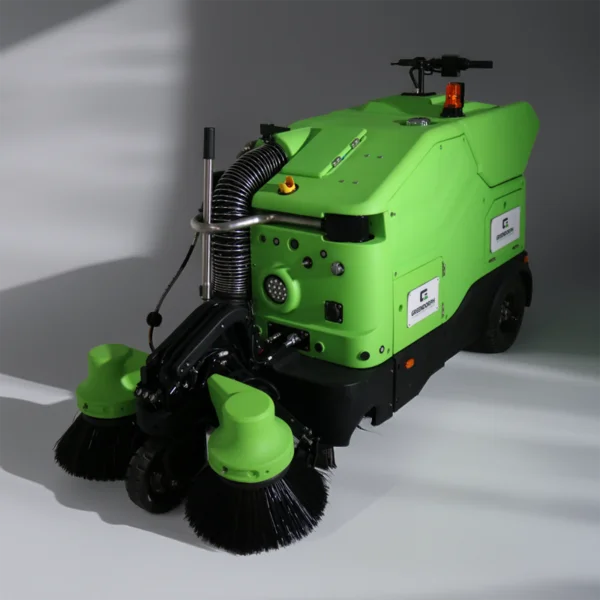
Suction functions can improve debris collection by removing fine dust left after sweeping. Airflow-assist technology can help move scattered materials toward the cleaning system, while misting spray may reduce dust during operation in suitable environments.
When evaluating a warehouse sweeper machine, buyers should review the complete cleaning process instead of looking at only one function. The combination of sweeping, collection, and dust control features can influence daily cleaning results. Factors such as floor layout, debris types, and cleaning frequency should also be considered during equipment comparison.
Operation time is another practical factor. Equipment used for large areas needs enough working duration to complete scheduled tasks. Reducing unnecessary charging interruptions can help improve cleaning arrangements and workforce planning. Maintenance access and operator training should also be included in the overall evaluation, as these details can affect long-term equipment use.
Why Automation Matters for Large Outdoor Areas
Automation has changed the way many organizations manage cleaning operations. For large outdoor spaces, autonomous equipment can reduce the need for constant manual operation and provide a more organized cleaning process.
However, automation should match the actual application. Buyers need to consider route planning, operating environment, maintenance requirements, and staff management methods before introducing new equipment.
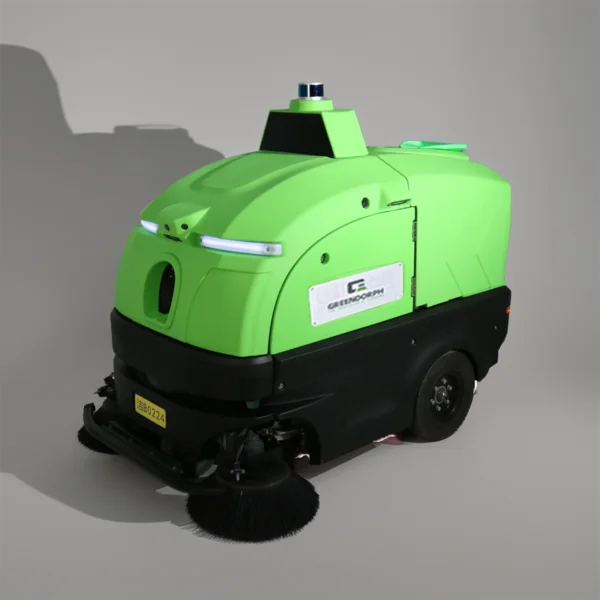
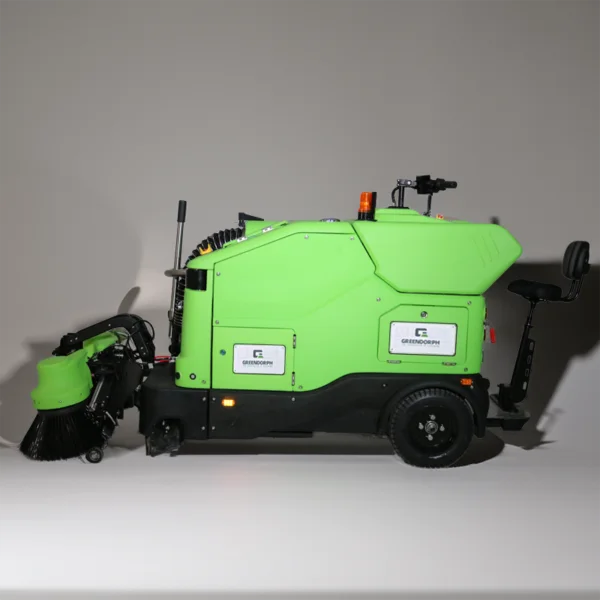
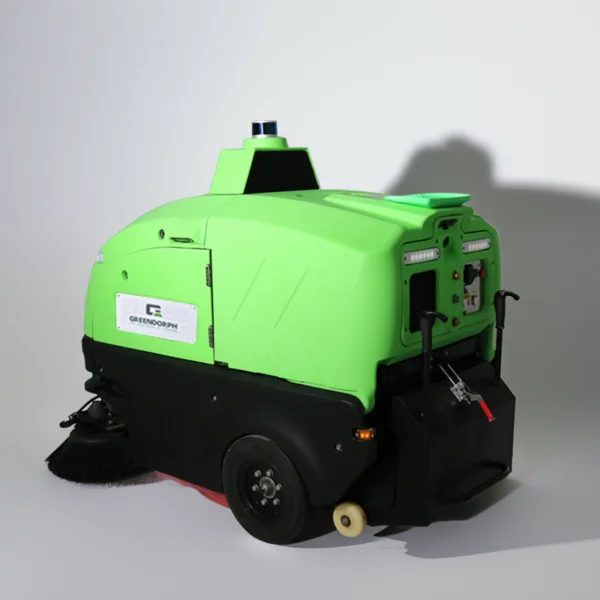
At Greendorph, we develop outdoor cleaning solutions based on different site conditions. Our Auto Sweeper YJ130 is a fully autonomous outdoor sweeper with a primary cleaning system and three auxiliary functions, including suction, airflow-assist, and misting spray.
The equipment is designed for large-area outdoor sanitation across parks, industrial campuses, sidewalks, schools, and similar environments. It can operate continuously for 6-8 hours and provides a practical option for locations that require regular outdoor cleaning.
How Product Features Match Different Application Scenarios
Different sites have different cleaning priorities. Parks may focus on removing leaves and outdoor debris, while industrial campuses may pay more attention to dust control and maintaining clean traffic areas.
For schools and public spaces, cleaning schedules may need to consider visitor movement and surrounding conditions. Equipment with suitable automation functions can help operators arrange cleaning work according to site requirements.
The cleaning efficiency of equipment is also an important reference. The Auto Sweeper YJ130 provides a cleaning efficiency of over 95% according to its product specifications, combining multiple cleaning functions to handle common outdoor sanitation needs.
When selecting equipment, buyers should compare product features with their own working conditions. A suitable warehouse sweeper machine should provide useful functions for the site instead of adding unnecessary complexity to daily operations.
A Practical Approach to Selecting Long-Term Cleaning Equipment
Choosing a floor sweeper is a process that involves environment analysis, function comparison, and operational planning. Buyers should consider cleaning requirements, machine capability, maintenance needs, and future usage conditions together.
We understand that different organizations have different expectations for cleaning equipment. Greendorph provides product solutions for customers evaluating outdoor cleaning applications and helps them review equipment features based on practical requirements.
A thoughtful selection process allows businesses and organizations to find equipment that fits their cleaning plans. By focusing on real operating conditions, buyers can make clearer decisions for dust and debris control while improving daily maintenance efficiency.