Outdoor route cleaning is not a single-condition task. Streets, parks, plazas, and service roads can differ in width, surface type, debris volume, pedestrian traffic, and access. A suitable machine should match these route details instead of being chosen only by size or appearance.
For B2B buyers, selection should begin with daily route conditions. Cleaning width, turning space, dust control, water use, debris type, and operator workload all affect practical performance. A clear route assessment helps teams choose equipment that fits routine work without adding unnecessary complexity.
Start With the Route Profile
The first step is to map the route. Buyers should record road width, narrow sections, slopes, curbs, corners, surface changes, and areas with frequent obstacles. A machine that performs well on an open square may be less suitable for a narrow park path or a service lane with parked vehicles.
Debris type also matters. Fine dust, leaves, sand, litter, and wet dirt place different demands on brushes, suction, flushing, and collection. When a route contains several debris types, a ride on sweeper with multiple cleaning functions can reduce the need to switch between separate tools during one shift.
Traffic patterns should also be reviewed. Public streets may require frequent stopping and precise edge cleaning, while closed industrial routes may allow longer uninterrupted runs. Understanding these differences helps buyers compare machines by route fit rather than by a single specification.
Match Cleaning Functions to Daily Tasks
Outdoor routes rarely need only dry sweeping. Dusty pavement may need misting, stained surfaces may need flushing, and scattered litter may require direct suction. Buyers should list the tasks that appear regularly and separate them from occasional work. This makes equipment comparison more practical.
For routes that change during the day, operating flexibility is useful. Manual control suits detailed areas, while assisted movement can reduce repeated effort on longer sections. Towed movement can also help when a machine needs relocation within a larger facility or maintenance zone.
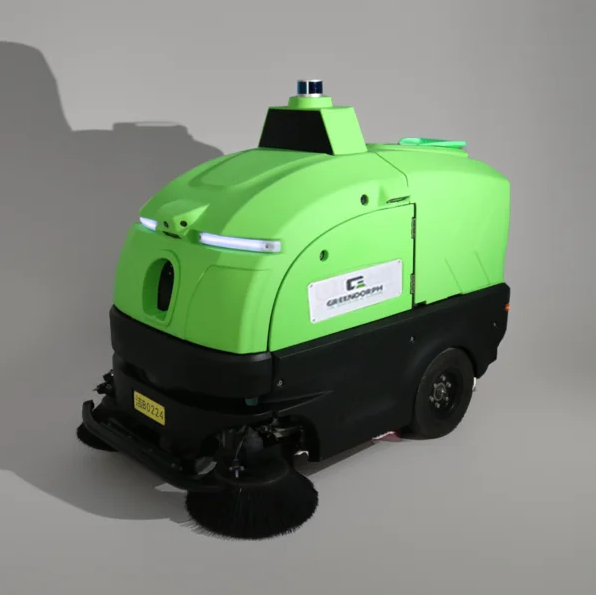
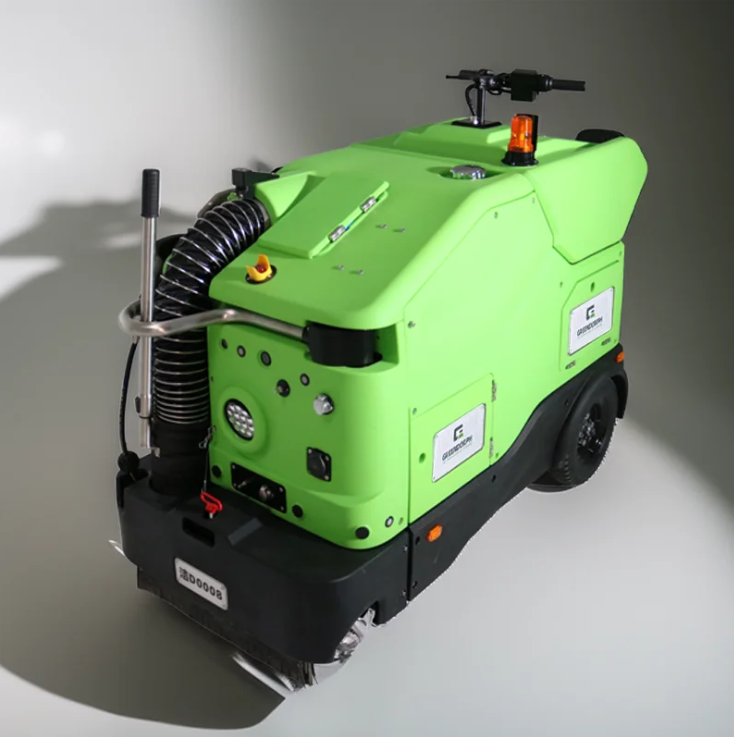
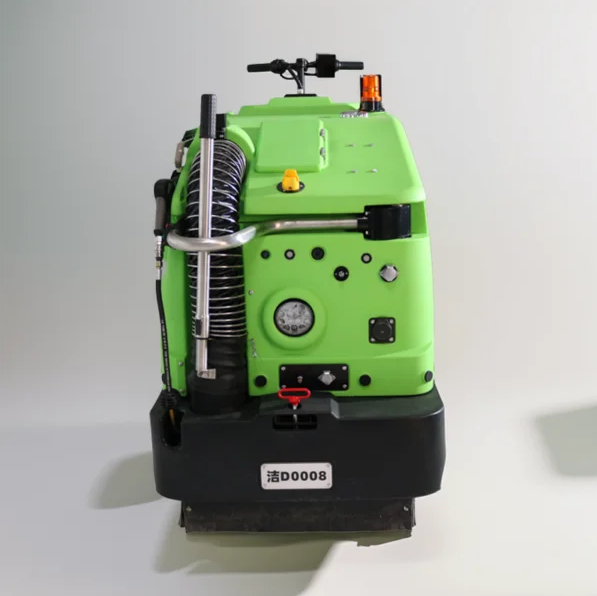
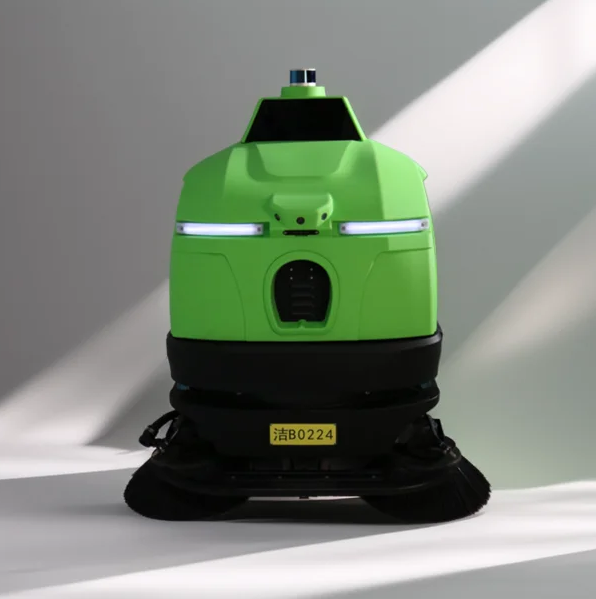
Our Omniclean Urban Street Sweeper YJ80 was developed around this mixed-task approach. Greendorph configures the machine with manual operation, auto-follow, and towed traction modes. This allows crews to choose a working method according to the route instead of using one fixed operating pattern.
Consider Dust, Water, and Debris Control Together
Dust management is important on outdoor roads because sweeping can move fine particles back into the surrounding area. Water spray and misting can help control this issue, but buyers should also consider tank capacity, refill frequency, and the distance between water points on the planned route.
The YJ80 combines vacuum collection, high-pressure flushing, water-spray cleaning, turbine blowing, targeted tube collection, and dust-suppression misting. Its water tank holds 120 L, while the garbage container holds 100 L. The high-pressure water gun operates at about 15 MPa, giving crews another option for localized washing tasks.
This combined structure can be useful when a floor sweeper ride on machine is expected to handle more than loose dry debris. Instead of judging the unit only by sweeping performance, procurement teams can compare how suction, water, blowing, and collection functions support the actual route.
Check Maneuverability and Edge Access
Cleaning width affects productivity, but wider is not always better for every route. Buyers should compare the normal path width with entrances, turns, tree pits, benches, curbs, and parked equipment. A wider working path is useful only when the machine can still move through restricted sections.
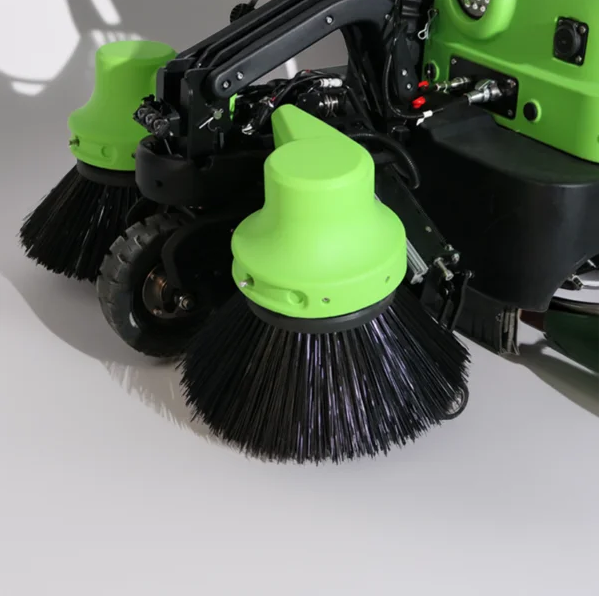
The YJ80 uses an extendable side brush that expands the cleaning width to 140 cm. This supports edge work on streets, parks, and plazas while keeping the machine practical on routes with changing widths. Its stated cleaning efficiency reaches 10,800 m²/h under suitable working conditions.
Obstacle sensing also deserves attention in mixed outdoor areas. Buyers can compare lidar, cameras, ultrasonic sensors, and other sensing methods by the conditions they face. The goal is to understand how the machine detects people, roadside objects, low obstacles, and changing surroundings.
Review Operator Workflow and Fleet Management
A machine can match the route technically but still create inefficient routines if operation is difficult. Buyers should look at how staff start tasks, move between zones, refill water, empty debris, and handle temporary interruptions. These workflow details influence actual daily output.
The YJ80 uses UWB positioning for its auto-follow function. The operator carries a receiving module that communicates with the base module on the vehicle. The follow angle is ±60 degrees, with a working distance of 1–6 m. This can support cleaning tasks where staff need to move with the machine.
Remote coordination is also relevant for larger sites. We recommend checking how supervisors start tasks, view status, and coordinate units across zones. For buyers comparing a second ride on sweeper, this control layer can be considered together with route size, staffing, and shift organization.
Build the Selection Around Real Route Conditions
The right outdoor cleaning machine should be selected from route data, not from a general product category. Buyers should compare surface conditions, debris, cleaning width, water access, turning space, operating modes, and daily maintenance before making a final decision.
At Greendorph, we see the YJ80 as one option for routes that need combined sweeping, suction, washing, blowing, and assisted movement. A floor sweeper ride on solution becomes more useful when its functions match the actual work sequence, helping B2B operators build a clearer and more practical cleaning process.