Selecting cleaning equipment should start with the floor, not with the machine itself. Smooth concrete, textured paving, coated floors, and outdoor hard surfaces create different demands. Brush contact, water use, debris type, edge access, and surface condition all affect the choice.
For B2B buyers, matching equipment to the actual floor can reduce repeated cleaning and make daily maintenance easier. The practical question is not which machine has more functions, but which configuration fits the surface, dirt, route, and working cycle.
Start With the Surface Structure
Smooth sealed concrete is common in warehouses, production buildings, and logistics areas. This surface usually allows stable brush contact and predictable movement. Buyers should still check whether the floor carries fine dust, packaging scraps, tire marks, or liquid residue.
Textured concrete and paving blocks require a different approach. Dust and small debris can settle into joints and shallow recesses. Sweeping width, brush reach, and edge contact become important. A floor cleaning machine for industrial use should be assessed for how well it follows uneven boundaries while keeping stable contact with the surface.
Coated floors need more attention to cleaning pressure and water use. Aggressive brushing may not suit some finishes, while too little contact may leave marks. Before procurement, we recommend checking coating type, cleaning frequency, contamination level, and whether the site allows wet cleaning.
Match Cleaning Functions to the Dirt
Dry dust, leaves, sand, and light packaging waste are mainly removal problems. Sweeping systems are useful when loose debris is spread across large areas. In outdoor zones, brush width and edge cleaning can affect how often workers need to return with handheld tools.
Oily marks, sticky residue, and compacted dirt usually need stronger surface treatment. Water spraying, washing, or pressure cleaning may be added when the floor material can tolerate it. The goal is to select functions that correspond to the dirt found on site.
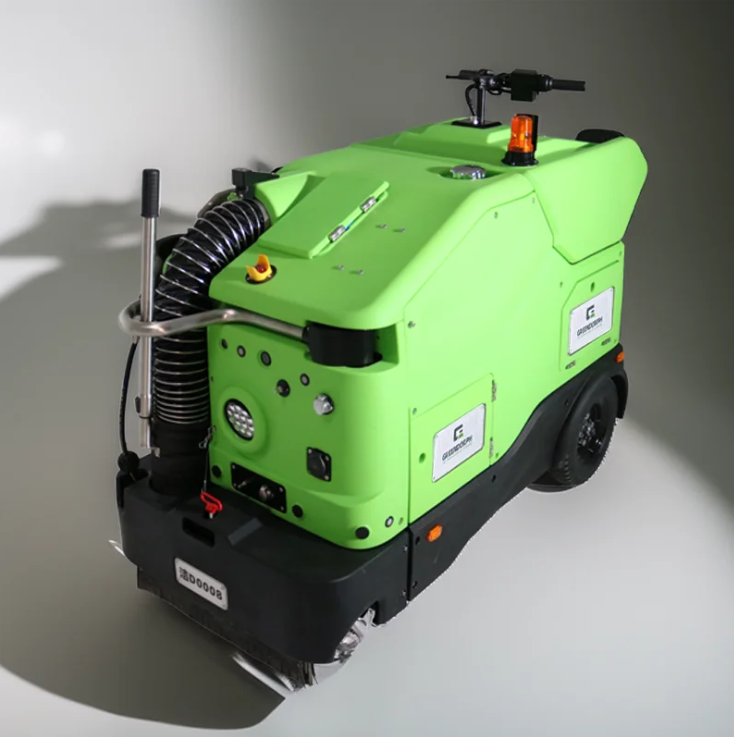
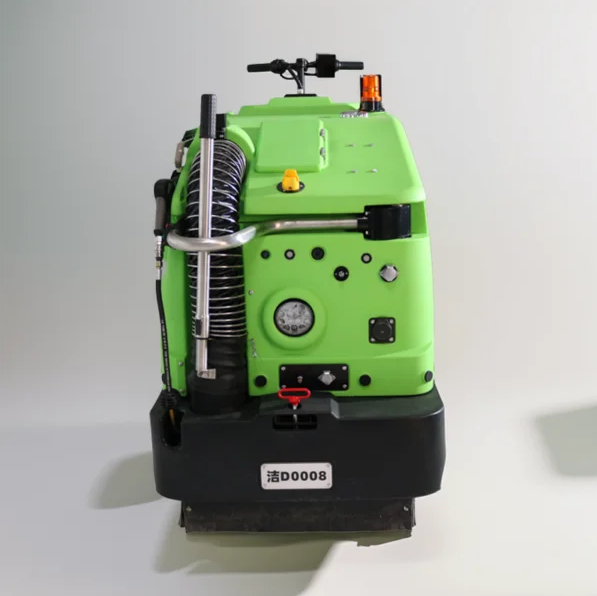
This is where equipment configuration becomes important. At Greendorph, we use the YJ80 as one example of a multi-function platform. It combines six cleaning functions and supports self-following operation. Its retractable side brush can extend the cleaning width to 140 cm, while the high-pressure water gun works at about 15 MPa.
Indoor and Outdoor Floors Create Different Demands
Indoor industrial floors usually have tighter travel paths, fixed shelving, workstations, and pedestrian activity. Turning space matters, along with blind corners and narrow passages. Buyers should evaluate machine width, obstacle detection, and how cleaning fits around normal production activity.
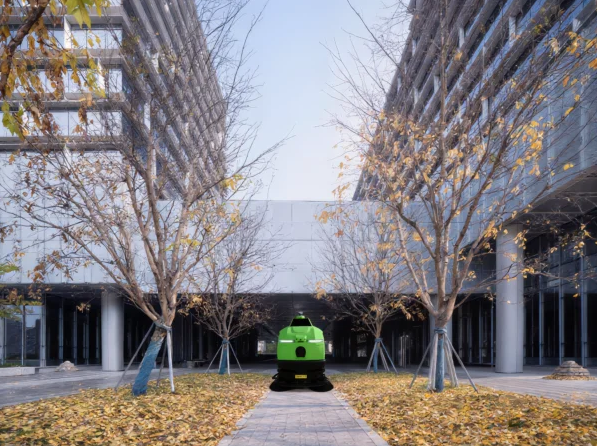
Outdoor surfaces create other challenges. Roads, parks, squares, loading yards, and paved service areas may contain curb edges, wider debris variation, and changing route conditions. Water control and dust suppression can also matter more. Surface selection therefore needs to consider floor texture and surrounding conditions.
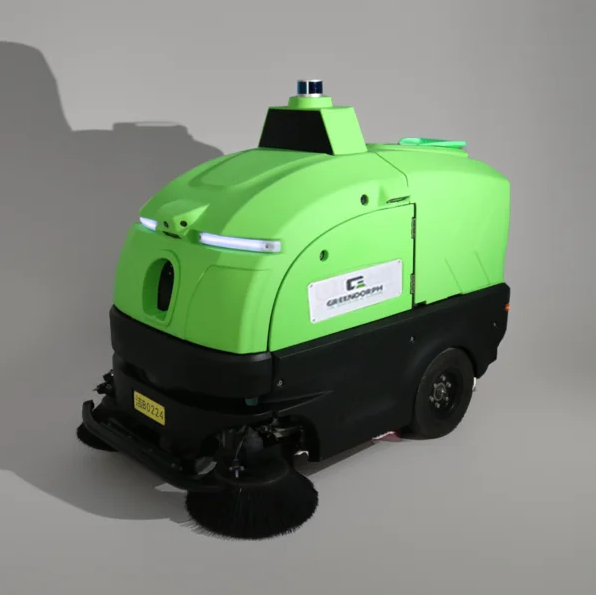
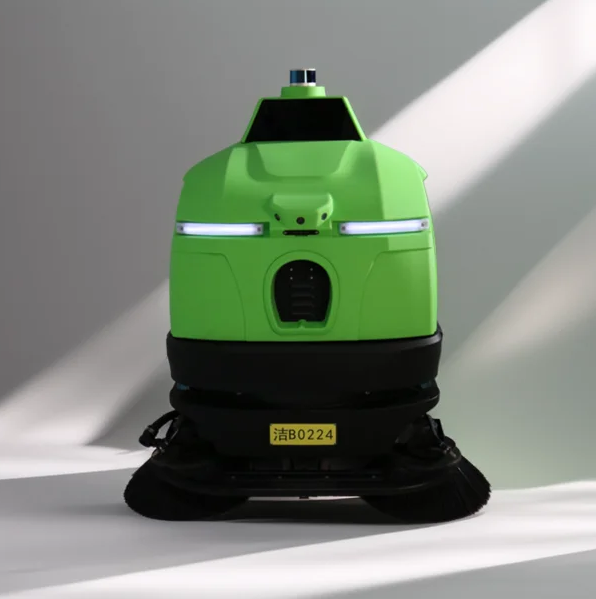
For large outdoor sites, autonomous operation may change the selection process. The YJ130 uses multi-line LiDAR, single-line LiDAR, 3D cameras, ultrasonic sensors, and collision sensors for environmental perception. It also supports breakpoint resume, recording cleaning progress before charging, refilling water, or emptying the waste bin, then continuing from the interrupted point.
Edge Access Can Change Cleaning Efficiency
Floors are rarely open rectangles. Columns, curbs, racks, walls, drains, equipment bases, and parked vehicles create cleaning edges that consume time. A machine may cover the center area quickly but still leave manual work if it cannot approach boundaries closely.
For this reason, an industrial cleaning machine should be evaluated by route behavior as well as working width. The YJ130 can clean with a minimum edge gap of 10 cm. This helps buyers estimate how much follow-up work may remain after autonomous cleaning.
Route complexity also affects mapping and deployment. Buyers should ask how maps are created, how lost positioning is handled, and how tasks recover after interruption. In our YJ130 workflow, maps can be created remotely or on site. For a general scenario, mapping, task deployment, testing, and final training can usually be completed within about two to three days.
Capacity Should Match the Working Cycle
Tank and waste-bin capacity should match floor area and dirt volume. A machine that stops too often for water or waste handling may not fit a long cleaning route. Capacity should be reviewed together with route length and cleaning intensity.
The YJ80 has a 120 L water tank and a 100 L waste bin, with a stated operating time of 6–8 hours. It can work in self-following mode through a UWB positioning module, with a following range of 1–6 m and an angle range of ±60°.
The YJ130 uses a 120 L water tank and a 150 L waste bin. At Greendorph, we position this model for autonomous outdoor cleaning tasks where route continuity, obstacle sensing, and remote operation are more central than close worker-machine cooperation.
Build the Choice Around the Floor
Different floor types do not need the same cleaning strategy. Smooth indoor concrete may favor stable sweeping and controlled washing. Rough outdoor paving may require stronger edge work, dust control, and flexible obstacle handling. Coated floors may need gentler contact and more careful water management.
A floor cleaning machine for industrial use should therefore be chosen after reviewing surface texture, dirt type, route shape, cleaning frequency, tank capacity, and operating mode together. A clear floor assessment gives procurement teams a practical basis for comparing machines and turns equipment specifications into a cleaning plan that fits the real site.