Residential property projects have different cleaning needs from factories or public facilities. Floors may include tile, stone, concrete, and coated surfaces. For property managers, choosing a residential floor scrubber machine should start with the real cleaning route, not only with machine size or appearance.
The same project may involve indoor and semi-outdoor areas. Buyers need to compare cleaning width, maneuverability, water capacity, obstacle handling, operating time, and maintenance. Unlike small household cleaning devices, equipment used in managed residential properties must support longer routes, higher cleaning frequency, and more structured staffing arrangements.
Start With the Cleaning Route
The first step is to map where the machine will work. Narrow corridors need easy turning, while lobby areas may require wider cleaning paths. Property teams should note thresholds, slopes, elevators, corners, and furniture positions. These details affect whether a machine moves smoothly through the route.
Floor type matters as well. Tile, polished stone, painted concrete, and outdoor paving respond differently to brushes, water flow, and cleaning pressure. Buyers should ask how the machine handles each surface.
Cleaning frequency is another factor. A busy residential project may need several cleaning cycles, while quieter properties may use the machine at fixed times. This affects battery requirements, tank size, charging plans, and operator workload.
Match Cleaning Capacity to Site Size
Machine capacity should match the property scale. A wider cleaning path can help in open areas, but it may be less convenient in compact spaces. Smaller units are often easier to move through doorways and service passages.
Water and waste capacity influence working time. Frequent refilling or emptying can interrupt a cleaning route. Buyers should estimate how much floor area can be covered before the machine needs service. This is more useful than comparing tank size alone.
Battery endurance should be reviewed with the daily schedule. If a machine must clean several zones in one shift, charging time and route planning become important. A residential floor scrubber machine should fit the cleaning cycle rather than forcing staff to redesign their routine.
Automation Changes the Labor Model
Automation can reduce repeated manual driving, but it also changes how work is organized. Property teams need to think about route setup, task assignment, obstacle handling, and supervision. The value comes from making routine work more consistent, not simply from removing an operator.
When an automatic floor scrubber for home is used as a reference, the comparison should still focus on commercial property needs. Multi-zone routing, remote control, repeatable tasks, and safe response around people matter more for B2B use.
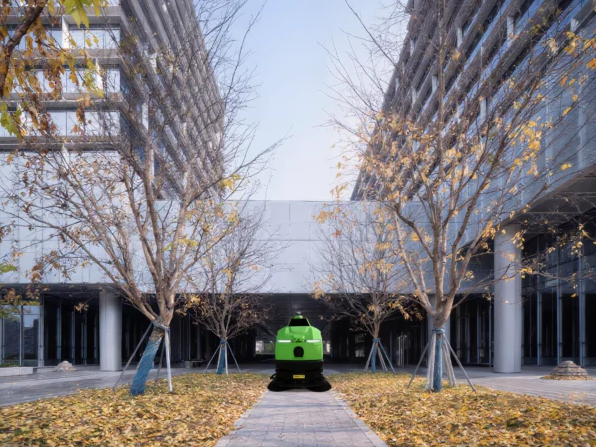
At Greendorph, we develop cleaning robots for professional property and outdoor cleaning scenarios. Our approach combines automated movement with practical cleaning functions, so project teams can evaluate where autonomous operation is useful and where staff support is still more efficient.
Sensor Design Matters in Shared Spaces
Residential properties are shared environments. People, pets, parked bicycles, planters, and temporary objects may appear on the route. Cleaning equipment therefore needs to detect changes and react without making operation complicated for staff.
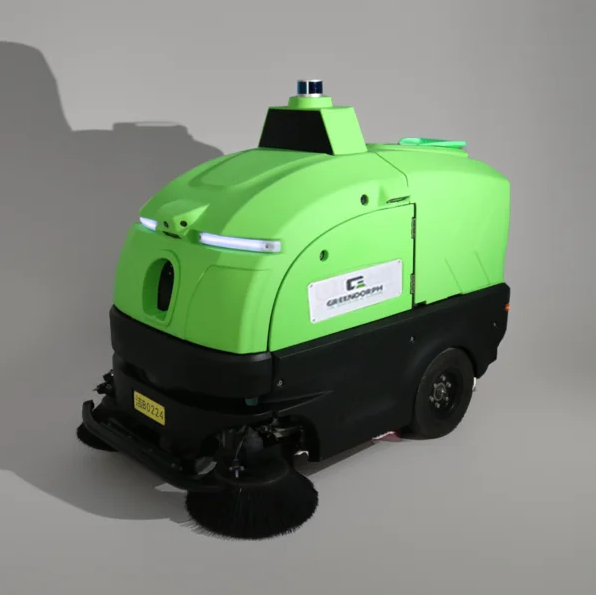
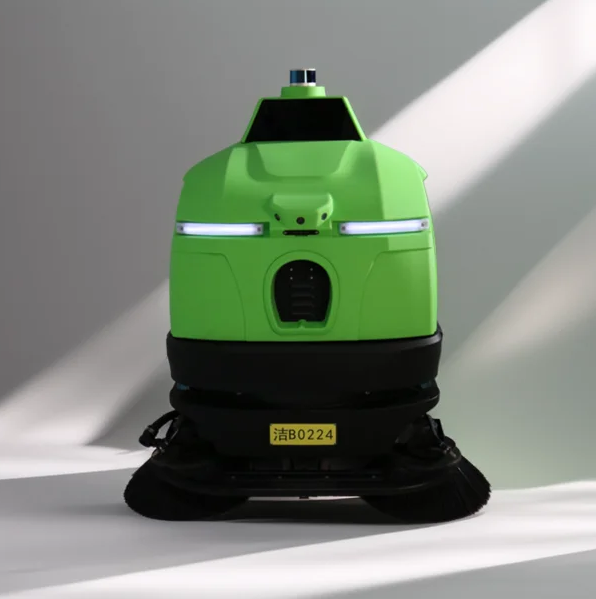
Our YJ80 uses multi-line LiDAR, single-line LiDAR, a 3D camera, and ultrasonic sensors for obstacle detection. Its self-following function uses UWB positioning. The following range is 1 to 6 meters within a ±60-degree angle.
The YJ80 also combines six cleaning functions and supports high-pressure washing at about 15 MPa. It has a 120 L water tank, a 100 L waste bin, and a working time of 6 to 8 hours. Its retractable side brush can extend the cleaning width to 140 cm.
These details matter because property managers need to compare how a machine responds to real spaces, not only how it performs in a straight-line test. Sensor coverage and turning space can affect daily use as much as cleaning speed.
Maintenance and Deployment Affect Daily Use
Daily maintenance should be easy to understand. Property teams should check how often brushes, filters, tanks, and cleaning parts need attention. They should also review whether staff can complete routine checks without special tools.
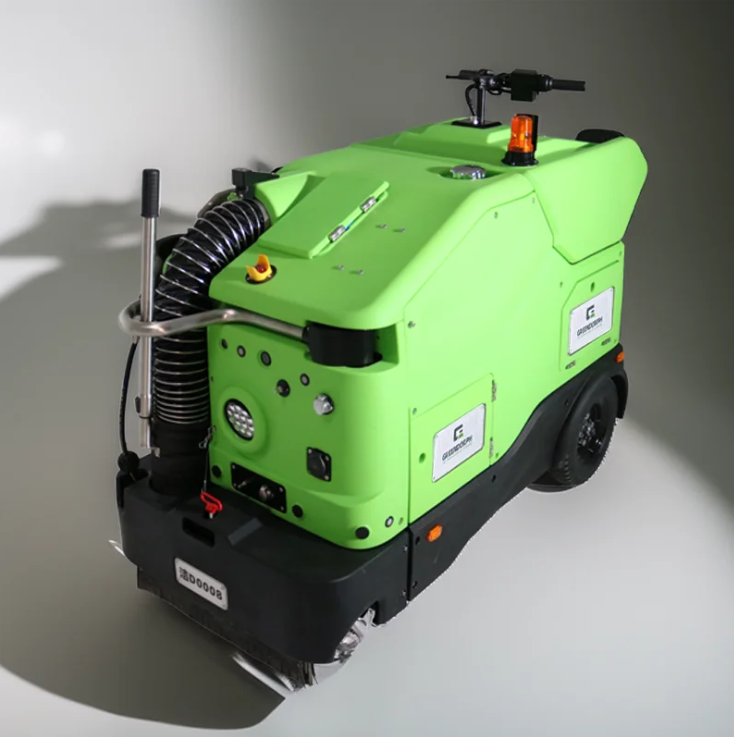
Remote management can help multi-building projects. The YJ80 supports a mobile app and cloud platform for remote control and multi-machine scheduling. This can help teams assign tasks across different areas during the same shift.
For projects that need more autonomous outdoor operation, our YJ130 adds breakpoint resumption, remote and on-site mapping, spray dust suppression, and close-edge cleaning with a minimum gap of 10 cm. Its waste bin is 150 L and its water tank is 120 L.
This is where Greendorph can be considered as one option within a wider equipment evaluation. The machine should still be compared against site size, route complexity, maintenance capacity, staffing, and cleaning frequency before a project decision is made.
Making the Final Choice
Property managers can make the comparison clearer by scoring each machine against the same site criteria. Cleaning width, sensor design, tank capacity, battery endurance, route planning, remote management, and maintenance time should be reviewed together.
The final choice should match the property rather than follow a single specification. A compact project may value maneuverability, while a larger residential estate may place more weight on endurance, scheduling, and autonomous task recovery. Comparing these factors in the same framework gives buyers a clearer view of how the equipment will fit daily property operations.