Logistics and distribution sites generate dust, packaging fragments, leaves, tire debris, and loose waste throughout the day. These materials often collect around loading bays, outdoor staging areas, access roads, staff passages, and vehicle waiting zones. Cleaning plans therefore need to match traffic flow, surface type, working hours, and the amount of debris produced in each zone.
For B2B operators, the goal is not simply to clean more often. A practical plan should reduce repeated manual work while keeping vehicle routes open and busy areas easier to manage. A warehouse sweeper can support this process when it is assigned to suitable outdoor and semi-open areas around the facility.
Cleaning Demands Around Logistics Facilities
Warehouse sites usually combine several operating environments in one property. Trucks enter through gates, forklifts move between loading points, staff cross outdoor passages, and goods may wait in temporary staging areas. Dust and waste can therefore build up differently across the same site.
Loading zones often need frequent removal of small fragments, dirt carried by tires, and loose packaging material. Outdoor roads may collect leaves, sand, and fine particles. Perimeter walkways also need routine cleaning because they connect staff areas, entrances, and service points.
This is why warehouse sweeping should be planned by zone rather than treated as one repeated route. Managers can divide the site into high-frequency areas, scheduled maintenance areas, and locations that only need periodic attention. This makes machine deployment easier to coordinate with transport activity.
Where Autonomous Sweeping Fits the Site
Autonomous equipment is useful when cleaning routes are repetitive and the working area can be clearly mapped. Distribution centers often have recurring road patterns around loading yards, gate areas, outdoor storage zones, and internal campus roads. These are suitable places to consider scheduled machine operation.
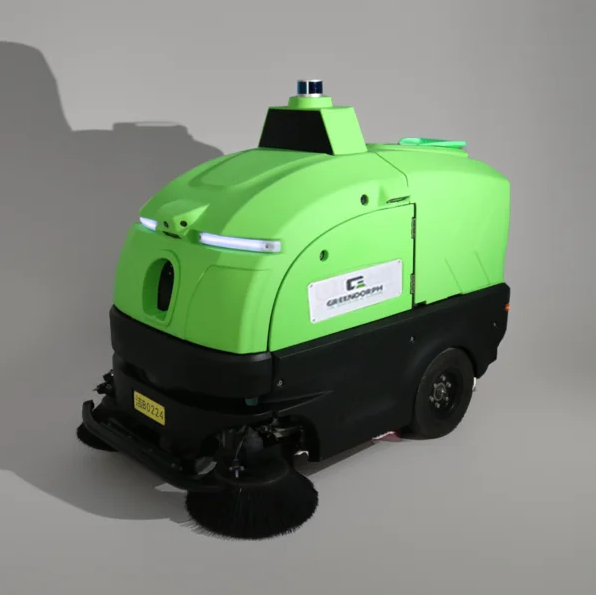
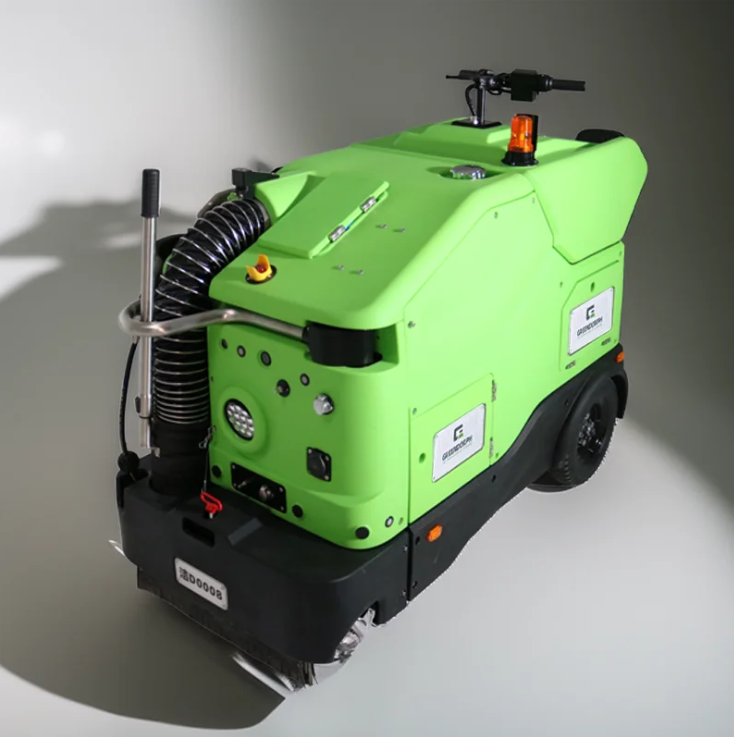
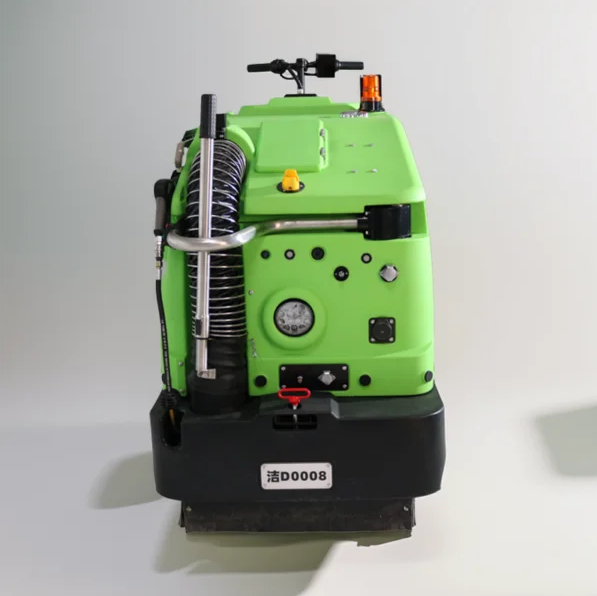
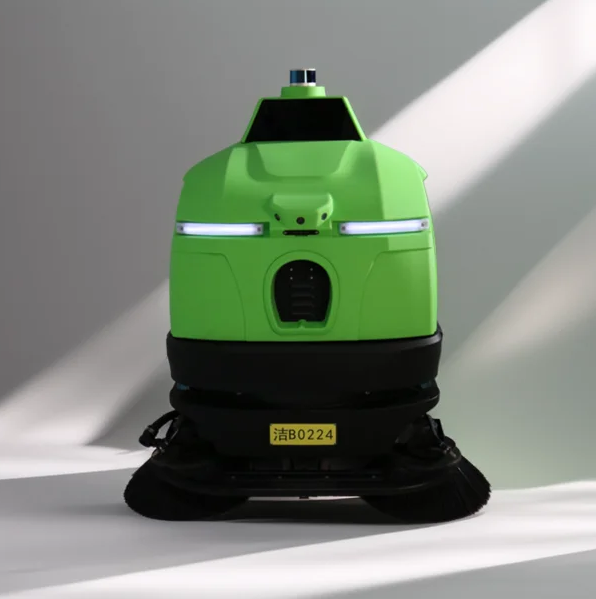
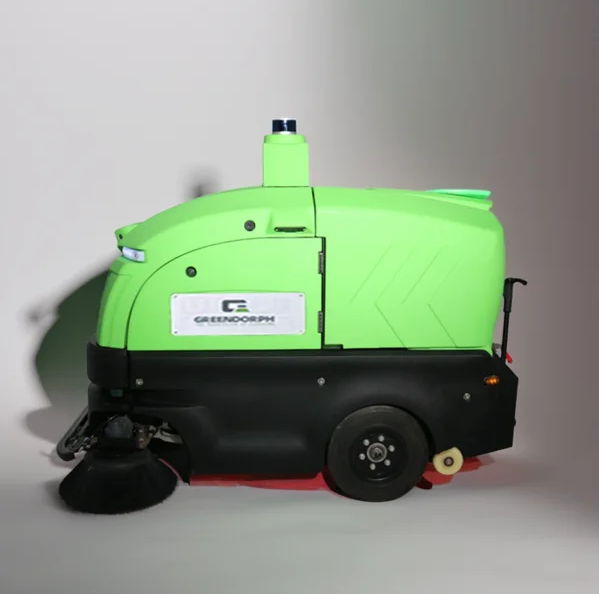
The Auto Sweeper YJ130 is designed as a fully autonomous outdoor sweeper. Its main cleaning system is supported by suction, airflow-assist, and misting spray functions. Our Auto Sweeper YJ130 delivers over 95% cleaning efficiency and can operate continuously for 6–8 hours, making it suitable for recurring outdoor cleaning tasks around warehouses and logistics facilities.
At Greendorph, we position this type of equipment for large-area outdoor sanitation rather than presenting it as a replacement for every indoor cleaning process. Applications can include industrial campuses, sidewalks, schools, parks, and similar open environments. For logistics sites, this means it can be considered for outdoor areas connected to warehouse operations.
A warehouse sweeper used in these zones can reduce the need for repeated manual passes on long routes. It can also help managers separate routine outdoor cleaning from more detailed indoor work, where different equipment or manual methods may still be required.
Matching Routes to Daily Operations
Route design should begin with the movement of trucks, forklifts, staff, and goods. Cleaning during peak loading periods may create unnecessary interaction with vehicles. A better schedule places routine sweeping in quieter windows or assigns routes that avoid active loading lanes.
Debris type also matters. Fine dust may need suppression, while larger fragments may require stronger collection performance. The misting spray function on YJ130 can support dust control during outdoor operation. Its suction and airflow-assist functions add flexibility when the route contains mixed surface debris.
For warehouse sweeping, operators should also review turning space, route width, curb edges, charging arrangements, and access restrictions. These details affect whether an autonomous machine can complete a route without frequent intervention. The cleaner the route design, the easier it is to build repeatable operating routines.
Our view is that automation works better when it follows site rules rather than forcing the site to adapt around the machine. Mapping, operating windows, safety zones, and maintenance checks should all be included in the cleaning plan before regular deployment begins.
How B2B Buyers Can Evaluate Suitability
Procurement teams should first define the areas they want the machine to cover. A logistics park with long perimeter roads and large outdoor staging zones has different needs from a compact warehouse with mainly indoor aisles. The machine should be matched to the real operating environment.
Cleaning efficiency and runtime are also practical factors. YJ130 is specified for more than 95% cleaning efficiency and 6–8 hours of continuous operation. Buyers can use these figures together with route length and cleaning frequency to estimate how the machine may fit into a daily sanitation schedule.
At Greendorph, we also recommend looking at how autonomous cleaning will connect with existing facility routines. Staff still need clear procedures for route planning, charging, waste handling, inspection, and response to unusual site conditions. Automation works as part of an operating process, not as an isolated purchase.
A Practical Role in Modern Distribution Sites
Large logistics properties need cleaning methods that match constant vehicle movement and repeated outdoor use. Autonomous sweeping can be useful where routes are stable, debris is predictable, and cleaning tasks occur on a regular schedule. It can help reduce repetitive manual work while keeping outdoor service areas under routine control.
The right approach is to define where automation adds value and where other methods remain more suitable. By separating outdoor routes, loading zones, access roads, and detailed indoor tasks, facility teams can build a cleaner and more manageable workflow without treating one machine as the answer to every cleaning requirement.