Smart cities are changing how public cleaning work is planned. Streets, plazas, transport areas, parks, and commercial spaces now require more flexible schedules and clearer task control. Cleaning equipment must deal with mixed traffic, changing obstacles, different surfaces, and large working areas. For this reason, floor cleaning machines are becoming part of a wider urban operations system rather than being treated as isolated tools.
For B2B buyers, innovation is useful only when it improves real work. Route continuity, obstacle response, remote supervision, water use, waste handling, and deployment time can all affect daily cleaning costs. Smart-city projects therefore need equipment that combines cleaning performance with practical control methods.
Urban Cleaning Is Becoming a Connected Task
Traditional cleaning plans often divide work by area and labor shift. Smart-city projects add another layer because machines, operators, routes, and digital platforms may need to work together. A suitable system should make task assignment easier without creating unnecessary operating steps.
Large outdoor sites also contain different cleaning zones. Open plazas may need wide coverage, while curbs and edges require closer control. Narrow passages, parked objects, and temporary barriers can change the route during the day. Equipment selection should therefore start with the site map and actual cleaning process.
Automation can help with repetitive routes, but full autonomy is not required in every location. Some projects benefit more from human-machine cooperation. The choice depends on route complexity, staffing, cleaning frequency, and how often operators need to handle spot cleaning or washing.
Route Continuity Matters in Large Public Areas
A cleaning machine may need to stop for charging, water filling, or waste-bin emptying. If the system loses all task progress after each stop, operators may spend extra time restarting routes. Breakpoint continuation can make repeated outdoor cleaning more practical.
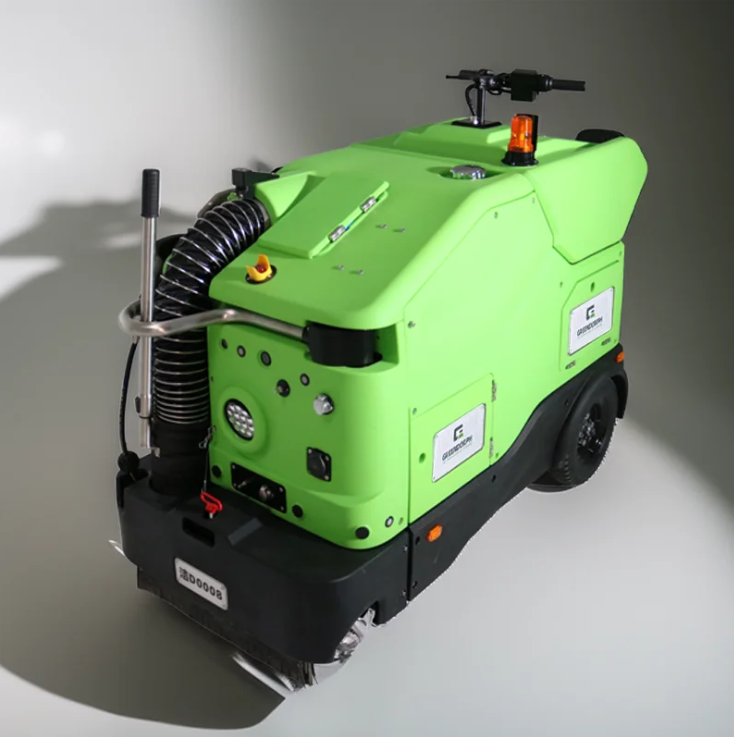
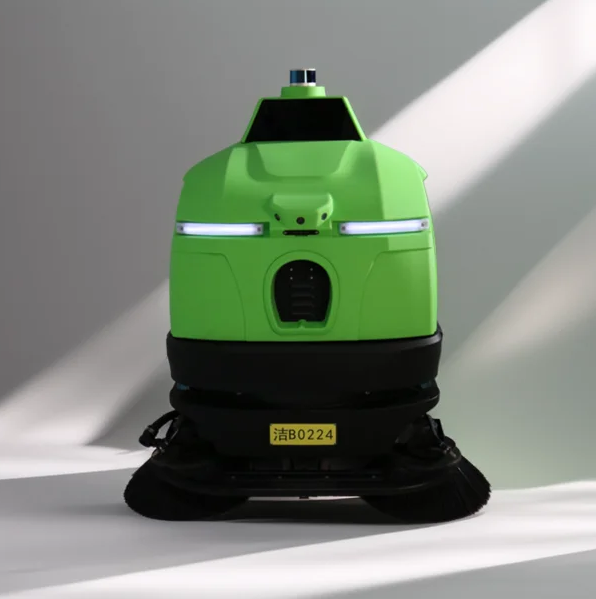
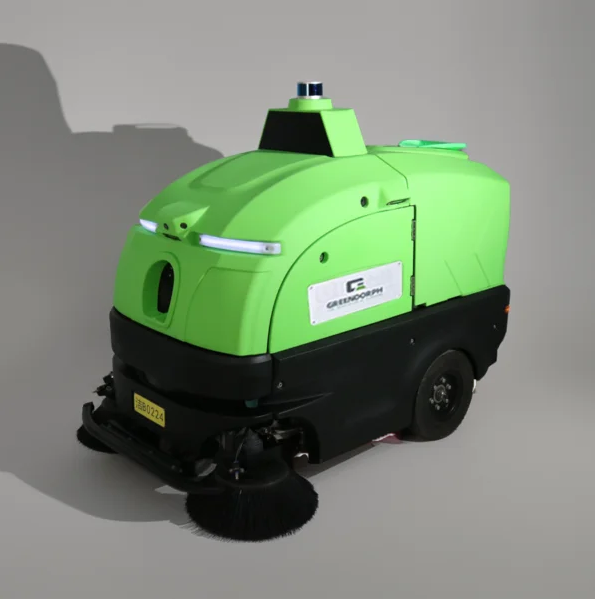
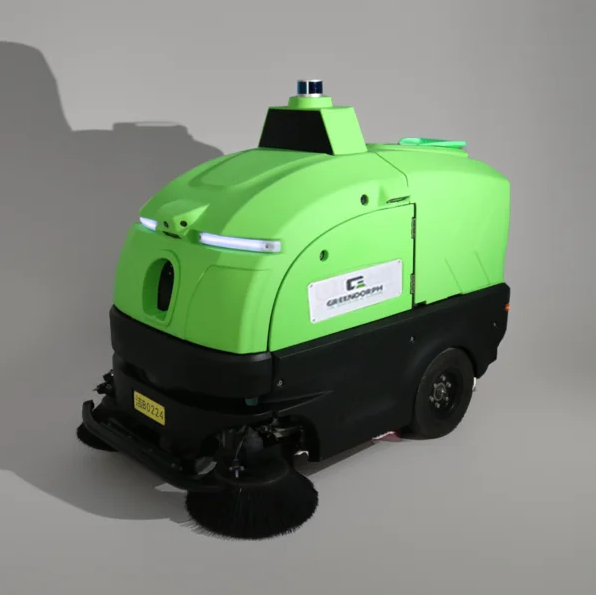
Our YJ130 records cleaning progress when service is required. After the machine returns to working condition, it can continue from the interrupted point. It also supports remote mapping and on-site mapping, which gives project teams two ways to prepare routes for different environments.
In a general scenario, mapping, task deployment, testing, training, and handover can usually be completed within about two to three days. This type of deployment process can be useful when urban operators need to introduce autonomous cleaning without adding complicated line marking or positioning procedures.
Environmental Sensing Supports Flexible Movement
Public spaces are rarely static. Pedestrians, curbs, low objects, temporary signs, and parked items may appear during a cleaning shift. Machines working in these areas need to detect their surroundings and adjust movement instead of relying only on a fixed path.
YJ130 combines multi-line LiDAR, single-line LiDAR, 3D cameras, ultrasonic sensors, and collision sensors. Its perception system supports 150-meter long-range recognition, 50-meter medium-range detection, and 1-meter close-range sensing. The front 3D camera can also detect low obstacles near the ground.
When buyers compare floor cleaning machines, sensing should be reviewed together with route design and operating speed. More sensors do not automatically solve every site problem. Their value depends on how detection, response, task recovery, and remote support work together during daily operation.
Human-Machine Cooperation Fits Mixed Cleaning Work
Some cleaning jobs require an operator to move between sweeping, washing, and local treatment. In such cases, self-following equipment can reduce repeated repositioning while keeping staff directly involved in the task.
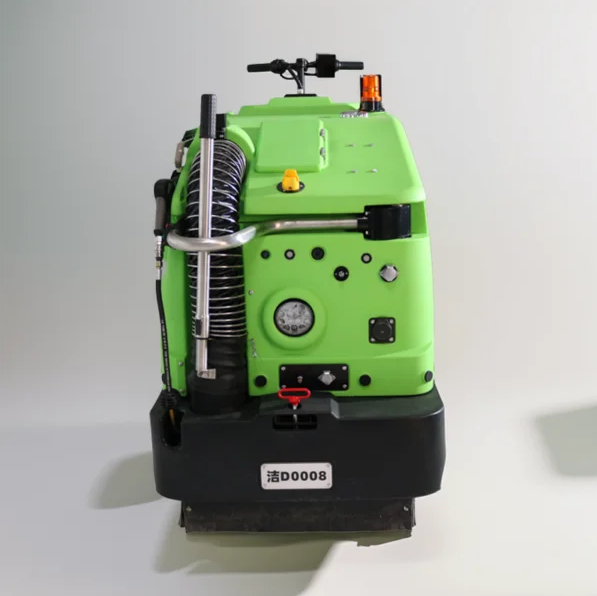
Our YJ80 uses UWB positioning for its self-following mode. The operator carries a receiving module that communicates with the machine. The following angle is within ±60 degrees, and the operating distance is about 1 to 6 meters. This supports work where staff need the machine to move with them.
The model combines six cleaning functions. Its high-pressure washing pressure is about 15 MPa. The water tank holds 120 liters, while the waste bin holds 100 liters. A retractable side brush expands the cleaning width to 140 cm, and the stated cleaning efficiency is 10,800 square meters per hour.
Remote Supervision Changes Fleet Management
Cleaning projects may involve several machines working across different zones. Remote tools can help managers distribute tasks and check operating status without staying beside each unit. This can be useful for campuses, public facilities, industrial parks, and other managed spaces.
YJ80 can connect to a mobile app and cloud platform for remote control and multi-machine scheduling. For Greendorph, this type of connection is part of a broader approach to smart cleaning: some routes may suit autonomous operation, while other tasks still benefit from direct staff involvement.
B2B buyers should therefore compare the complete workflow. Mapping, sensing, tank capacity, cleaning width, task recovery, remote control, maintenance access, and operator training all influence whether a machine fits the intended site. Smart functions have more value when they reduce specific operating steps.
Practical Innovation for the Next Stage of Smart Cities
Smart-city cleaning is not simply about making machines move without drivers. It is about matching automation to real routes, workloads, service intervals, and staffing plans. A capable floor scrubber manufacturer should help project teams evaluate these factors together rather than focus on one technical feature.
This October, Greendorph is also preparing to participate in Interclean Shanghai 2026, held from October 28 to 30 at the Shanghai New International Expo Centre. The event provides a useful setting for discussing robotics, cleaning equipment, and digital cleaning applications, giving industry visitors another way to examine how smart cleaning technology is being applied in practice.