Optimizing the movement of heavy cleanup gear across busy distribution hubs, active cargo bays, and manufacturing zones requires a detailed analysis of spatial layouts and operational patterns. Daily warehouse operations continuously scatter fine abrasive dust, wooden splinter fragments, and heavy tire soot that slowly degrade floor sealants. Standard manual sweeping methods often fail to cover these expansive structures uniformly, leaving fine grit to grind into concrete under heavy vehicle tires. Integrating a highly maneuverable warehouse sweeper into daily maintenance routines offers facilities managers a predictable, highly systematic framework to control soil accumulation.
Planning precise paths for maintenance machinery involves mapping permanent storage rack positions, localized debris collection zones, and peak forklift traffic hours. Sweeping routes must coordinate with daily shipping schedules to prevent tight bottleneck zones and avoid collisions in active work corridors. By matching mechanical sweep paths with the physical flow of your facility, operations teams can significantly reduce cleaning times and prevent missed corners. Selecting an advanced, high-efficiency warehouse sweeper machine helps facilities streamline their daily cleanup runs while maintaining a safe, highly productive workplace environment.
Mapping Local Traffic Density and Sectional Soil Loads
Designing a logical travel path begins with identifying which specific sections of the facility gather the most dirt and experience the heaviest traffic. Busy shipping docks, active unloading bays, and primary forklift lanes naturally collect heavy debris, such as wood splinters, packing bands, and outdoor sand, very quickly. Conversely, deep storage zones and stagnant racking areas collect mostly fine, settled atmospheric dust over longer periods.
Categorizing these distinct areas allows maintenance supervisors to assign the right cleaning frequencies to different zones. High-traffic lanes may require multiple sweeps during a single shift, while quiet storage aisles might only need a daily pass. This strategic distribution of resources prevents equipment wear on clean floors and facilitates prompt cleaning for heavily soiled lanes.
Navigating Spatial Constraints with Agile Seated Ride-On Units
Narrow storage corridors, tight racking corners, and busy packing stations present major physical navigation challenges for heavy cleaning machinery. Large utility trucks can easily strike structural columns, block emergency exits, or disrupt the active flow of warehouse materials. Facilities require compact, highly maneuverable ride-on sweeping platforms that can turn smoothly in tight spaces without losing sweeping efficiency.
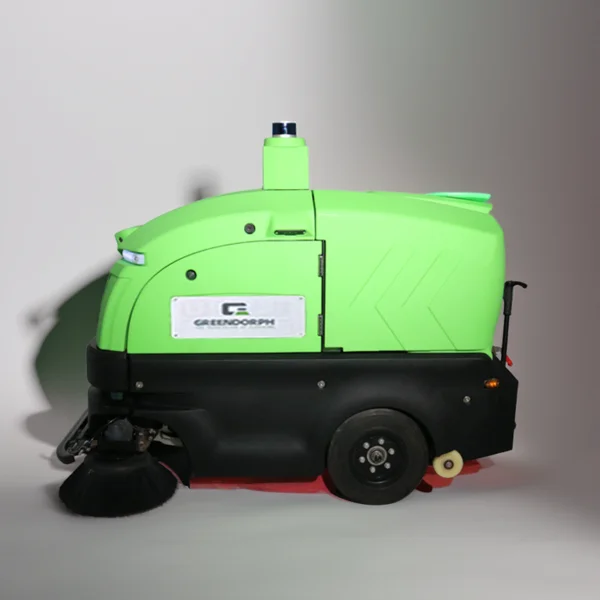
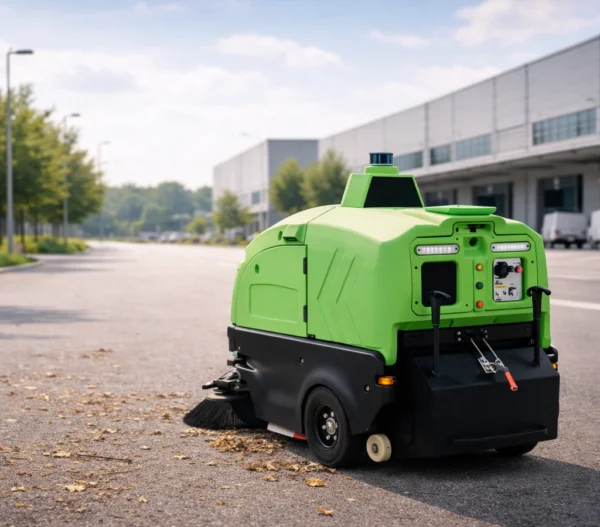
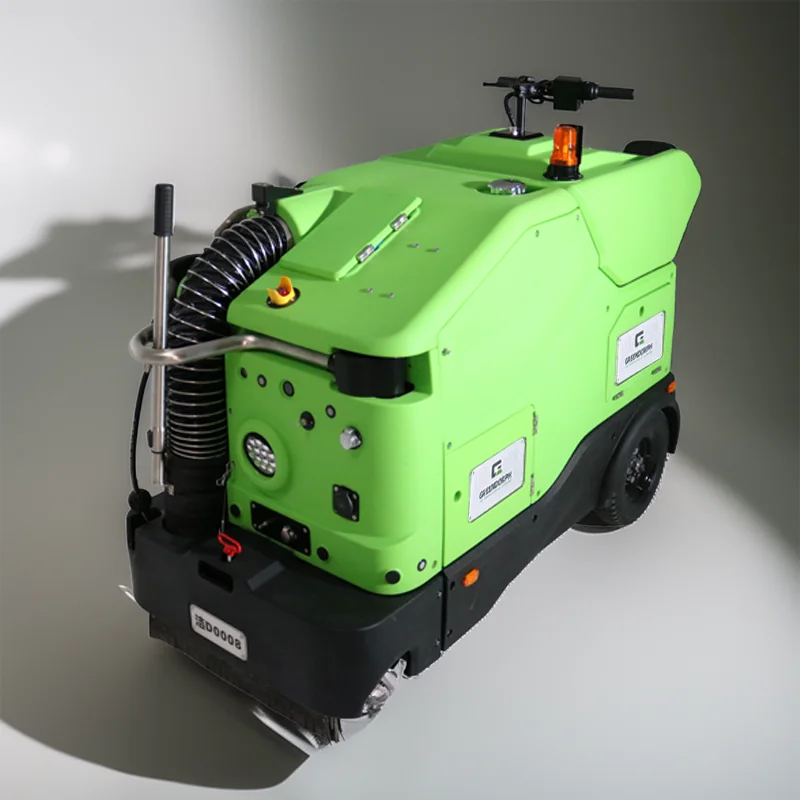
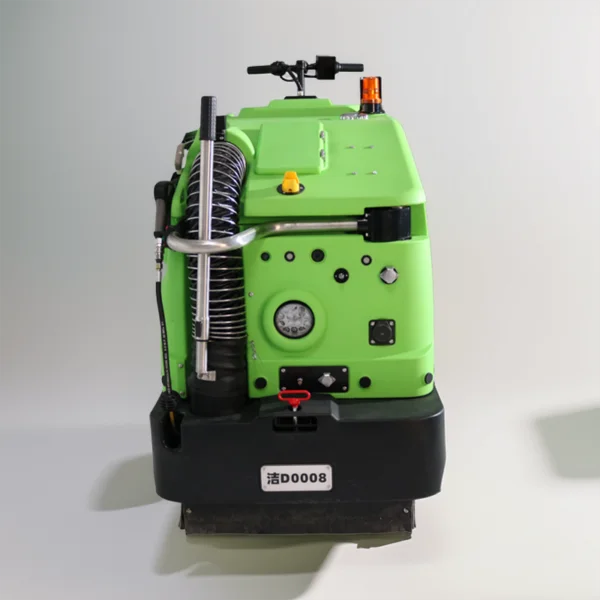
Our mid-size ride-on warehouse sweeper, the YJ80, is designed for mid-size warehouses, sidewalks, pedestrian plazas, featuring a ride-on, operator seated setup perfect for medium floors, light to medium debris. This agile layout allows the machine to turn inside tight storage corridors easily, ensuring complete coverage in restrictive spaces. At Greendorph, we prioritize building compact utility vehicles that navigate tight angles smoothly without risking damage to nearby inventory racks.
Mitigating Fine Dust Dispersion and Enhancing Indoor Air Quality
Dry sweeping across high-density storage bays can easily launch massive particulate clouds, exposing logistics workers to harmful breathing hazards. Effective industrial dust management relies on multi-stage filtration systems working alongside high-pressure water misting nozzles to bind small particles together right before vacuuming. This wet-suppression mechanism traps fine concrete dust securely inside the collection hopper, preventing it from venting back into the facility.
Using an advanced warehouse sweeper effectively retains trapped fine particulates inside the unit during extended working hours. High-efficiency fabric filters prevent fine particulate matter from escaping back into the public air during long cleaning shifts. Our engineering projects prioritize these sealed air pathways to protect indoor air quality and safeguard workers from inhaling fine airborne dust.
Transitioning to Quiet Electric Power for Flexible Scheduling
Running loud combustion-engine utility trucks during indoor shifts can create major noise disruptions and fill enclosed warehouses with exhaust fumes. Shifting to advanced, battery-powered electric drivetrains helps facilities run quiet, eco-friendly cleaning shifts at any hour of the day or night. This clean electric operation reduces annual energy consumption while eliminating on-site carbon output during facility cleaning cycles.
Our large-capacity battery packs support up to eight hours of nonstop operation after a full charge. The prolonged working duration allows on-site maintenance crews to finish large-area outdoor cleaning routes with low midway stops and avoid disturbing surrounding residents. Thanks to low-noise electric driving, cleaning tasks can be arranged during regular working hours without interfering with workshop operators and office personnel.
Standardizing Cleaning Cycles to Reduce Maintenance Expenses
Traditional internal combustion sweeping trucks feature complex hydraulic lines, drive belts, and fluid reservoirs that require frequent, specialized maintenance. Dusty operating conditions accelerate wear on these moving parts, leading to hydraulic leaks, sudden breakdowns, and expensive repair bills. Transitioning to direct-drive electric systems simplifies the mechanical footprint and prevents these frustrating maintenance issues.
Utilizing a brushless warehouse sweeper machine significantly cuts down your weekly maintenance checklists and keeps your fleet active on the floor. Our technical design team removes unnecessary drive belts, making the machinery incredibly reliable and much cheaper to operate over years of service. Keeping the underlying mechanical architecture simple achieves maximum vehicle uptime, keeping your fleet active on the ground.
Conclusion
Industrial safety starts with smarter cleaning—automated electric sweepers replace manual tools with quiet, low-emission performance. Certified maneuverability protects coatings, controls dust, and reduces moisture while cutting costs. We engineer sustainable electric tools that keep global facilities safe and pristine.