At Greendorph, we have worked with school districts across the country, and we consistently hear the same concerns: noise restrictions during class hours, tight maintenance budgets, and the need to keep thousands of students safe from airborne dust and debris. Selecting the right ride on sweeper for a school campus is not the same as choosing equipment for a warehouse or a city street. Educational environments demand specific features — quiet operation, maneuverability in crowded zones, and zero emissions around children. Let us walk through what to look for in a ride on vacuum cleaner designed for schools.
Compact Size for Navigating Crowded Campus Zones
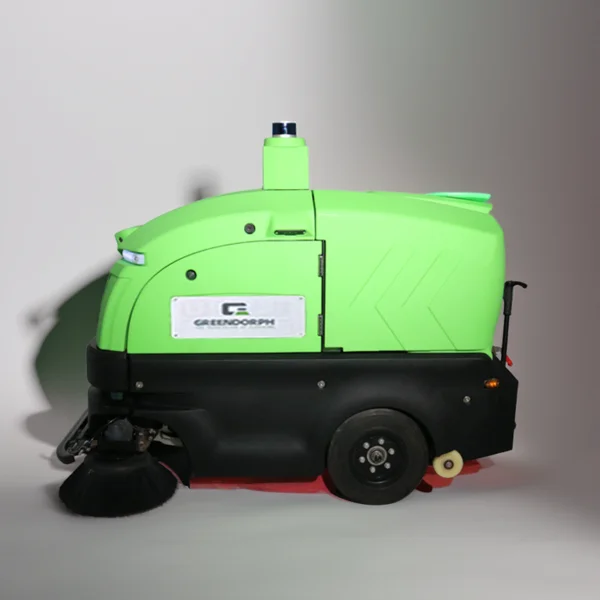
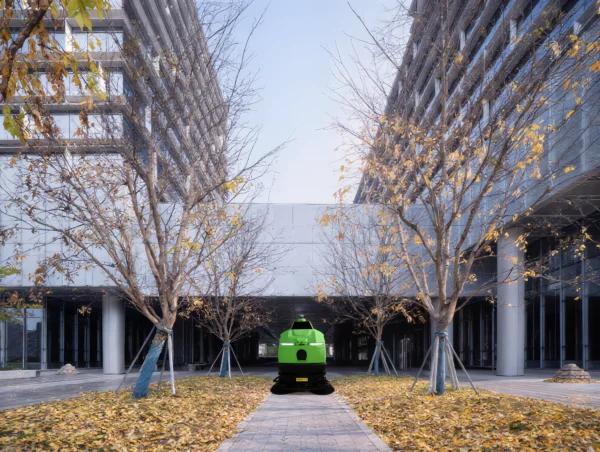
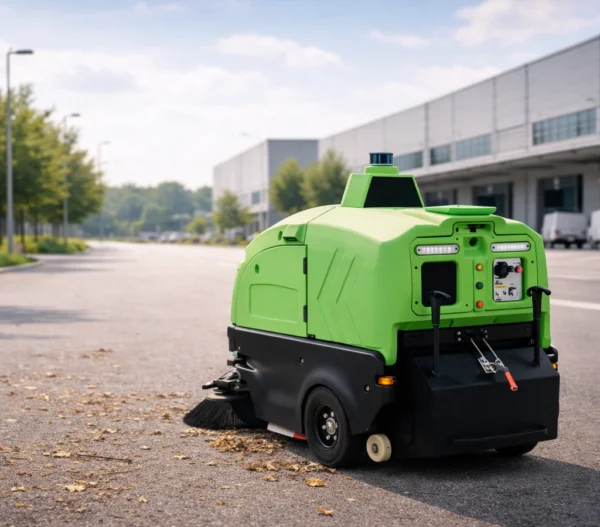
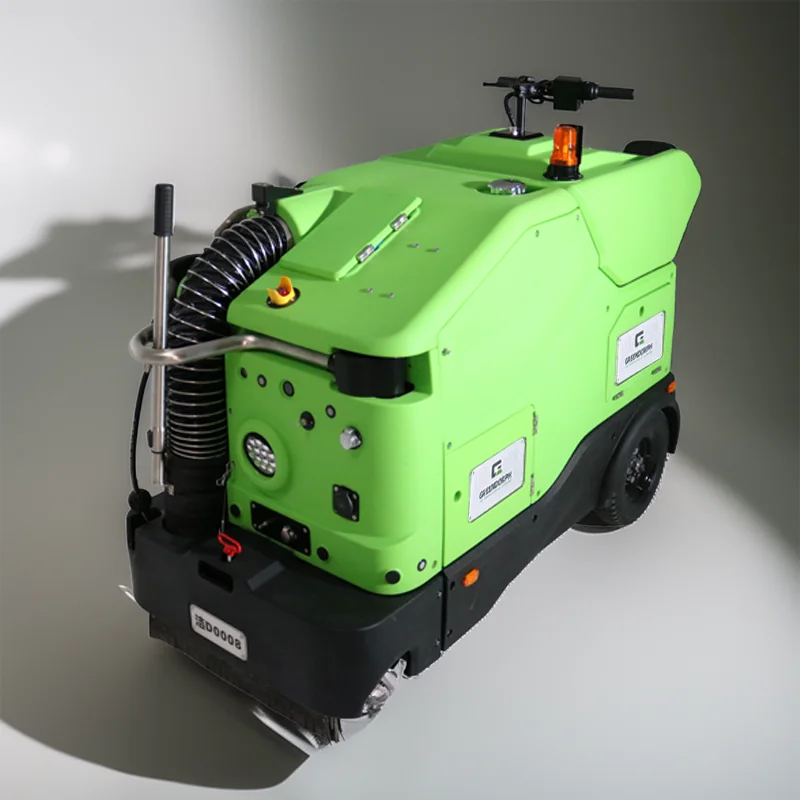
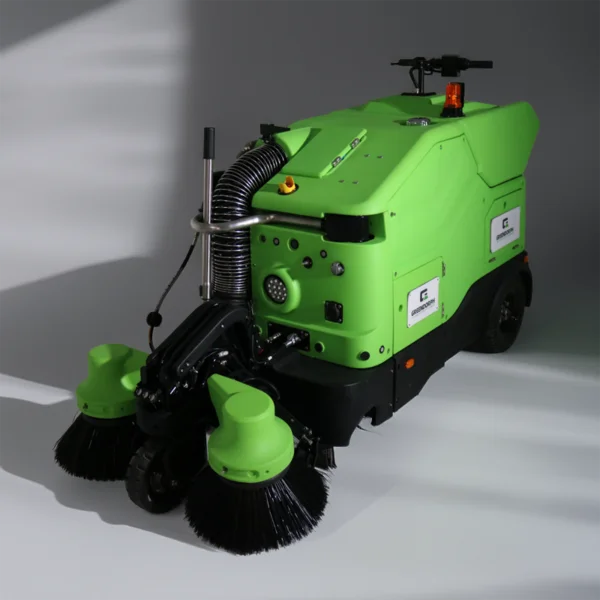
School campuses present unique spatial challenges: narrow walkways between classroom wings, crowded pickup and drop-off zones, playgrounds with scattered wood chips or sand, and indoor-outdoor transitional spaces like covered breezeways. A bulky ride on sweeper will struggle here. The Omniclean Urban Street Sweeper YJ80 from Greendorph features a compact footprint that helps the floor sweeper ride on maneuver easily in tight spaces — from sidewalks and pedestrian plazas to parking structures and mid-sized outdoor areas — without sacrificing coverage. When evaluating any ride on vacuum cleaner, measure your campus’s narrowest corridors and tightest turning radii. A machine that cannot navigate those spaces will leave debris behind, forcing manual touch-ups that defeat the purpose of automation.
Quiet, Emission-Free Operation for Uninterrupted Learning
Schools operate on strict schedules. Noisy equipment disrupts classrooms, frightens young students, and limits cleaning windows to before 8 a.m. or after 3 p.m. That is why a quiet, zero-emission ride on sweeper is non-negotiable for educational settings. The YJ80 delivers near-silent electric operation with zero emissions — making it a reliable ride on vacuum cleaner for daily cleaning tasks. Operators get up to 8 hours of runtime on a single charge, enough to cover an entire campus before the first bell rings or after the last bus departs. Gas-powered ride on sweeper models, by contrast, produce fumes that linger near ground-level air intakes — precisely where children breathe. Electric eliminates that risk entirely.
Runtime and Productivity for After-Hours Cleaning Windows
School cleaning windows are notoriously tight. You may have only two hours between the final afterschool activity and the start of evening events. A ride on vacuum cleaner that runs out of charge mid-shift leaves half the campus dirty. The YJ80’s 8-hour runtime means one operator can methodically cover parking lots, playgrounds, sports courts, and drop-off lanes without rushing or recharging. For larger districts with multiple buildings, consider deploying two units with staggered schedules. The key is matching the ride on sweeper’s battery capacity to your actual campus square footage and available cleaning windows. Undersized batteries create chronic overtime costs.
Building a Safer, Cleaner Learning Environment
Students learn better in clean, dust-free environments. At Greendorph, we believe the right ride on vacuum cleaner does more than remove visible litter — it reduces respiratory irritants, minimizes classroom disruptions, and stretches facility budgets further. Ready to evaluate ride on sweeper options for your school district? Let us help you calculate the optimal machine size, battery runtime, and maneuverability specs for your unique campus layout.