Maintaining clean parking and indoor vehicle areas is no longer just about appearance. It directly impacts safety, equipment longevity, and operational efficiency. At Greendorph, we design cleaning solutions that help facilities manage both outdoor parking environments and enclosed garage spaces with greater consistency and control.
When evaluating industrial cleaning equipment, two categories often come into focus: systems used for open-air surfaces and those optimized for enclosed structures. Understanding how each performs is essential for selecting the right configuration for your site.
Parking Areas: Built for Outdoor Durability and Coverage
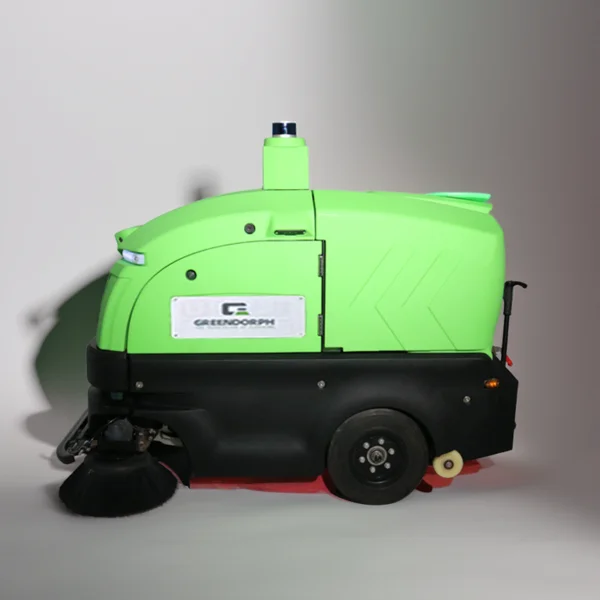
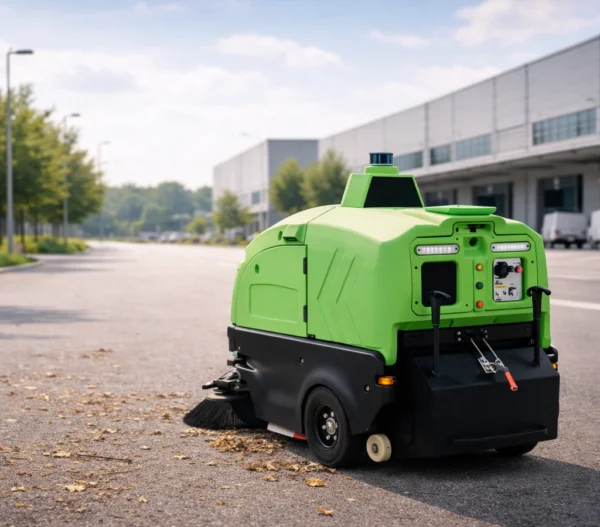
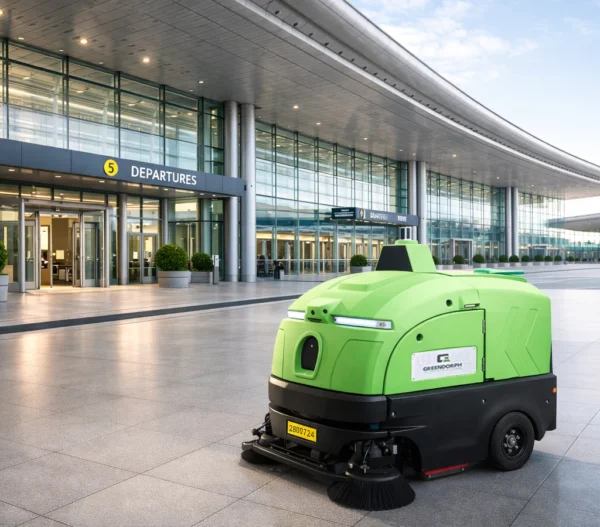
Outdoor environments such as parking lots require machines that can handle changing debris conditions, including dust, sand, leaves, and industrial residue. A parking lot sweeper is typically designed with stronger airflow systems and wider cleaning paths to support large surface coverage and uneven terrain.
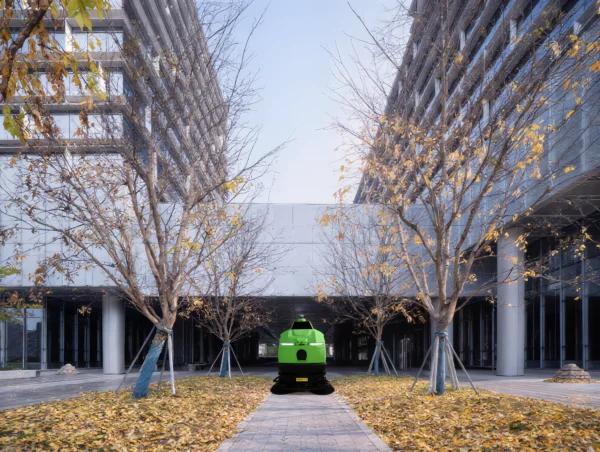
These machines are commonly used in logistics hubs, commercial plazas, and industrial parks where debris accumulates quickly due to traffic flow and weather exposure. As noted in industrial equipment guidance, outdoor sweepers often prioritize power sources like fuel or high-capacity battery systems to support longer operating cycles and ramp navigation in large facilities.
At Greendorph, our parking lot sweepers are engineered to maintain consistent cleaning performance across expansive surfaces while reducing manual intervention.
Indoor Garages: Precision Cleaning in Controlled Spaces
In contrast, enclosed environments such as parking structures require more compact and maneuverable machines. Garage sweepers are designed to operate efficiently in tighter layouts, including ramps, corners, and multi-level configurations.
Walk-behind models are often preferred in smaller garage zones due to their flexibility and ease of control, while ride-on or semi-automated systems are used in larger indoor facilities where productivity is prioritized. Industry comparisons show that walk-behind sweepers are especially effective in narrow or congested areas where precision matters more than scale.
Greendorph focuses on balancing maneuverability with dust control systems, ensuring enclosed spaces remain clean without compromising air quality or operator comfort.
Walk-Behind vs. Fully Autonomous Operation
A key decision point for facility managers is whether to adopt manual operation or move toward automation.
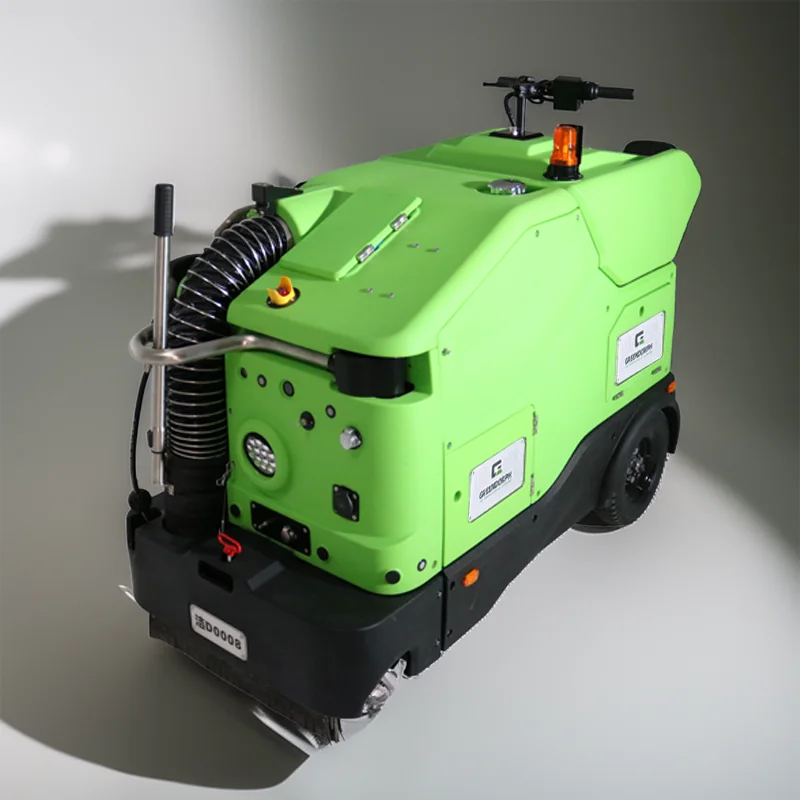
Walk-behind systems offer direct control, lower initial complexity, and adaptability for varied cleaning tasks. They are often used in mixed environments where human judgment is still valuable.
Fully autonomous solutions, on the other hand, are designed for repetitive cleaning routes and large-scale consistency. Greendorph’s automation approach emphasizes sensor-based navigation and route optimization to reduce operational workload while maintaining predictable cleaning results.
Choosing between these two depends on facility size, traffic frequency, and staffing strategy rather than technology alone.
Greendorph Approach to Integrated Cleaning Systems
At Greendorph, we design the parking lot sweeper that supports both parking lot sweeping requirements and indoor garage maintenance needs through scalable configurations. Instead of treating these as separate problems, we focus on how both environments connect within the same operational ecosystem.
Garage sweepers are built to adapt across different surface types, debris loads, and spatial constraints, helping facility operators maintain cleaner and safer environments without unnecessary complexity.
Conclusion
Selecting between outdoor and indoor sweeping solutions is not simply a matter of machine size. It requires understanding how your facility functions daily, from traffic density to cleaning frequency.
A parking-focused system is best suited for open, high-exposure areas, while garage-oriented equipment is designed for structured, enclosed environments. Greendorph continues to develop solutions that bridge these needs, helping operators build more efficient and manageable cleaning workflows across both settings.