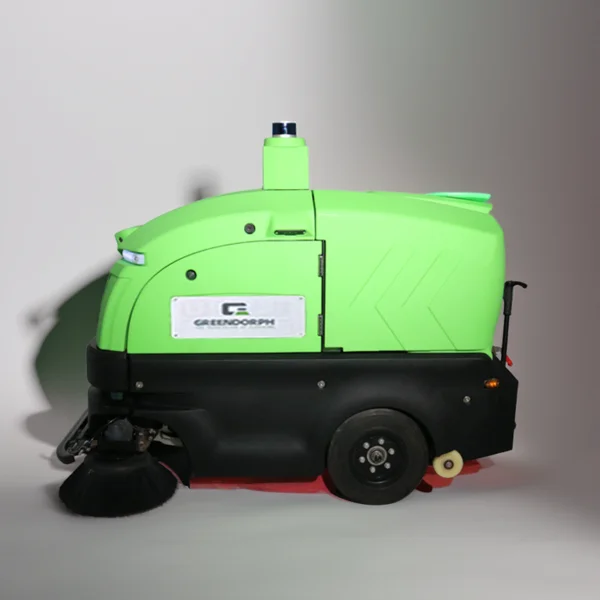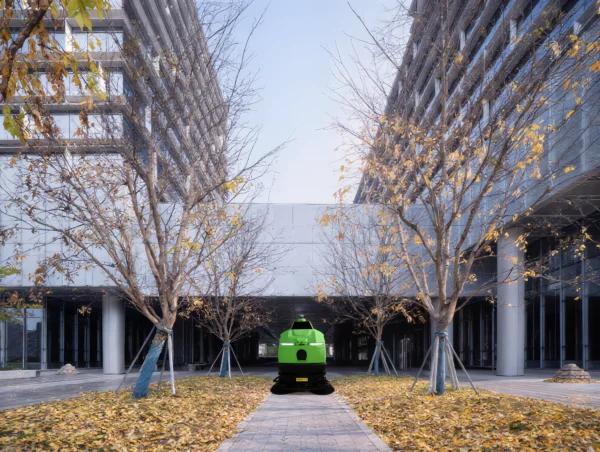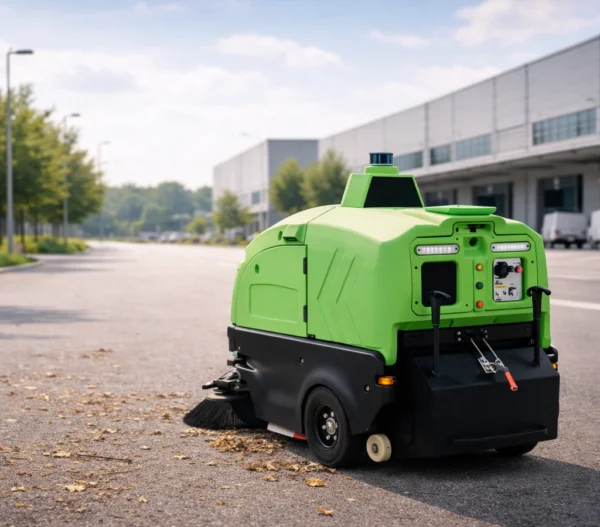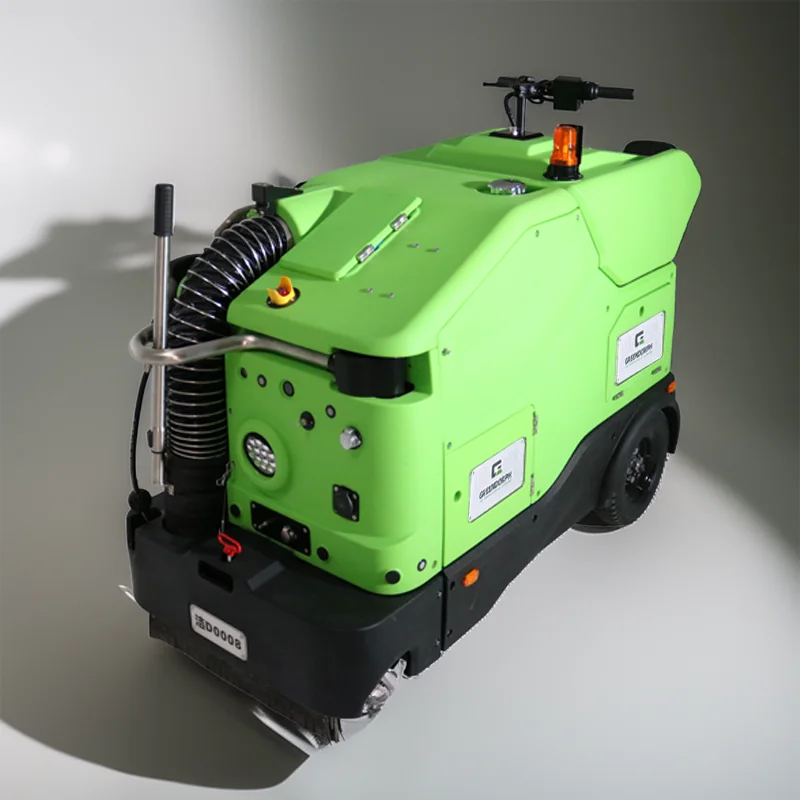
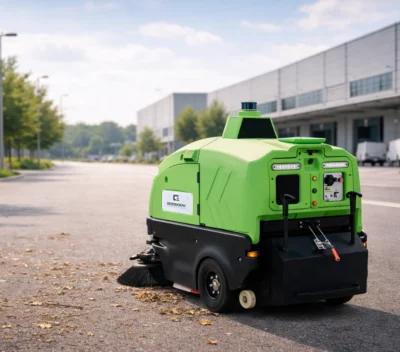
As cities and industrial sites adopt more automation, we design systems that combine human oversight with robotic execution. At Greendorph, we recognize that a street sweeper is no longer just a machine operated by a driver but part of a shared operational environment where humans, infrastructure, and software interact continuously. This shift introduces new questions about safety boundaries, decision-making authority, and responsibility when unexpected situations occur.
Our approach focuses on defining clear operational roles. While the machine executes predefined cleaning paths and sensor-based navigation, human supervisors remain responsible for planning, monitoring, and intervention. This separation helps reduce ambiguity in real-world operations where environmental conditions change rapidly.
Operational Ethics in Autonomous Cleaning Environments
When deploying an autonomous street sweeper, ethical design begins with predictability and transparency. We ensure that the system behavior is understandable to operators, even when decisions are made by algorithms. This includes predictable stopping behavior, obstacle recognition logic, and clear alert mechanisms when the system encounters uncertainty.
Modern autonomous cleaning systems rely on multiple sensor layers, including LiDAR and vision fusion, to detect pedestrians, vehicles, and unexpected debris in real time. These capabilities support safer navigation, but they also raise ethical considerations: the system must prioritize human safety over task completion at all times.
At Greendorph, we design our systems so that ethical constraints are embedded into the control architecture, not added afterward as external rules.
Liability Distribution Between Humans and Systems
A key challenge in automation is determining liability when outcomes are shared between human operators and autonomous systems. In practical terms, responsibility is distributed across three layers:
First, system design responsibility lies with us as the manufacturer. We ensure that sensing, navigation, and decision frameworks are tested under realistic environmental conditions.
Second, operational responsibility lies with the user organization, which defines deployment zones, schedules, and supervision protocols.
Third, situational responsibility is shared dynamically. If an autonomous street sweeper encounters an ambiguous scenario, it is designed to transition into a safe state, such as slowing down or pausing operations until human input is received.
This layered model reduces the risk of unclear accountability in complex public or industrial environments.
Working Safely in Mixed Human and Robot Environments
Autonomous cleaning machines are increasingly deployed in areas shared with pedestrians, vehicles, and workers. These environments require systems that can continuously interpret movement patterns and adjust behavior accordingly. For example, driverless cleaning platforms used in urban environments already rely on real-time object tracking and emergency stop mechanisms to maintain safe distances and avoid collisions.
We also emphasize training for operators. Even though automation reduces manual control, human understanding of system limitations remains essential. Operators must be able to interpret alerts, understand navigation constraints, and intervene when environmental conditions exceed system design assumptions.
Greendorph‘s Perspective on Responsible Autonomy
At Greendorph, we view autonomy not as removing human involvement, but as restructuring it. The goal is to allow machines to handle repetitive cleaning tasks while humans focus on supervision, optimization, and safety assurance.
We design our systems with three priorities: operational clarity, predictable behavior, and shared accountability. This ensures that when our solutions are deployed in real environments, both efficiency and responsibility remain balanced.
Conclusion
The integration of autonomous systems into public and industrial cleaning introduces both opportunities and obligations. A modern street sweeper ecosystem depends on collaboration between humans and machines and adds new layers of intelligence that must be carefully governed.
At Greendorph, we continue to refine how responsibility is shared across these systems, ensuring that automation supports safer and more structured urban maintenance without removing human oversight from critical decision points.