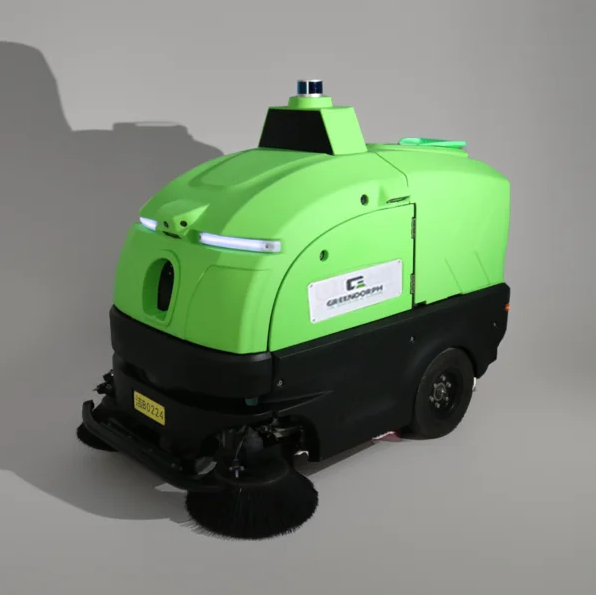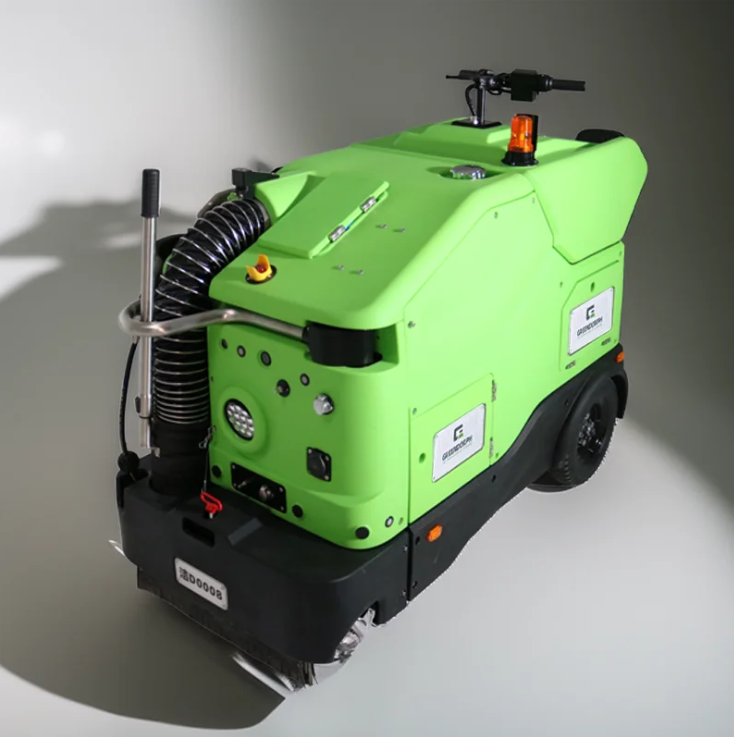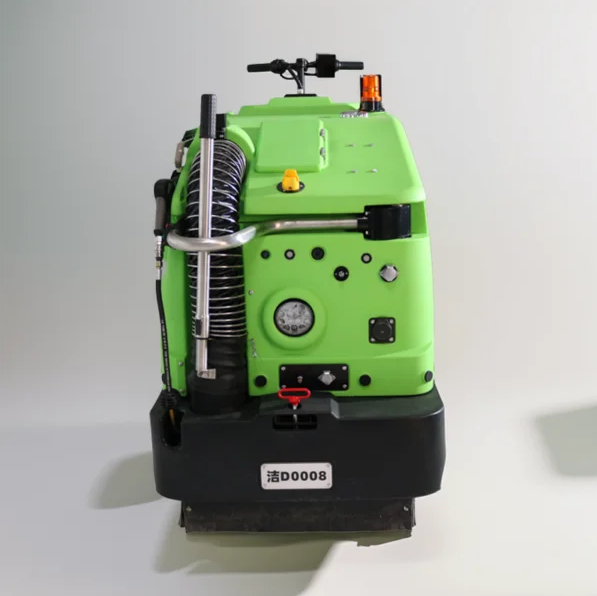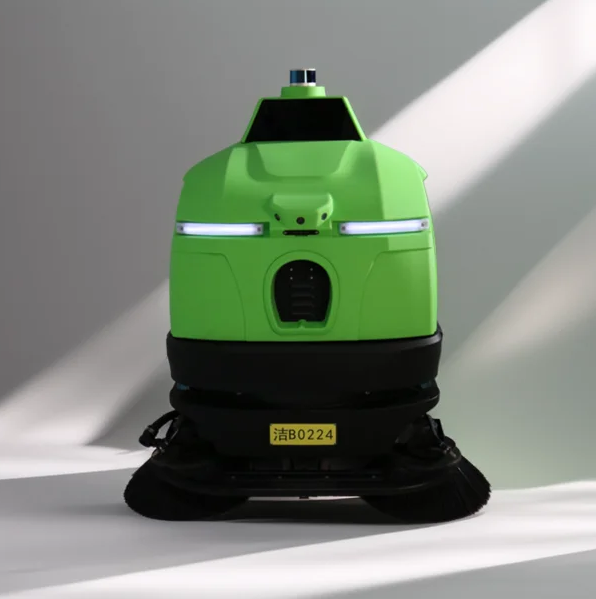
We view cleaning turnaround as more than machine speed. Crews must complete several tasks before an area can return to normal use. Using a ride on sweeper can shorten this process when sweeping, collection, dust control, and surface rinsing are organized within one working sequence.
This matters in streets, parks, squares, campuses, and commercial outdoor areas where cleaning windows may be limited. Crews often work around pedestrians, vehicles, curbs, and changing surface conditions. Faster turnaround comes from reducing tool changes, repeated passes, and unnecessary movement between cleaning stages.
Turnaround Time Depends on the Whole Cleaning Process
Traditional outdoor cleaning can involve several separate machines or handheld tools. One unit may sweep loose debris, another may rinse stains, and workers may still need handheld equipment for corners or concentrated waste. Each change adds setup time.
We therefore look beyond travel speed. The useful measure is how quickly a crew can complete the full route, including collection, dust control, edge work, spot washing, and disposal. Machines that combine more of these steps can simplify route planning.
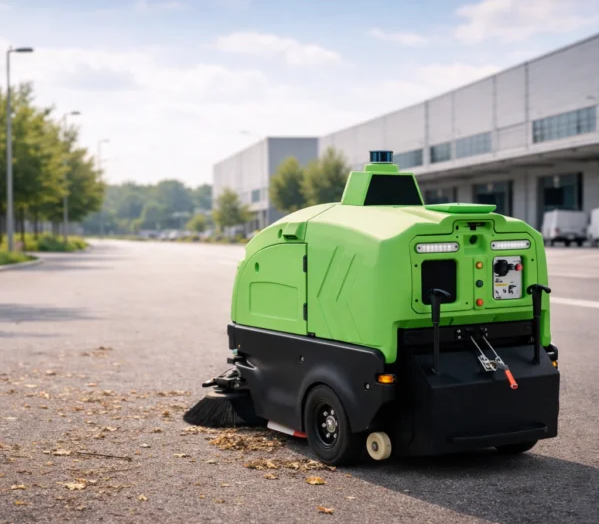
At Greendorph, we designed the Omniclean Urban Street Sweeper YJ80 for mixed urban cleaning work. Its layout supports crews that need one platform for routine debris removal, washing, blowing, and targeted collection during the same shift.
Flexible Operating Modes Reduce Unnecessary Repositioning
Different zones do not always require the same operating method. Wide roads may suit manual driving, while narrow pedestrian areas can benefit from a mode that lets the machine follow a worker. Towed traction can also help when the unit needs to be moved or coordinated with another work arrangement.
We provide three operator-oriented modes on the YJ80: manual driving, auto-follow, and towed traction. This allows crews to adjust the workflow to the site instead of forcing one operating pattern across the whole route. Less repositioning can reduce idle time between cleaning sections.
Its auto-follow function uses UWB positioning. The worker carries a receiving module while the vehicle communicates with the onboard base module. The following range is 1–6 meters within a ±60° angle. This can support handheld pickup or high-pressure rinsing while the machine moves with the operator.
Combining Cleaning Functions Cuts Repeated Passes
Multiple passes are a common reason for slow turnaround. Dry debris may be removed first, then dust may need treatment, followed by rinsing or blowing. When these stages are handled separately, crews may travel over the same area several times.
We combine vacuum collection, high-pressure flushing, water-spray cleaning, turbine blowing, targeted tube collection, and dust-suppression misting on the YJ80. In practical use, this means one ride on street sweeper can support several cleaning steps without sending crews back to exchange equipment after every task.
The high-pressure water gun works at about 15 MPa, while the water tank holds 120 liters and the waste container holds 100 liters. These figures matter during route planning because water capacity, waste capacity, and cleaning method influence how often work must stop for servicing.
Edge Work Can Decide Whether a Route Finishes on Time
Open pavement is usually easier to cover than curbs, walls, planters, and irregular road edges. These areas often create extra manual work after the main sweeping pass. If edge cleaning is not planned early, crews may need to return to sections that appeared complete.
The machine uses an extendable side brush that expands the cleaning width to 140 cm. This can help crews cover broader surfaces while still working along complex road edges. The benefit is not simply wider coverage; it is the ability to reduce separate touch-up work after the main route.
Sensor support also matters when cleaning mixed environments. The unit uses multi-line lidar, single-line lidar, a 3D camera, and ultrasonic sensing. These systems support obstacle awareness around people, street furniture, and route changes, helping operators maintain a steadier cleaning sequence.
Faster Turnaround Still Requires Practical Route Planning
Machine capability cannot replace planning. We still recommend dividing routes by surface type, debris level, water demand, pedestrian activity, and access restrictions. Heavy leaves, fine dust, stains, and scattered litter may require different combinations of the available functions.
Using a ride on sweeper is more practical when operators decide in advance where sweeping is enough and where flushing, blowing, or targeted pickup is needed. This prevents crews from applying every function in every zone, which can waste water, battery time, and labor.
The YJ80 has a working endurance of about 6–8 hours and supports remote operation through a mobile app and cloud platform. At Greendorph, we also support remote scheduling for multiple machines. For B2B users, these functions can help supervisors coordinate routes and reduce delays caused by manual task assignment.
A Faster Route Comes From Fewer Workflow Breaks
In practice, a ride on street sweeper supports faster cleaning turnaround when it reduces the number of separate tools, return trips, and repeated surface passes required during a shift. Operating flexibility, combined cleaning functions, edge coverage, sensor support, and sensible route planning all contribute to that result.
For facility teams, contractors, and municipal service providers, the practical question is not simply how quickly a machine travels. The stronger measure is how smoothly the full cleaning cycle moves from debris removal to detailed finishing. When each stage connects with the next, crews can complete routes with fewer interruptions and more predictable timing.