Commercial cleaning is moving beyond basic mechanical operation. For B2B users, equipment selection now involves navigation, sensing, task planning, and remote management as well as cleaning performance. Smart technology is changing how floor cleaning machines work because it can reduce repeated manual control and make routine tasks easier to organize.
The same shift affects how buyers assess a floor scrubber machine. Brush action and tank capacity still matter, but they are only part of the decision. Buyers also need to consider obstacle response, route management, task recovery, and how easily supervisors can follow operating progress.
From Manual Driving to Assisted Operation
Traditional cleaning equipment depends heavily on an operator to control direction, speed, and routes. Smart systems can take over part of that work through positioning modules, sensors, cameras, and software. Workers can then focus more on inspection, spot cleaning, maintenance, and areas that still require human judgment.
This change can also improve workflow consistency. When routes and tasks are planned digitally, different shifts can follow a clearer process. Supervisors do not need to depend only on memory, verbal handovers, or handwritten notes to understand what has already been cleaned.
Navigation Becomes a Working Function
Real cleaning sites rarely remain unchanged. Warehouses, plazas, parks, and commercial areas may contain pedestrians, posts, benches, curbs, parked vehicles, or temporary objects. Smart equipment therefore needs to understand its surroundings while it is moving.
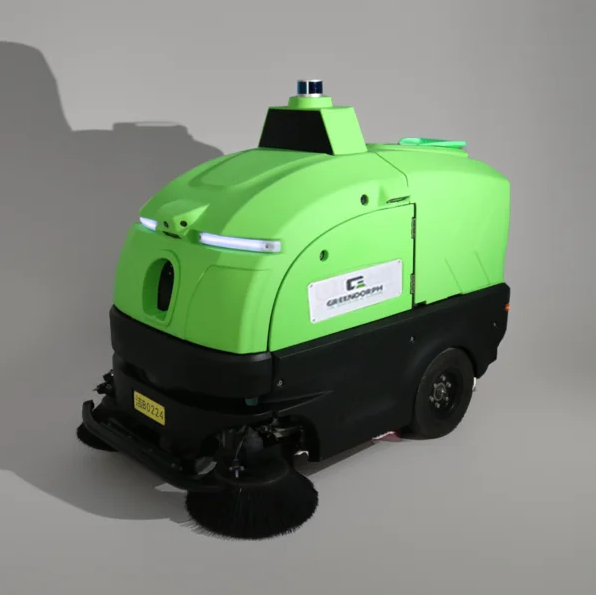
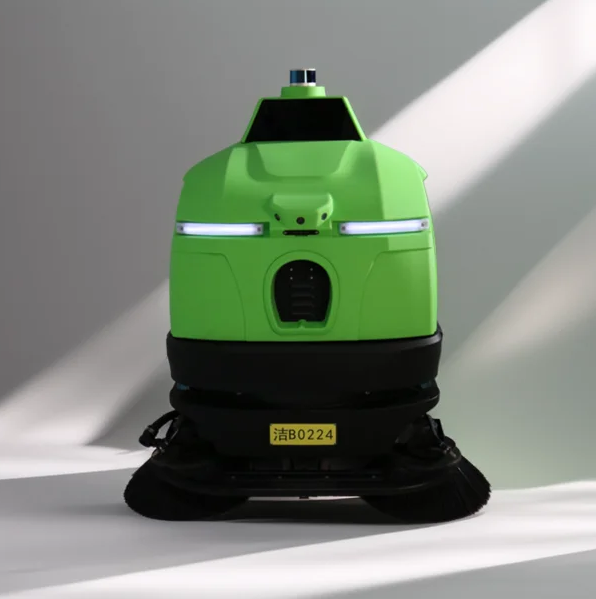
Sensor fusion can support this process. LiDAR, cameras, ultrasonic sensors, and positioning systems can provide environmental information. The machine can use these inputs to detect nearby objects, adjust movement, and react to changing conditions instead of relying on a fixed path alone.
Task Memory Helps Manage Interruptions
Cleaning may stop because a machine needs charging, water refilling, or waste disposal. Without task memory, an operator may have to decide where to restart. Smart systems can record progress before the interruption and continue from the recorded point after service is completed.
This function is useful in large operating zones. It reduces unnecessary repetition and gives supervisors a clearer view of task status. For B2B users, that can make shift planning more structured without changing the cleaning objective.
Remote Management Changes Supervision
Smart cleaning also changes the role of supervisors. A remote platform can support task assignment, status checks, and coordination between several units. This becomes useful when machines operate across a large property or in separate cleaning zones.
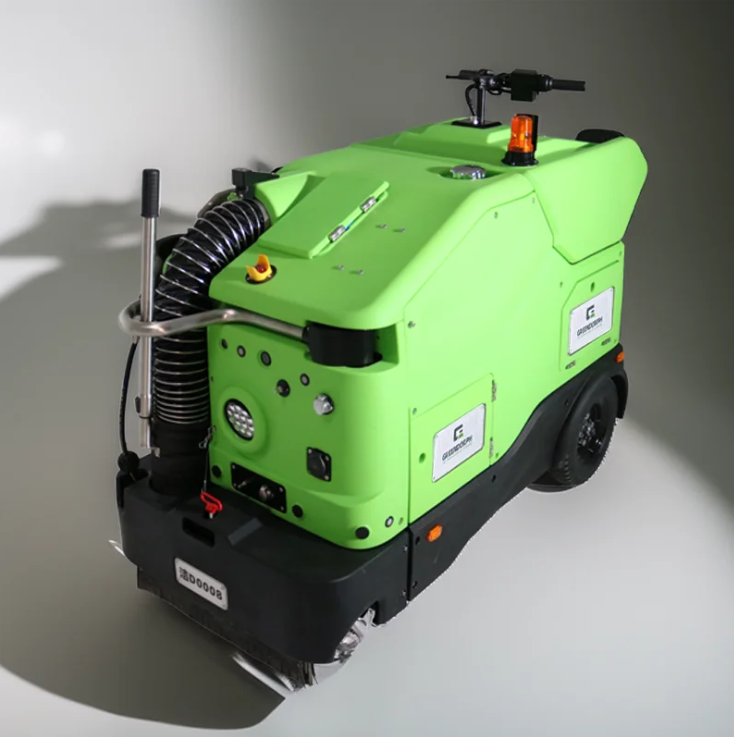
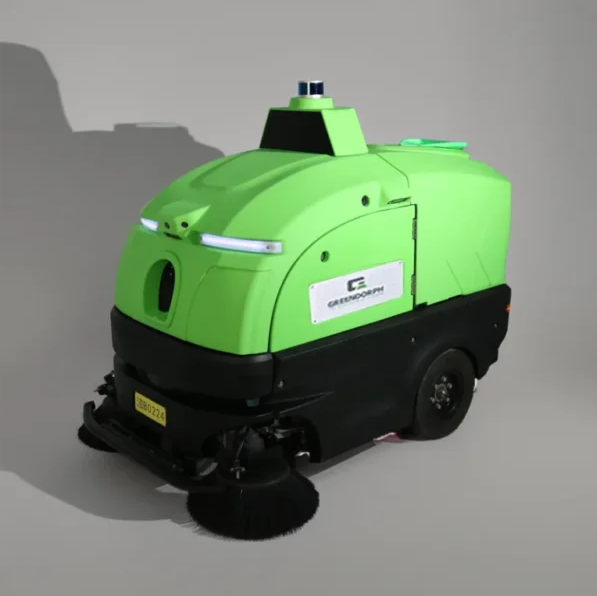
At Greendorph, the YJ80 reflects this human-machine cooperation model. It supports remote control through a mobile app and cloud platform, including remote task distribution. Its self-following function uses UWB positioning. The following range is 1 to 6 meters, with an angle of ±60 degrees.
Human-Machine Cooperation Remains Useful
Automation does not remove the need for workers. Many sites still require people to handle detailed cleaning, unexpected conditions, maintenance, and inspection. Smart functions are more useful when they reduce repetitive movement while keeping staff involved where judgment is needed.
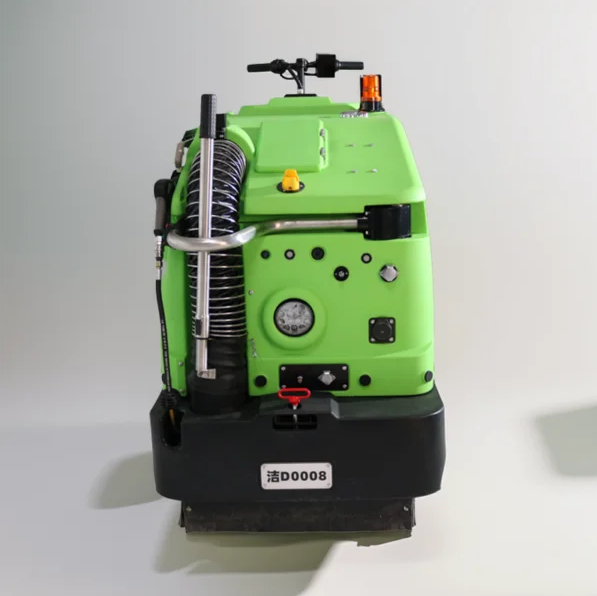
The YJ80 combines six cleaning functions in one machine. It has a 120 L water tank, a 100 L waste bin, and an operating time of 6 to 8 hours. Its extendable side brush increases cleaning width to 140 cm, while the stated sweeping efficiency is 10,800 square meters per hour.
Autonomous Systems Depend on Perception
Higher levels of autonomy require reliable environmental perception. A machine needs to identify objects, understand space, and respond when positioning is interrupted. It also needs a clear recovery process so supervisors know whether a task has paused or resumed.
The YJ130 from Greendorph uses multi-line LiDAR, single-line LiDAR, 3D cameras, ultrasonic sensing, and anti-collision sensors. It supports breakpoint resumption. If the unit stops for charging, water refilling, or waste-bin emptying, it records cleaning progress and continues from the interrupted point after operation resumes.
Mapping Changes Site Deployment
Smart mapping can reduce dependence on physical guide lines and repeated manual positioning. Remote mapping and on-site mapping also make it easier to prepare routes for different operating areas.
For the YJ130, a typical site can usually complete mapping, task deployment, testing, training, and final delivery within about two to three days. The actual period depends on site size. This shows why deployment planning should consider both software setup and the physical cleaning environment.
What B2B Buyers Should Review
Smart functions should not be evaluated as isolated selling points. Buyers should review obstacle detection, mapping, task recovery, remote operation, tank capacity, runtime, maintenance access, charging conditions, and staff workflows together. The right combination depends on how the site actually operates.
When comparing a floor scrubber machine, procurement teams should also ask who will manage routes, how interruptions are handled, and whether remote functions fit existing procedures. These questions help separate useful automation from functions that may add little value to a specific site.
The growing role of intelligent cleaning systems will also be reflected at Interclean Shanghai 2026, held from October 28 to 30 at the Shanghai New International Expo Centre. We will participate in the exhibition to exchange ideas with industry professionals on robotic navigation, remote management, and practical automation. Such discussions can help facility operators understand how emerging technologies relate to their daily cleaning requirements.
Smarter Cleaning Starts with Site Needs
Smart cleaning technology is changing floor cleaning machines by combining mechanical cleaning with sensing, navigation, task memory, and remote management. The practical result is a shift from continuous manual control toward planned and monitored operation.
For B2B users, the decision should still begin with the site. Floor conditions, obstacles, operating hours, staffing, water access, charging, and cleaning routes all affect equipment choice. Smart functions become useful when they solve specific operating problems and fit the way a cleaning team already works.