Commercial outdoor cleaning projects often cover wide areas, long routes, and mixed surfaces. Choosing equipment requires more than checking speed or battery life. Buyers should review cleaning quality, autonomy, obstacle handling, route recovery, and daily operating time. The outdoor robot cleaner should match the actual workload instead of simply offering many functions.
Project managers also need to study the site. Parks, industrial campuses, sidewalks, and schools present different challenges. Dust, pedestrians, curbs, debris, and access width affect performance. Good evaluation connects technical functions with the daily cleaning process.
Start with the Working Environment
The first step is to define where the machine will operate. Large plazas may require long operating time and broad coverage. School campuses may include narrow paths, corners, trees, and frequent pedestrian movement. Industrial sites may contain dust, packaging debris, and changing vehicle traffic.
Surface type also matters. Smooth pavement, rough concrete, brick paths, and roadside areas place different demands on brushes, suction, and movement control. Buyers should consider daily debris such as loose dust, leaves, and small litter.
The route should be reviewed before equipment selection. Cleaning width, turning space, charging points, refill locations, and waste disposal areas influence daily productivity. Equipment that performs well in an open test zone may work differently once it enters a complex commercial site.
Match Cleaning Functions to Real Tasks
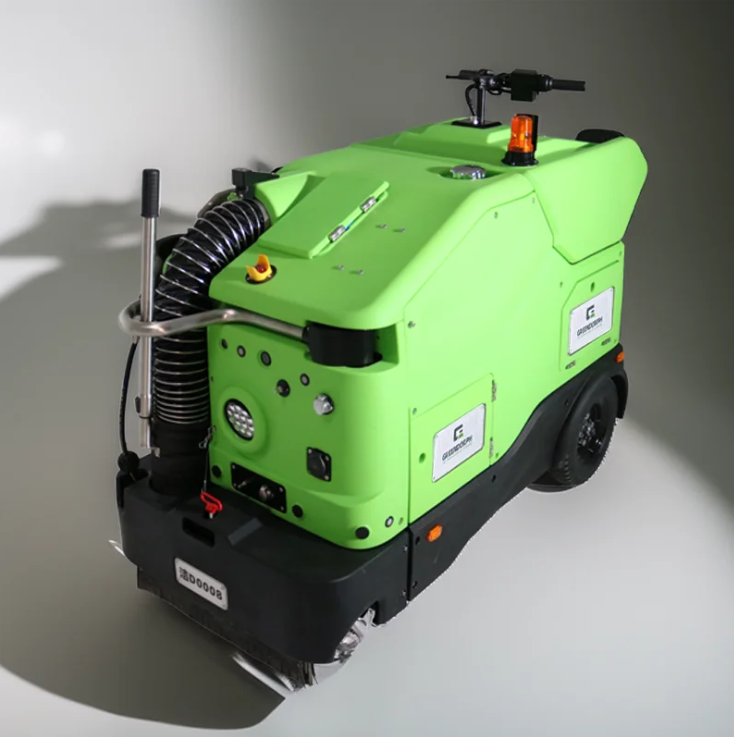
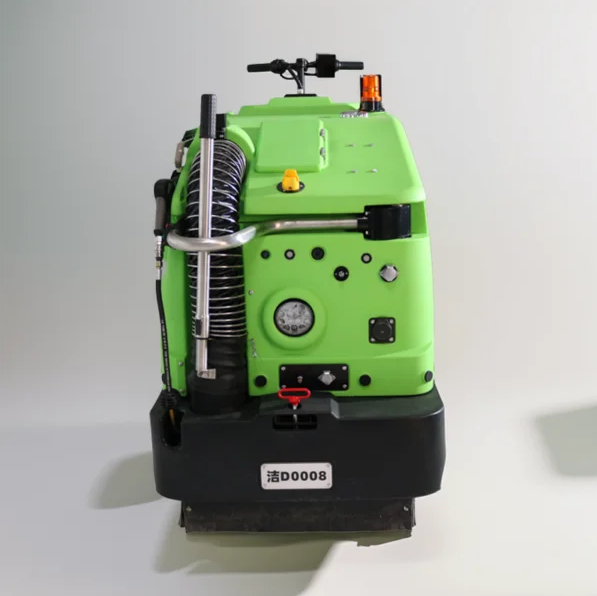
Commercial buyers should evaluate the cleaning mechanism as a complete system. Sweeping alone may not suit dusty outdoor areas. Suction can collect finer debris, airflow assistance can move material toward the cleaning path, and misting spray can help control dust during operation.
The outdoor vacuum sweeper should therefore be judged by how its functions solve specific site problems. Buyers need to ask whether sweeping, suction, airflow support, and spraying suit the expected debris. Extra functions have limited value when they do not match the working conditions.
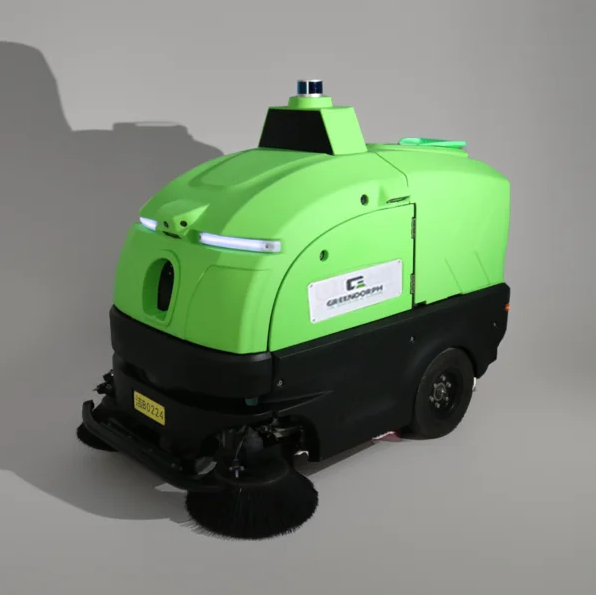
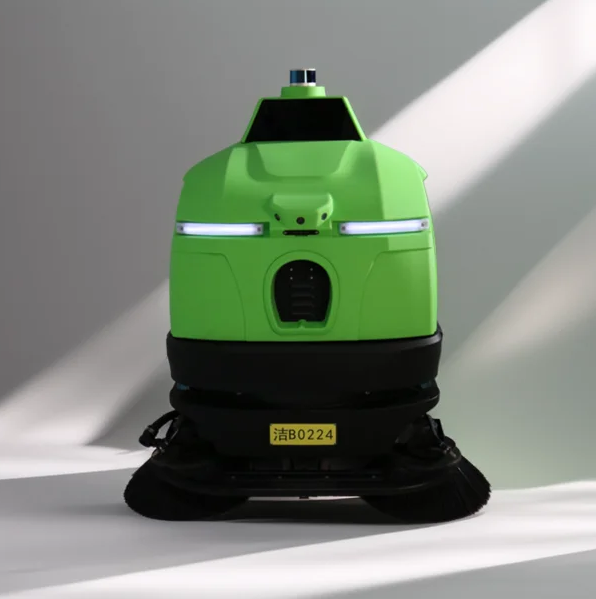
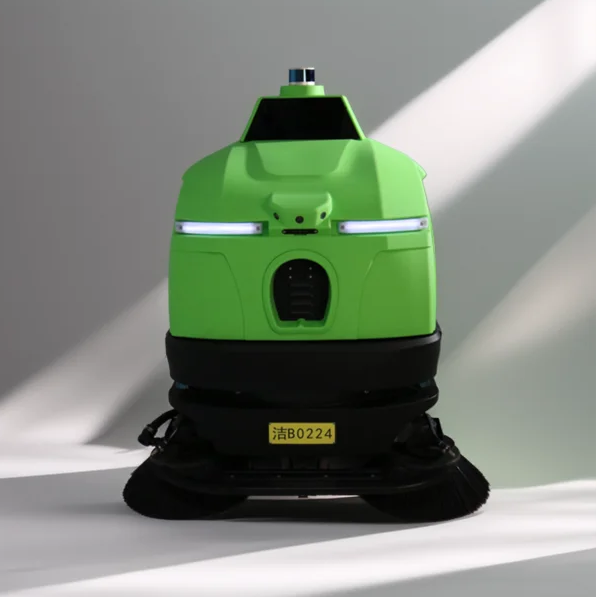
Our Auto Sweeper YJ130 combines a primary sweeping system with suction, airflow assistance, and misting spray. It delivers over 95% cleaning efficiency and can operate continuously for 6–8 hours, making it a practical option for commercial sites that require regular outdoor cleaning. These capabilities also help facility managers plan cleaning routes, working shifts, and charging schedules.
Autonomy Means Less Routine Intervention
Autonomous operation is useful when it reduces repeated supervision. Buyers should examine how a machine handles obstacles, interruptions, task recovery, and changing conditions. Robots can still increase labor demand if staff frequently need to restart them or guide them through normal situations.
At Greendorph, we focus on fully autonomous outdoor cleaning for large commercial environments. The aim is to reduce repeated manual driving while keeping cleaning tasks organized. This approach is relevant for sites with fixed routes, recurring sanitation schedules, and large areas that require regular coverage.
The YJ130 is intended for parks, industrial campuses, sidewalks, schools, and similar outdoor spaces. Its 6–8 hour runtime supports longer cleaning cycles. Project planning should still consider route length, water use, charging strategy, waste handling, and the time needed for routine inspection.
Navigation Must Work Beyond Demonstrations
Navigation should be checked under realistic operating conditions. Pedestrians, parked vehicles, temporary barriers, bins, leaves, and maintenance work can change a route during the day. Buyers should observe how the machine responds when the planned path is partly blocked.
Task recovery is another practical point. Cleaning may pause for charging, water refilling, or waste removal. If the system can continue from the interrupted position, the machine can reduce repeated coverage and lower the risk of leaving sections unfinished.
Stable route coverage also matters when evaluating an outdoor robot cleaner for repeated daily tasks. Buyers should ask how maps are created, how routes are adjusted, and how the system reacts when a familiar area changes. These questions provide a clearer picture of real operational value.
Put Runtime into the Daily Workflow
Battery duration should be compared with the complete cleaning plan. Six hours may suit one site but not another. Buyers need to consider route length, cleaning speed, charging arrangements, and the number of cycles required during a working day.
Cleaning efficiency should be viewed in the same way. Quoted percentages provide a useful reference, but heavy leaves, higher dust levels, wet surfaces, and pedestrian activity can affect practical results. Site trials should reflect normal working conditions instead of simplified demonstration routes.
For large projects, an outdoor vacuum sweeper should also be evaluated from a staffing perspective. Autonomous movement can reduce repetitive driving, but staff may still manage charging, water, waste disposal, inspection, and maintenance. These supporting tasks belong in the operating-cost calculation.
Make the Decision from Site Evidence
Commercial robotic cleaning equipment should be selected through a site-based assessment. Buyers can begin with area size, surface conditions, debris types, operating hours, and cleaning frequency. At Greendorph, we use these factors when discussing YJ130 projects with B2B customers. This assessment also helps teams estimate staffing, charging, and routine service requirements before deployment.
Interclean Shanghai 2026 provides another opportunity to discuss these considerations with industry professionals. We will be exhibiting at the Shanghai New International Expo Centre from October 28 to 30, where visitors can explore developments in cleaning equipment and robotics. For commercial buyers, the decision still comes down to practical cleaning results, reliable route recovery, and manageable daily operations. These are also useful topics for discussions with our team during the exhibition.