Warehouse floor cleaning often looks simple until labor, dust, traffic, and floor size are considered together. Large facilities may require repeated sweeping across aisles, loading zones, staging areas, and storage corridors. When this work depends mainly on manual crews, cleaning schedules can become difficult to maintain during busy shifts.
We can reduce this pressure by matching cleaning equipment to the floor condition and operating routine. A suitable machine can cover wider areas, collect debris consistently, and reduce repeated manual passes. The goal is not simply to remove people from cleaning, but to use labor where judgment and supervision matter more.
Match the Machine to the Floor
The first step is to identify the debris in the facility. Dust, packaging scraps, pallet fragments, leaves near loading doors, and fine particles may need different cleaning methods. A warehouse sweeper should be selected according to floor material, aisle width, traffic level, and the area that must be cleaned each day.
Cleaning width also affects labor demand. Wider coverage can reduce passes on open floors, while a compact machine may suit narrow aisles. For procurement planning, we recommend considering turning radius, edge-cleaning ability, and access around racks, pillars, and dock equipment.
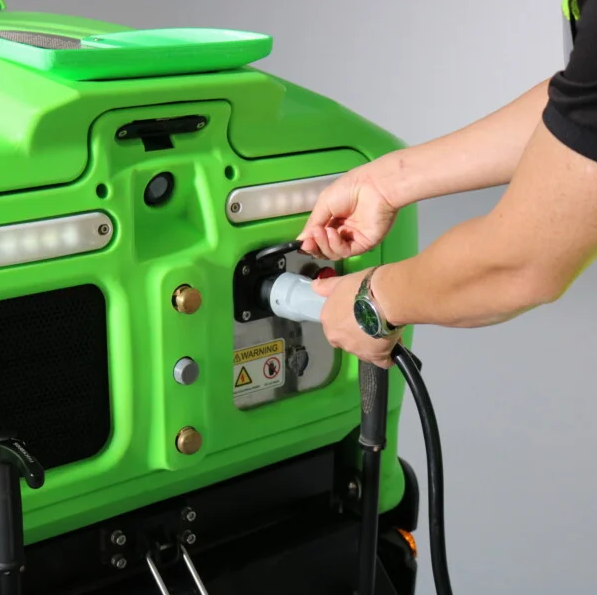
Daily operating time matters as well. If cleaning is performed during logistics hours, the machine should move in a controlled way without causing unnecessary disruption. Battery runtime, charging arrangements, and cleaning frequency should be reviewed before deployment.
Use Automation for Repetitive Routes
Manual labor is often used for routes that change little from day to day. These routes can be suitable for automation because the task can be planned, repeated, and monitored. In this workflow, a warehouse vacuum sweeper can reduce routine walking and repeated pushing for cleaning staff.
Automation can also help managers organize cleaning around shift changes or low-traffic periods. Staff can spend more time inspecting difficult corners, handling spills, or dealing with areas that need manual attention. This creates a clearer division between machine-based cleaning and human tasks.
At Greendorph, we focus on autonomous cleaning technology for large-area environments. Our approach is to reduce repetitive work through route planning, obstacle sensing, remote operation, and consistent task execution. For B2B users, the key is to match machine capability with the actual operating environment.
Plan Around Traffic and Safety
Warehouse floors are shared by forklifts, carts, workers, and delivery vehicles. Cleaning equipment must fit into the movement pattern of the site. Routes should avoid conflicts at intersections, loading points, and narrow passages. Cleaning times may also need to change according to logistics activity.
Obstacle detection matters when the environment changes throughout the day. Machines should respond to people, pallets, and temporary objects rather than depend only on fixed routes. Clear operating zones, staff training, and routine checks still remain important when automated equipment is used.
We also recommend defining where manual cleaning remains necessary. Stairs, tight corners, spill response areas, and spaces blocked by stored materials may still need direct staff involvement. A mixed workflow is often more practical than expecting one machine to handle every cleaning task.
Reduce Labor Through Better Task Allocation
Labor savings do not come only from replacing one worker with one machine. The better approach is to reduce low-value repetition. When one operator can supervise equipment, review cleaning progress, and handle exceptions, the same team can cover more space with fewer repeated manual movements.
A warehouse sweeper can also support more predictable scheduling. Managers can assign routes by zone, set cleaning frequency, and review which areas need extra attention. This makes it easier to organize cleaning around production, storage, and dispatch activities.
The same principle applies when selecting a warehouse vacuum sweeper. We suggest reviewing collection method, dust control, maintenance access, consumable needs, and the amount of manual emptying required. A machine that needs frequent intervention may reduce some labor while creating new tasks elsewhere.
Where the YJ130 Fits
Some warehouse operations include outdoor areas such as industrial campuses, access roads, sidewalks, loading approaches, and perimeter zones. These spaces can also consume significant labor when cleaned manually. An outdoor autonomous machine can therefore support a wider site-cleaning plan.
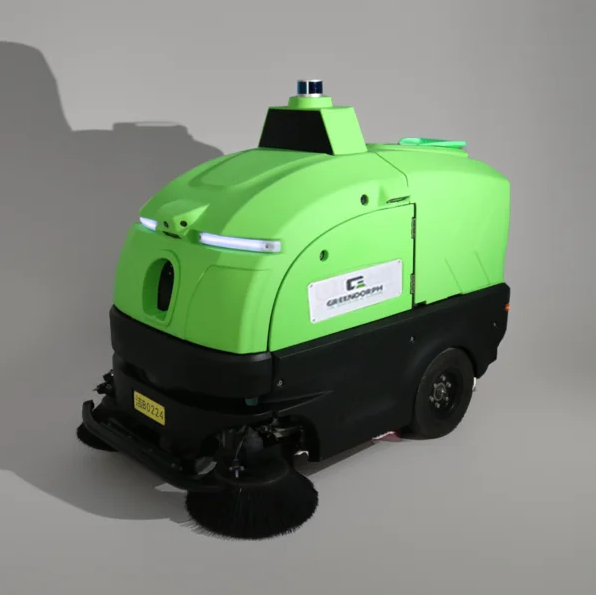
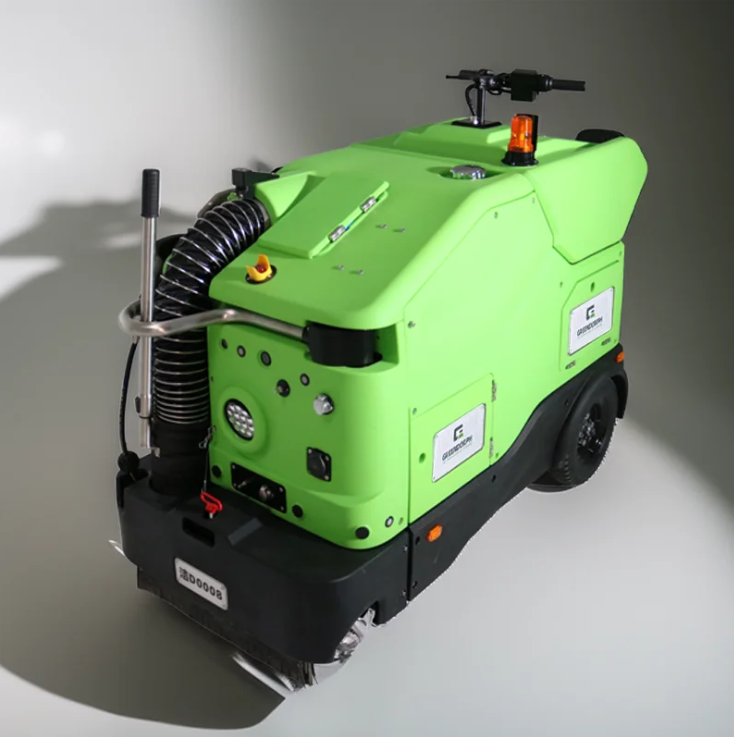
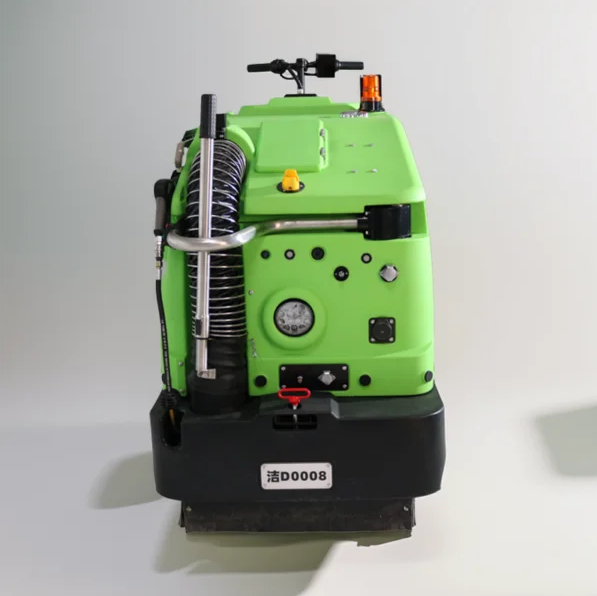
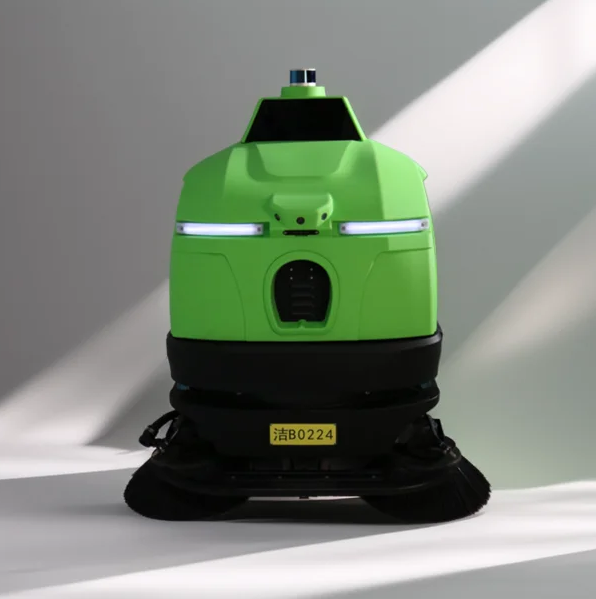
Our Auto Sweeper YJ130 is designed as a fully autonomous outdoor sweeper. It combines a primary cleaning system with three auxiliary functions: suction, airflow-assist, and misting spray. The machine provides more than 95% cleaning efficiency and can operate continuously for 6 to 8 hours.
It is intended for large outdoor sanitation areas such as parks, industrial campuses, sidewalks, schools, and similar environments. For facilities with warehouse buildings and extensive exterior zones, the YJ130 can help separate indoor floor-cleaning needs from outdoor sweeping tasks.
At Greendorph, we see this division as practical for B2B sites with mixed environments. Indoor floors may require one equipment strategy, while surrounding roads and exterior spaces may require another. Separating these tasks can make labor planning clearer.
A More Practical Cleaning Workflow
Reducing manual labor starts with identifying where employees spend time on repeated sweeping, walking, and route work. Equipment should be introduced where it can reduce these repetitive tasks without creating extra complexity.
A practical plan combines machine selection, route design, safety rules, maintenance, and human supervision. When these parts match the facility, cleaning teams can focus more on inspection, exceptions, and tasks that need judgment. Floor sweeping then becomes a planned part of warehouse operations rather than a separate manual burden.