At Greendorph, we have seen city managers and facility operators struggle with the same frustration: traditional sweepers push debris around rather than removing it. Fine dust gets left behind, only to become airborne again with the next gust of wind or passing vehicle. That is where a high-efficiency street vacuum changes the game. Unlike mechanical brooms that merely aggregate larger particles, a true street vacuum cleaner uses negative pressure to extract and contain contaminants down to the sub-micron level. Here is what you need to understand about this technology.
The Science of Negative-Pressure Suction Systems
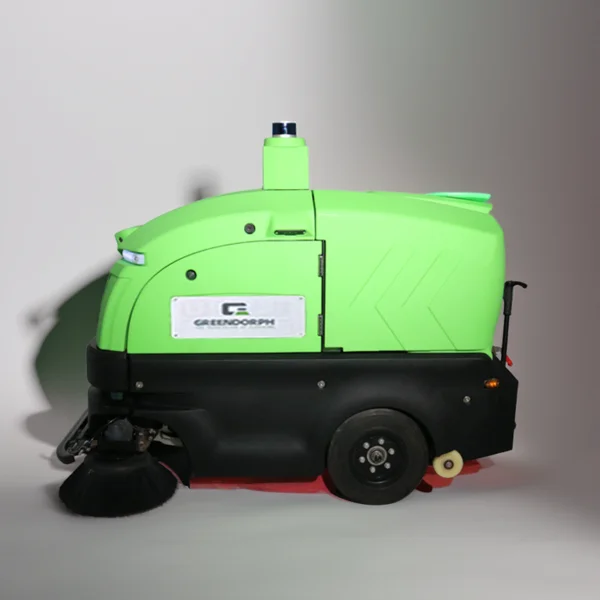
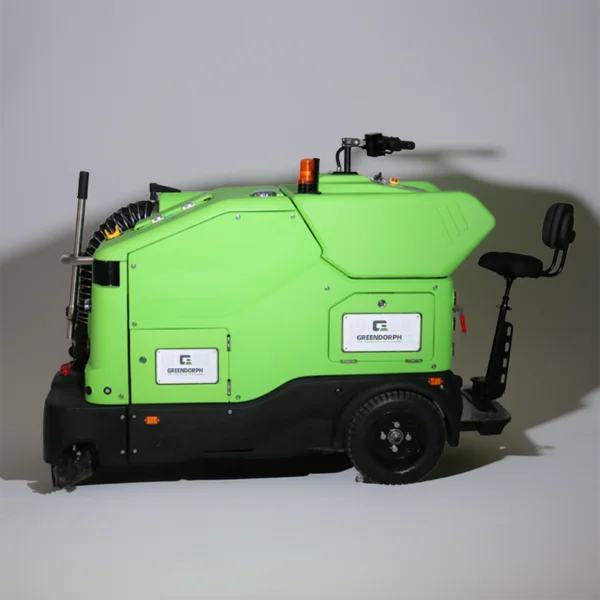
Not all equipment labeled as a street vacuum performs equally. The YJ80 from Greendorph is engineered around a high-performance negative-pressure suction system, making it one of the most effective vacuum street sweepers available for urban environments where dust control and surface hygiene are non-negotiable. This means that instead of relying on rotating brushes to flick debris into a hopper, the YJ80 creates a powerful low-pressure zone that lifts particles directly from the pavement. A street vacuum cleaner built this way captures silica dust, brake dust, pollen, and other fine particulates that mechanical sweepers leave behind. When you evaluate a street vacuum, ask about suction pressure measured in pascals and filtration efficiency — those numbers reveal true performance.
Maneuverability That Reaches Every Surface
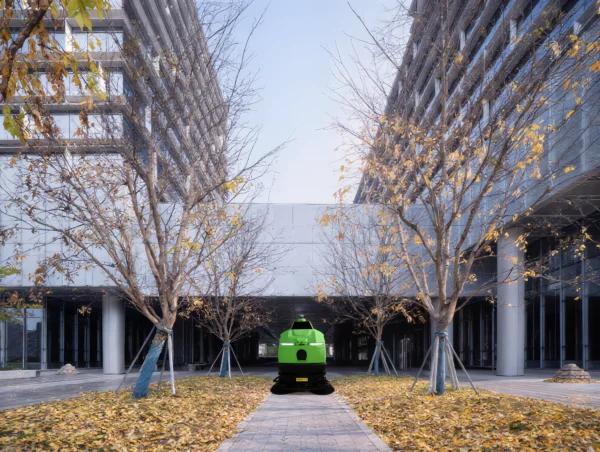
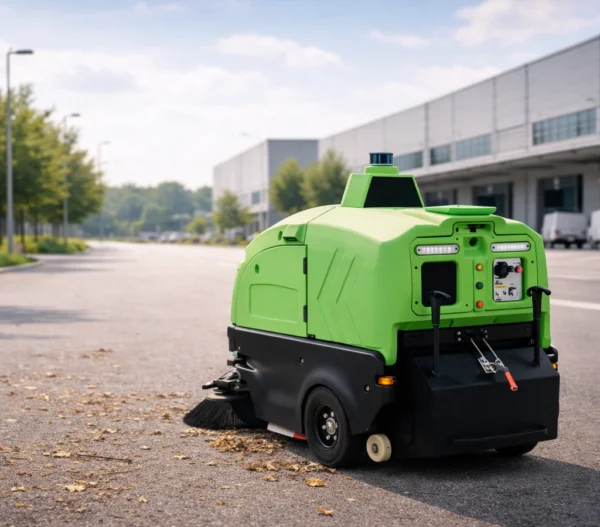
A street vacuum cleaner is only effective if it can access the areas that collect the most debris: curbs, corners, pedestrian plazas, and parking structures. The YJ80 features a compact footprint and sensor-fusion obstacle avoidance, giving this road sweeper vacuum exceptional maneuverability in tight spaces — from narrow sidewalks and pedestrian plazas to parking structures and mid-sized outdoor zones. This matters because dirt accumulates precisely where large equipment cannot reach. A high-efficiency street vacuum should navigate around bollards, trash cans, street furniture, and parked cars without operator stress. Sensor-fusion technology combines cameras, ultrasonic sensors, and sometimes radar to detect obstacles from multiple angles, preventing collisions and ensuring complete coverage.
Adaptable Workflows for Maximum Productivity
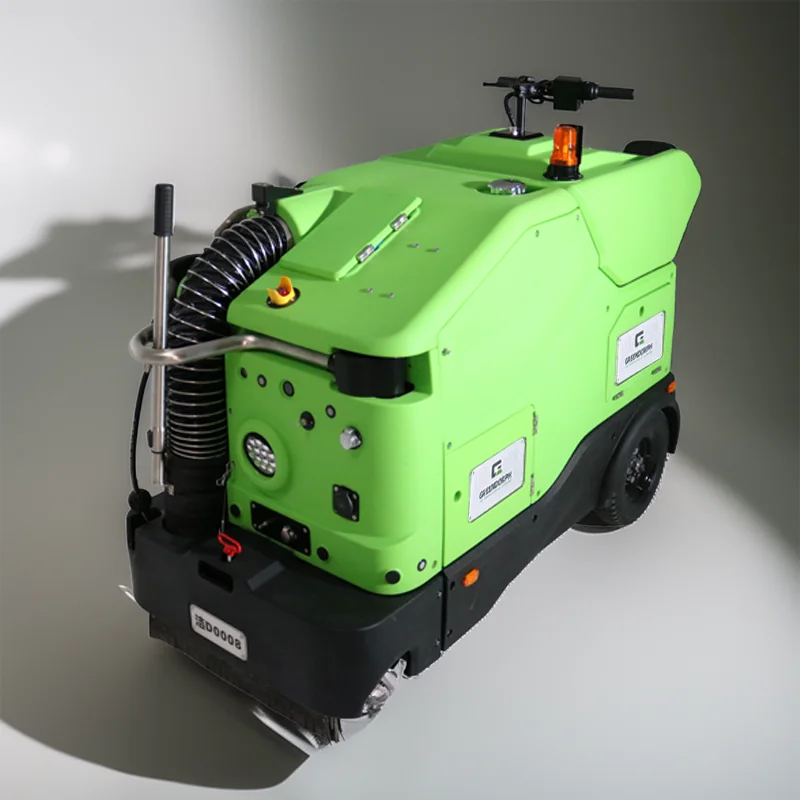
One operator should not need three different machines to clean a single district. The YJ80 offers three intuitive control modes — manual ride-on, auto-following, and towed traction — adapting to different cleaning workflows and letting one operator cover significantly more ground per shift. A street vacuum cleaner with multiple modes allows you to match the machine to the task: manual mode for complex plazas with unpredictable obstacles, auto-following for long linear stretches like bike paths, and towed traction for moving between zones without consuming battery power. When comparing street vacuum options, verify that mode switching is simple and does not require special tools or extended training.
Elevating Public Space Hygiene Through Smart Technology
High-efficiency street vacuum cleaner technology is not a luxury — it is becoming a baseline expectation for cities that prioritize public health. At Greendorph, we engineer every YJ80 to reduce airborne dust, simplify maintenance workflows, and help your team achieve more with fewer passes. Ready to move beyond mechanical sweeping? Let us show you how negative-pressure street vacuum performance can transform your urban hygiene outcomes.