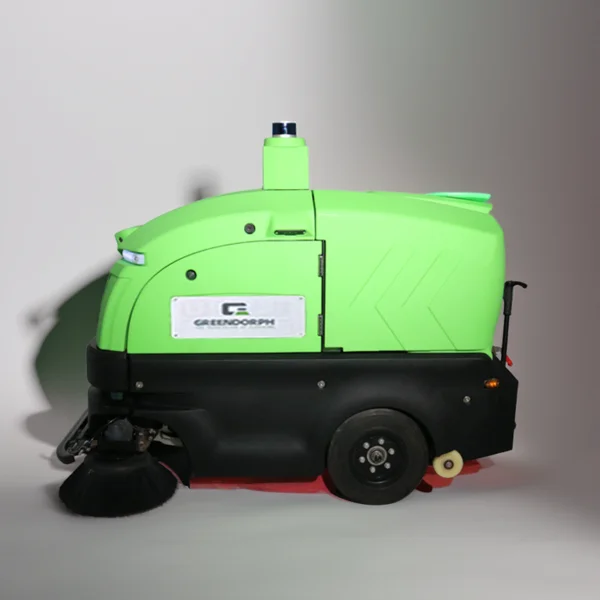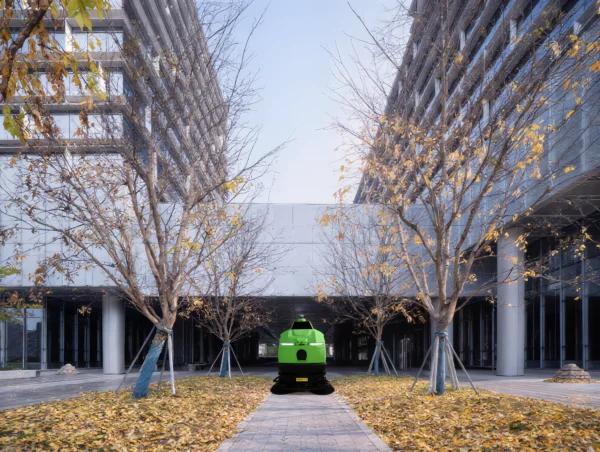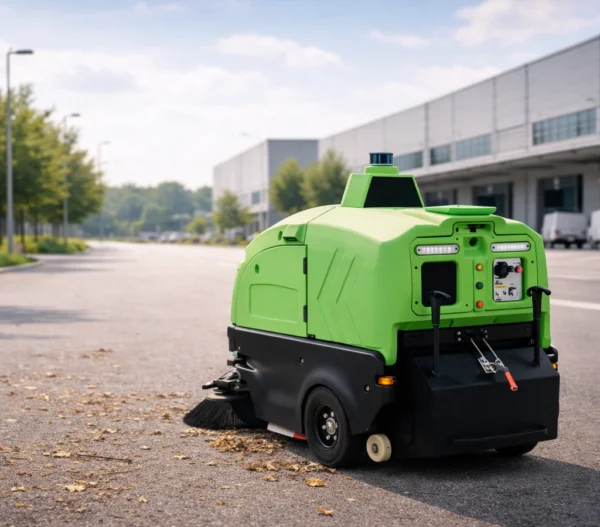
Sustaining high sanitation standards across sprawling retail plazas, corporate business parks, and residential walkways requires an analytical strategy to combat the steady accumulation of surface dirt. Winds and high foot traffic continuously scatter fine dust, organic foliage, and loose paper litter across expensive decorative pavements. Manual sweeping routines often struggle to keep up with these massive public areas, resulting in inconsistent cleaning and high operating budgets. Deploying an advanced outdoor robot cleaner allows property managers to establish a highly systematic, predictable framework for communal ground care.
Integrating smart utility equipment into daily estate workflows involves looking past standard brush setups to study automated spatial coverage and navigation safety. Traditional high-emission cleaning trucks are often too bulky and loud to operate safely around busy office entrances and dining patios. By focusing on critical technical parameters—such as mechanical suction lift, real-time sensor processing, and low-carbon battery life—operations teams can make highly informed investments. Utilizing an autonomous outdoor vacuum robot safeguards physical hardscapes while keeping busy pedestrian walkways clear, safe, and visually welcoming.
Understanding the Physics of Autonomous Path Planning and Safety
Navigating outdoor environments requires a sophisticated combination of real-time sensor processing, rapid path adjustment, and physical obstacle detection. Sidewalks and shopping plazas are constantly changing spaces filled with moving pedestrians, temporary signs, and forgotten deliveries. Automated equipment must analyze these structural and moving barriers instantly to adjust its travel paths without losing overall sweeping efficiency.
Our advanced engineering incorporates high-precision LiDAR and optical sensors to allow our machines to navigate complex public areas smoothly. This technology supports flexible obstacle avoidance, ensuring that the utility platform bypasses pedestrian groups safely and continues its cleaning path uninterrupted. We focus closely on these spatial dynamics to build highly dependable systems that operate independently in busy public zones.
Deciphering the Efficiency of High-Speed Mechanical Dirt Extraction
Achieving deep cleanliness on textured outdoor pavements requires combining high-torque physical sweeping with balanced negative-pressure suction. Coarse sand and wet leaves easily stick to rough brickwork, making them incredibly difficult for standard vacuum systems to lift. Rotating side brushes loosen this stubborn surface dirt, allowing the high-velocity vacuum system to lift and deposit waste securely.
Operating an advanced outdoor robot cleaner promises that large public areas receive a thorough, consistent clean with minimal daily supervision. High-capacity suction pathways allow our machines to process various debris profiles—from fine dust to heavy organic waste—smoothly and efficiently. At Greendorph, we design our collection systems to keep expansive public spaces spotless during high-traffic operational hours.
Mitigating Particulate Dispersion with Closed Fluid Suppression
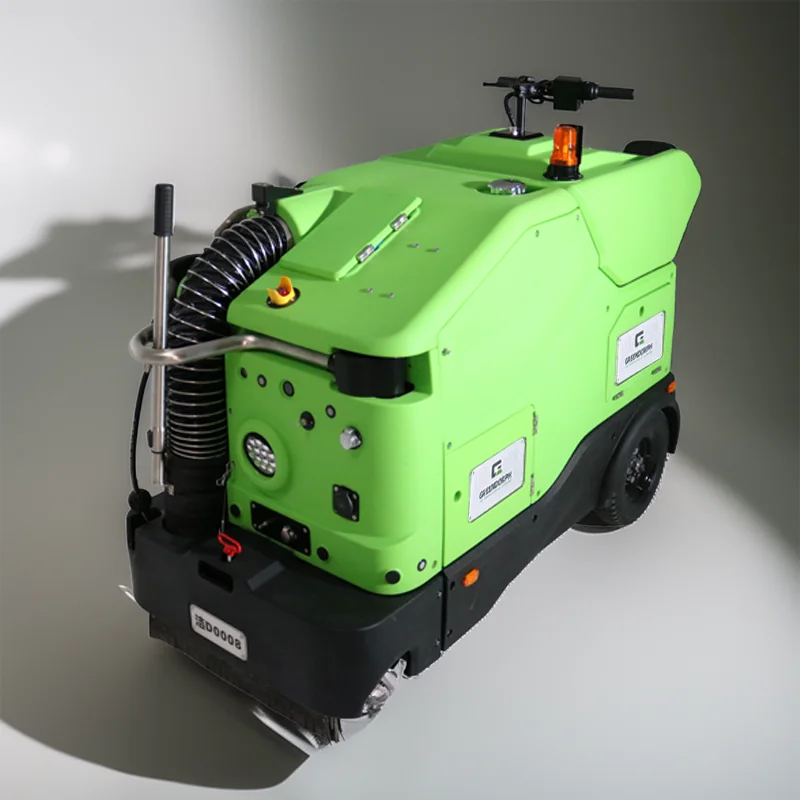
Dry sweeping across dry concrete plazas can easily launch massive particulate clouds, exposing facility users to harmful breathing hazards. Modern dust containment relies on a balanced system that uses high-pressure water misters to bind small particles together right before vacuuming. This wet-suppression mechanism traps fine concrete dust securely inside the collection hopper instead of venting it back into the neighborhood air.
Autonomous outdoor vacuum robots deliver steady dust control and safety for busy municipal and industrial roadways. Efficient fabric filters reduce fine particle leakage to preserve ambient air quality. We refine closed filtration structures to protect city public areas and nearby residential districts.
Transitioning to Clean Battery Power for Quiet Outdoor Operations
Conventional fuel-powered sweeping trucks generate loud noise during nighttime operations, which easily disturb residents living nearby. Upgrading to mature battery-electric drive systems enables facilities to conduct low-noise, environmentally friendly cleaning work around the clock. Electric-driven cleaning work effectively cuts annual power expenditure and reduces carbon emissions produced on the facility premises.
Our advanced utility platforms are 100% electronically powered, ensuring quiet operation and a significantly reduced carbon footprint. This clean energy approach allows property managers to schedule deep cleaning cycles during quiet overnight hours without disturbing nearby residents. At Greendorph, we prioritize building quiet, low-emission electric vehicles that lower your annual energy costs while keeping your property pristine.
Utilizing Real-Time Telemetry and System Metrics for Fleet Logistics
Managing multiple cleaning zones across a massive commercial property requires clear, constant visibility into your equipment’s location and performance. Modern utility fleets use advanced telemetry modules to transmit real-time data on battery levels, area coverage, and diagnostic statuses directly to your dashboard. This remote oversight allows supervisors to monitor their equipment’s progress and coordinate maintenance schedules without having to step onto the floor.
Our integrated software supports live status tracking, giving operators full visibility into every sweeping run and system metric instantly. With a cleaning speed of up to 5000㎡/hour cleaning, our automated systems allow you to cover massive areas quickly and efficiently. Powerful remote monitoring allows ground maintenance teams to oversee large cleaning operations effortlessly and seamlessly.
Conclusion
Preserving sprawling public hardscapes and commercial access paths requires replacing manual cleanup routines with specialized, automated electric utility equipment. Utilizing quiet, low-emission autonomous vehicles allows facility managers to protect floor coatings, control fine dust, and reduce moisture hazards. These compact, battery-powered machines deliver exceptional cleanliness consistency across expansive public plazas while reducing annual repair and labor expenses. Our team remains fully dedicated to engineering the robust, sustainable electric tools required to support grounds crews and keep global facility assets pristine.