High-dust public areas create cleaning challenges that basic sweeping cannot fully address. Fine dust settles along curbs, near drains, around benches, and across open paved surfaces. If crews only move loose debris, particles can rise again and spread into nearby areas.
A practical cleaning plan should combine collection, dust control, airflow, spraying, and flushing according to site conditions. This approach helps crews handle different types of dirt without relying on repeated manual passes. It also gives supervisors a clearer way to assign tasks across long or mixed-use routes.
Why High-Dust Areas Need Several Cleaning Methods
Public roads, squares, parks, and industrial access routes often contain mixed contamination. Dry leaves, grit, paper waste, fine dust, and compacted dirt may appear within the same work zone. Cleaning methods should therefore be selected by debris type and surface condition.
A street vacuum supports direct collection where loose waste gathers in concentrated areas. It is useful around curbs, corners, tree pits, and narrow edges where manual sweeping can simply move debris elsewhere. Route planning should also consider traffic, pedestrians, wind, and pavement condition.
Dust suppression is equally important. Misting can limit the amount of fine material that becomes airborne during cleaning. Water spraying can prepare dirty surfaces for further treatment, but operators should control water use to avoid unnecessary runoff.
Timing also affects the result. Dry, windy periods can increase dust movement, while wetter conditions may cause fine material to stick to textured surfaces. Cleaning teams should adjust the sequence when environmental conditions change.
Matching Functions to Surface Conditions
Smooth pavement and textured concrete do not behave in the same way. Fine particles can remain inside grooves, while light debris may collect against edges. In these areas, suction, airflow, spraying, and flushing can work as a coordinated process.
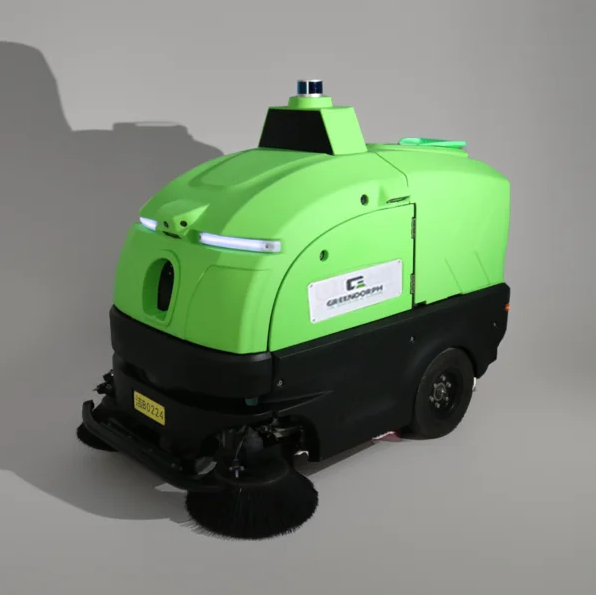
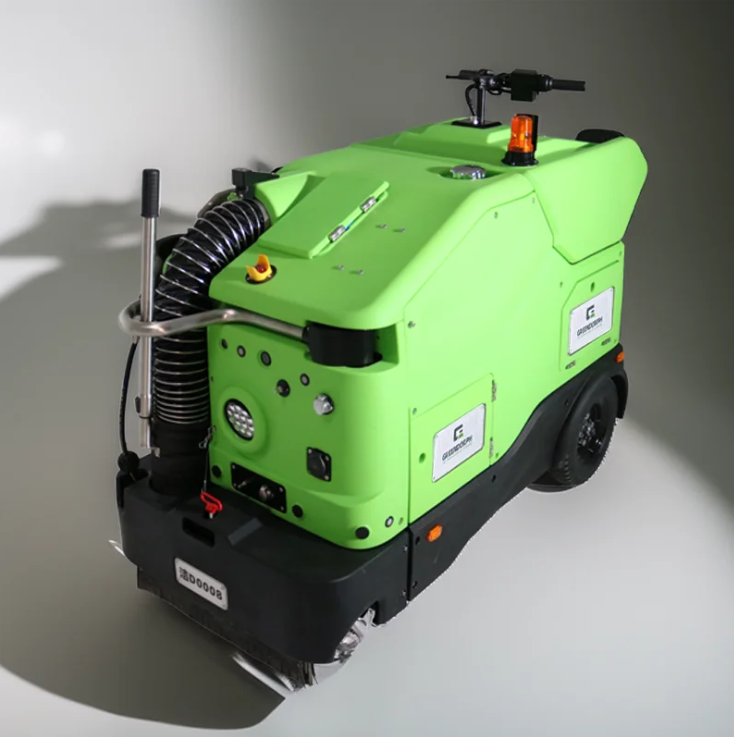
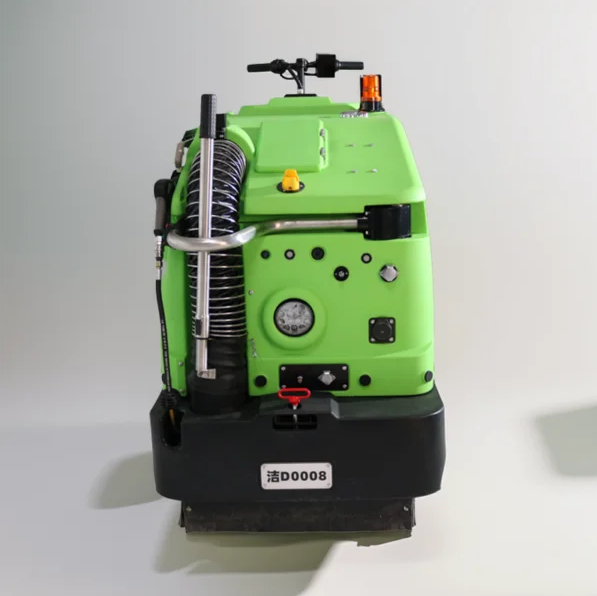
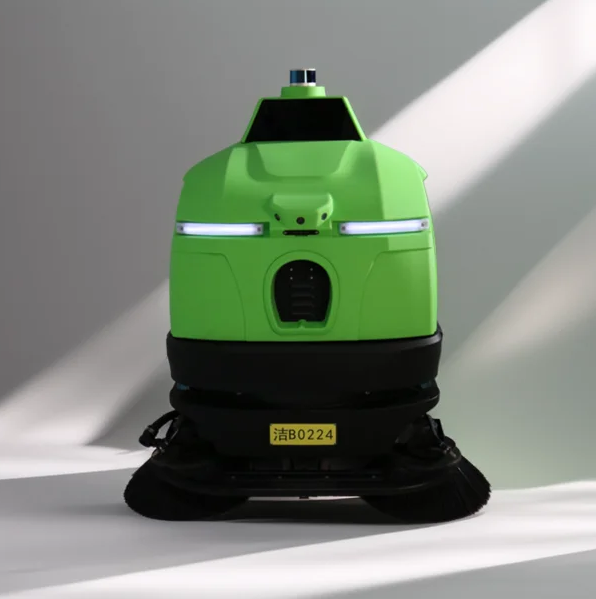
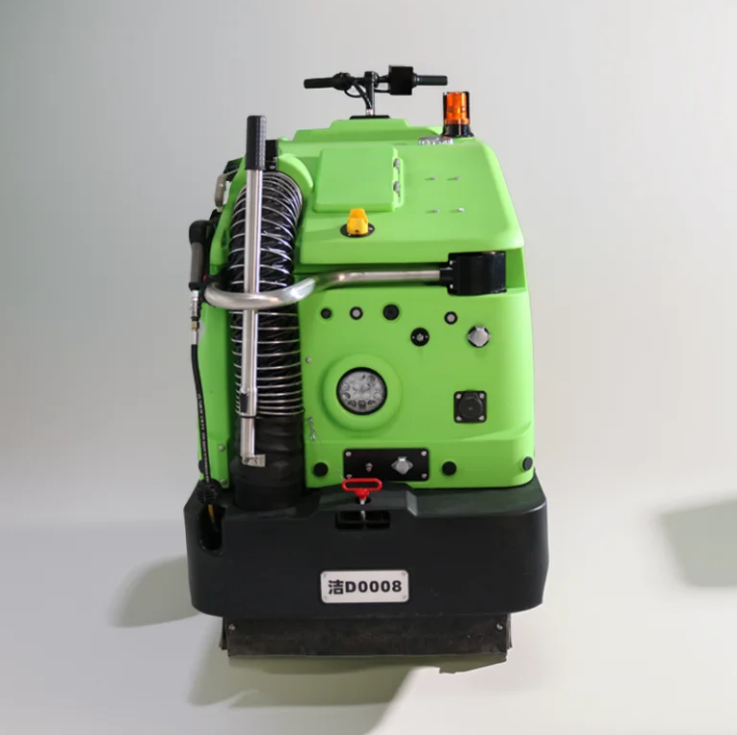
We designed the YJ80 Vacuum Street Sweeper around this idea. Its negative-pressure system works with targeted vacuum-tube collection, intelligent dust-suppression misting, turbine-speed airflow blowing, water-spray cleaning, and high-pressure surface flushing. These integrated functions bring work commonly handled by six separate machines into one road sweeper vacuum platform.
The practical value comes from choosing the right function for the dirt present. Dry waste may need suction and blowing. Adhered dirt may respond better to spraying and flushing. Crews can change methods within one route instead of repeatedly switching equipment.
This also matters in sites with mixed cleaning zones. A route may move from open pavement to curb edges, entrances, or landscaped boundaries within a short distance. Function changes should follow those surface transitions.
Route Planning Shapes Daily Cleaning Results
We recommend dividing high-dust zones into clear work sections before cleaning begins. Crews can identify curb lines, open pavement, pedestrian spaces, corners, drainage points, and areas where litter often accumulates. Each section can then receive a suitable cleaning sequence.
Loose debris can first be moved from difficult corners with controlled airflow. Fine dust can be treated with misting before disturbance. Heavier surface dirt can be flushed after loose material has been collected. This sequence reduces unnecessary repeat passes.
At Greendorph, we treat route planning as part of machine application. Our systems are developed for B2B users managing streets, parks, plazas, and other outdoor spaces. Equipment selection still needs to work together with staff training, operating procedures, and site-specific task planning.
Secondary Dust Needs Attention
Visible waste is only one part of street cleaning. A machine can remove litter while still creating airborne dust behind it. In busy areas, this may affect pedestrians, vehicles, nearby shops, or facility entrances.
A second street vacuum pass can help where dust becomes concentrated after blowing. Misting can also be used before or during collection to reduce re-suspension. Water volume should match dust level, weather, and pavement condition instead of following one fixed setting.
We also recommend inspecting collection areas during the shift. Debris buildup near suction points or changes in wet waste can affect material flow. Routine checks of hoses, nozzles, collection paths, and water supply help keep the process stable.
What Buyers Should Review Before Deployment
Cleaning width or travel speed alone does not explain how a machine will perform on a real route. Buyers should review site access, curb layout, water availability, debris type, route length, storage conditions, and maintenance access before selecting equipment.
When evaluating a road sweeper vacuum, buyers should also examine how suction, misting, blowing, spraying, and flushing are used during actual work. The goal is to reduce equipment changes while keeping operation clear for cleaning teams.
For projects that need several methods on one route, Greendorph uses the YJ80 as a practical example of integrated outdoor cleaning. We focus on combining functions that support different surface conditions while keeping equipment use tied to real daily tasks.
Managing Dust-Heavy Routes with a Clear Process
High-dust public areas become easier to manage when cleaning methods follow a clear sequence. Vacuum collection, misting, airflow, spraying, and flushing each address a different problem. Their value depends on matching them with the surface, debris, and route conditions.
For B2B operators, the useful question is not how many functions appear on a specification sheet. It is how those functions reduce repeated work across a shift. Clear planning, controlled dust suppression, regular inspection, and flexible cleaning methods can make public-area maintenance more consistent and easier to organize.