Facility managers rarely choose cleaning equipment based on one specification. A machine may look efficient on paper but still create problems if it does not match the site, staffing pattern, storage space, or daily routine. Before purchasing, we recommend asking practical questions about debris, operating modes, water use, maneuverability, safety, and maintenance.
The same questions matter across campuses, parks, commercial complexes, transport hubs, industrial yards, and municipal spaces. A suitable ride on sweeper should fit the real route, not just a brochure description. Managers should also consider how often the machine changes tasks during one shift and whether crews can handle those changes without wasting time.
Start With the Cleaning Route
The first question should be simple: where will the machine work each day? Route width, turning space, curbs, ramps, planted areas, parked vehicles, and pedestrian traffic all affect equipment choice. An open plaza has different needs from a narrow service road or a park path with frequent edges.
We recommend mapping the route before comparing machines. Teams should record tight corners, uneven surfaces, and areas with leaves, dust, litter, mud, or standing water. This shows whether sweeping alone is enough or whether washing, blowing, dust suppression, and targeted pickup are also needed.
We also suggest checking how often routes change. Some facilities have fixed morning cleaning zones. Others respond to events, deliveries, weather, or temporary work areas. Flexible operating modes can be useful when daily conditions vary. This also helps managers estimate labor needs across different cleaning periods.
Ask What One Machine Can Replace
Cleaning productivity depends on more than travel speed. Teams often lose time when workers switch between sweepers, pressure washers, blowers, and manual collection tools. We suggest asking how many cleaning functions are built into one platform and whether crews can use them during the same shift.
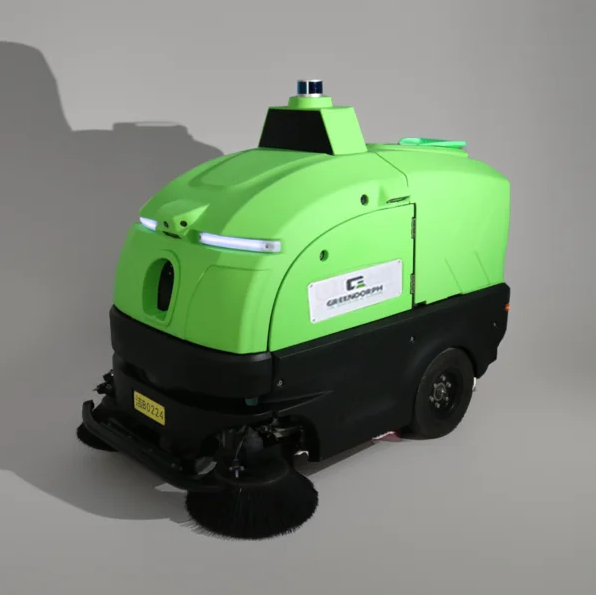
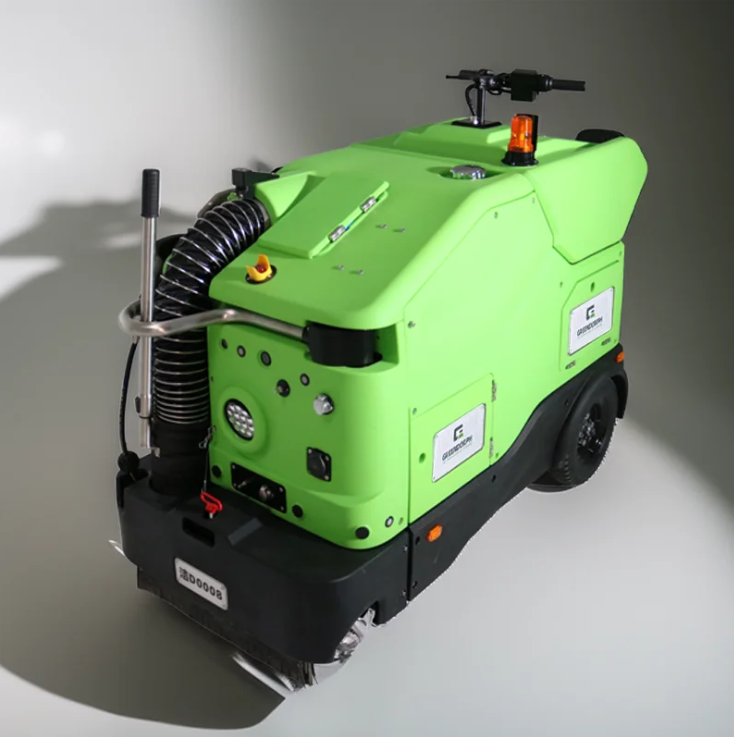
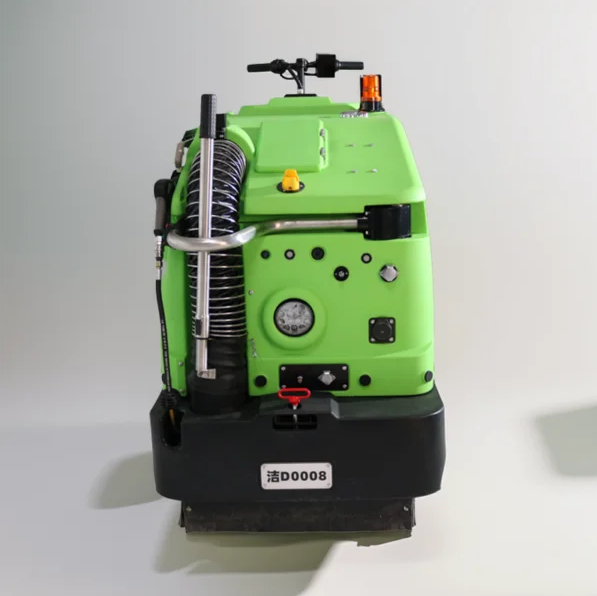
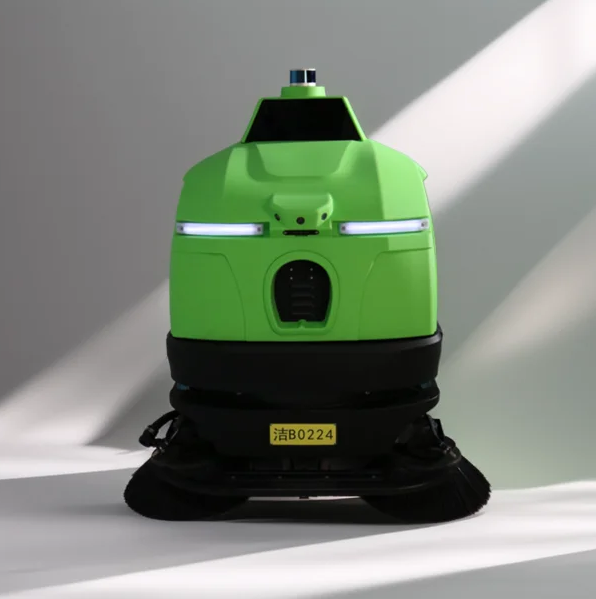
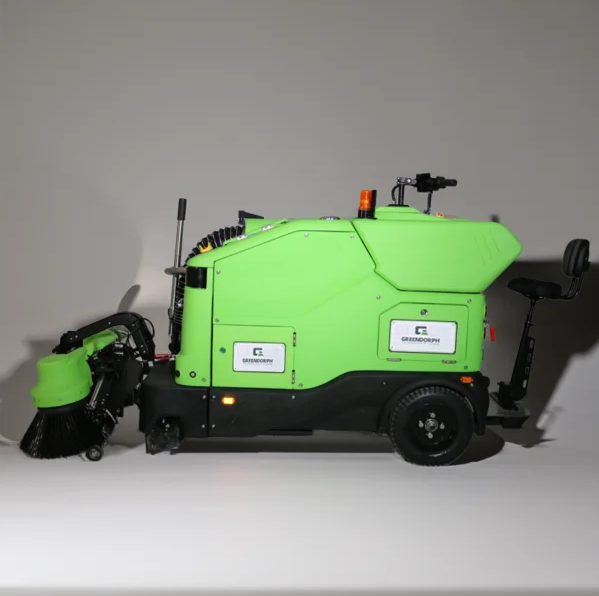
The Omniclean Urban Street Sweeper YJ80 provides one example. We designed it with manual driving, auto-follow, and towed traction modes. Its system combines vacuum collection, high-pressure flushing, water-spray cleaning, turbine blowing, targeted tube collection, and dust-suppression misting.
For facilities comparing a ride on sweeper for sale, the key question is not how many functions appear on a specification sheet. We recommend checking whether those functions match actual tasks and whether crews can change modes without disrupting the cleaning flow.
Consider How Operators Work Around the Site
Operator workload deserves close attention. Some sites need a driver seated for long routes. Other jobs require a worker to step away and clean around benches, corners, drains, or roadside objects. In these cases, the connection between operator movement and machine movement affects productivity.
Our YJ80 uses UWB positioning for auto-follow operation. The worker carries a receiving module, while the vehicle uses a base module for communication. The following range is 1 to 6 meters within a ±60-degree angle. This supports work that combines mobile equipment with handheld cleaning tasks.
We also advise checking remote coordination. The machine can connect with a mobile application and cloud platform for remote scheduling and task initiation. Greendorph applies this setup where several machines or cleaning zones may need coordinated operation instead of separate manual dispatch.
Match Capacity to the Daily Workload
Tank and bin capacity affect how often equipment must stop. The YJ80 has a 120 L water tank and a 100 L waste bin, with a working time of about 6 to 8 hours. We recommend comparing those figures with route length, debris volume, water demand, and access to refill or disposal points.
High-pressure washing is another practical detail. The system provides about 15 MPa of pressure. Managers still need to decide where water use fits the site. Landscaped paths, public squares, service roads, and loading areas can require different cleaning methods.
Cleaning width should also be checked against physical constraints. The YJ80 has an extendable side brush that expands the cleaning width to 140 cm. A ride on sweeper should be judged by how its width works around curbs, corners, narrow lanes, and edge areas, not by width alone.
Review Sensing Before Daily Deployment
Facilities with mixed pedestrian and vehicle traffic need careful obstacle planning. We recommend asking which sensors are installed and how the machine responds near people, fixed structures, and low objects. Sensor coverage needs to suit the operating mode and the environment.
The YJ80 combines multi-line lidar, single-line lidar, a 3D camera, and ultrasonic sensing for obstacle detection. Procurement teams should still review how sensing works together with route rules, operator procedures, and site supervision.
When evaluating a ride on sweeper for sale, managers should also check training, inspection routines, and operating boundaries. Technology supports the cleaning process, but organized site procedures remain important during daily use.
Turn Site Questions Into a Practical Purchase Decision
Facility managers can make a clearer comparison when they start with daily work instead of isolated specifications. Route conditions, debris type, operator movement, refill frequency, cleaning functions, sensing, and coordination all influence whether equipment fits a facility.
These practical questions will also shape our conversations at Interclean Shanghai 2026, scheduled for October 28–30 at the Shanghai New International Expo Centre. At Greendorph, we plan to demonstrate how the YJ80’s operating modes and six cleaning functions support different maintenance tasks. Facility managers attending the event can discuss their route conditions, staffing arrangements, and cleaning schedules with our team. Such exchanges can help buyers identify suitable equipment capabilities before making procurement decisions.