Residential cleaning is not limited to private apartments. Property managers also maintain lobbies, corridors, parking areas, entrance zones, community roads, and shared outdoor spaces. Different surfaces collect different types of dirt, so machine selection should depend on surface material, traffic level, available space, drainage, and cleaning frequency.
A residential floor scrubber machine is useful where manual cleaning becomes repetitive or difficult to standardize. For B2B buyers, the key question is whether the equipment fits the daily workflow of a residential property and reduces unnecessary movement between separate cleaning tasks.
Shared Lobbies and Entrance Areas
Building entrances often collect dust, sand, rainwater, leaves, and dirt carried in by pedestrians. These areas need regular attention because they are highly visible. Cleaning machines can support a more consistent routine in larger apartment buildings or mixed-use residential developments.
Equipment used here should be easy to control around doors, columns, benches, and access-control points. Compact turning and obstacle detection can be more useful than high travel speed. Operators also need to consider how the machine moves near pedestrians during scheduled cleaning periods.
For property teams comparing a residential floor scrubber, the entrance area is a practical place to evaluate handling, edge cleaning, water control, and how easily staff can move between open spaces and narrower routes.
Corridors and Internal Common Areas
Long corridors create a repetitive cleaning workload. Staff may need to cover the same route several times each week. A machine can make this process more structured, but its width, steering response, and cleaning method must match the corridor layout.
Floor material also matters. Smooth tile, sealed concrete, and similar surfaces may require different cleaning approaches. Managers should also consider lifts, fire doors, furniture, and temporary obstacles that can interrupt the route.
In projects with multiple buildings, standardizing procedures can reduce training complexity. At Greendorph, we view equipment selection as part of the route and work sequence rather than a reason to redesign the entire cleaning process.
Underground Parking and Garage Floors
Parking areas often contain tire dust, sand, leaves, mud, and occasional liquid residue. They also include ramps, pillars, barriers, drainage channels, and moving vehicles. Visibility and obstacle awareness therefore become important during cleaning.
A machine used here needs enough working width for open lanes while remaining manageable around parking spaces and columns. Water capacity and runtime also affect how often staff must stop for refilling, emptying, or charging. Buyers should map these service points before deployment because repeated detours can reduce productive cleaning time.
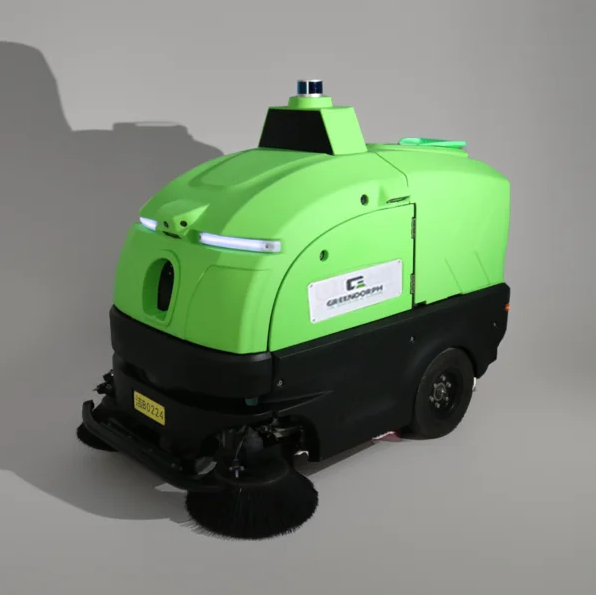
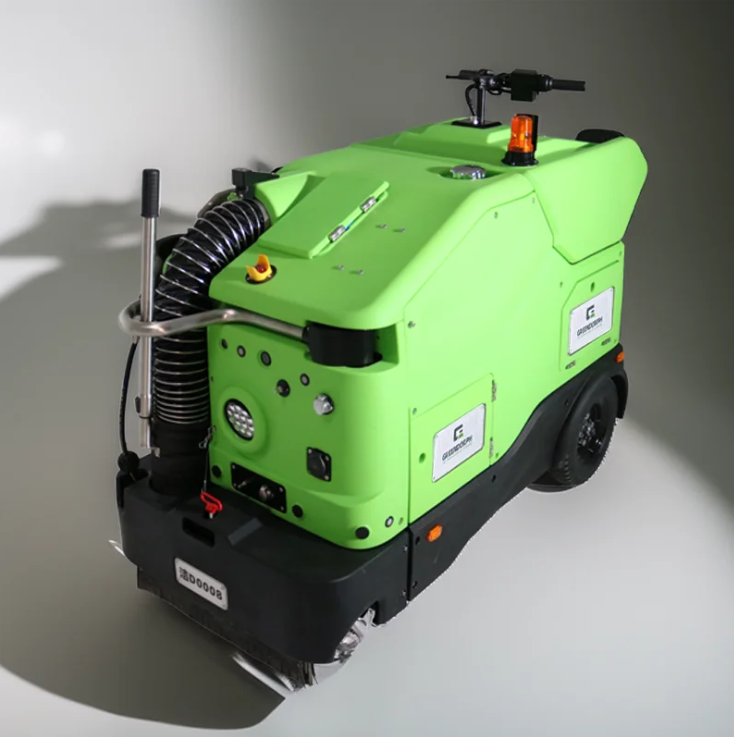
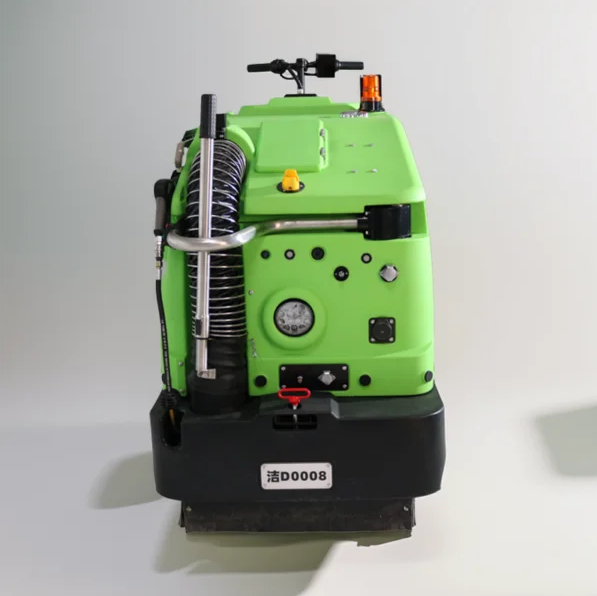
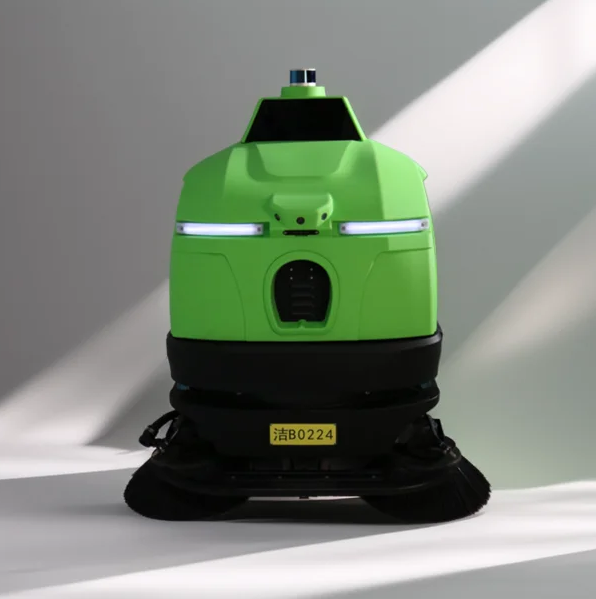
The YJ80 combines six cleaning functions in one platform and supports a follow mode for tasks that still require operator participation. Its water tank is 120 L and its waste container is 100 L. Operating time is about 6–8 hours, which can suit longer property-maintenance shifts when routes are planned in advance.
Community Roads and Outdoor Residential Spaces
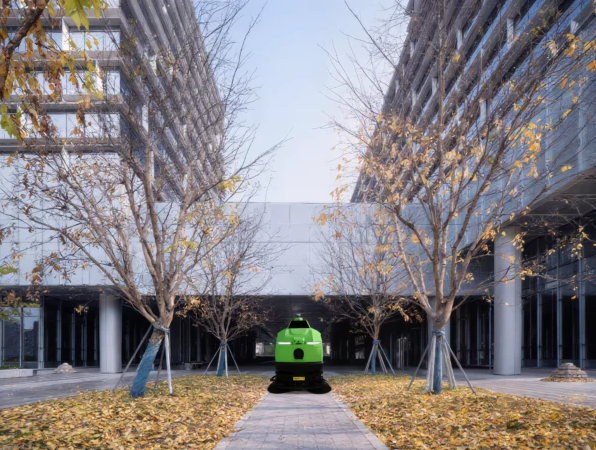
Residential developments often include internal roads, pedestrian paths, small plazas, garden edges, and activity areas. These spaces collect leaves, dust, light litter, and dirt from changing weather, so equipment must handle more variable conditions than an indoor corridor.
The YJ80 uses a retractable side brush that can extend the cleaning width to 140 cm. It also provides sweeping, blowing, spraying, and high-pressure washing functions. The high-pressure water gun works at around 15 MPa for selected hard-surface cleaning tasks.
Its sensor system combines multi-line lidar, single-line lidar, a 3D camera, and ultrasonic sensing. These functions are relevant because outdoor residential routes can include curbs, pedestrians, landscaping, parked vehicles, and changing obstacles.
When a residential floor scrubber machine is considered for outdoor community areas, buyers should review route complexity, edge distance, surface condition, drainage, pedestrian flow, and refill points instead of looking only at rated productivity.
Large Residential Compounds and Multi-Building Sites
Large developments may have several towers, underground levels, gardens, and long connecting routes. The challenge is often coordination rather than one difficult cleaning task. Managers need to know where machines are working, which areas are complete, and how staff can respond when priorities change.
The YJ80 supports remote operation through a mobile application and cloud platform. Multiple machines can be scheduled remotely, and tasks can be issued from the platform. This can help property teams organize work across larger sites without relying only on manual coordination.
Its follow function uses UWB positioning. Staff carry a receiving module that communicates with the base module on the machine. The following range is 1–6 m within an angle of ±60 degrees. This supports supervised tasks where staff still move with the equipment.
Choosing the Right Area for Machine Deployment
A residential floor scrubber can provide more practical value when assigned to the right space. Wide and repetitive routes usually benefit first, while narrow rooms, staircases, and heavily furnished areas may still require manual tools. A balanced plan can combine machine cleaning with targeted manual work. Trial runs are also useful for checking turning space, refill locations, pedestrian interaction, and the time required to complete each route.
At Greendorph, we assess residential cleaning by route, task type, surface condition, and staff workflow. A machine should address a clear operational need. When buyers match equipment functions with actual site conditions, they can create a cleaning process that is easier to manage and more consistent across different residential areas.