High-dust facilities create cleaning challenges that go beyond visible dirt. Fine particles can settle on floors, move with vehicle traffic, and return to the air. In these environments, cleaning is not only about appearance. It is also about keeping travel paths clear, reducing dust circulation, and supporting controlled operation.
For factories, logistics yards, warehouses, and loading zones, manual sweeping can become difficult to sustain. A suitable industrial cleaning machine can cover wider areas, collect debris more consistently, and reduce repeated manual work. The main value comes from matching the cleaning method to the type of dust, floor condition, traffic pattern, and operating schedule.
Dust Control Starts with the Cleaning Process
High-dust sites often deal with mixed contamination. Fine dust may appear together with sand, packaging debris, leaves, or loose industrial waste. If cleaning only pushes material from one area to another, dust can quickly return to the surface.
This is why sweeping systems need more than basic brush movement. Dust suppression, debris collection, and stable airflow control can help reduce secondary dust during operation. The cleaning path also matters because missed zones can become long-term accumulation points.
We usually recommend reviewing how dust is generated before selecting equipment. Buyers should look at production activity, vehicle routes, loading frequency, floor roughness, and the size of open areas. These factors affect cleaning frequency and machine configuration.
Large Areas Need Consistent Coverage
Manual crews can handle small or irregular spaces, but large facilities often require more consistent coverage. Long travel routes make cleaning efficiency more important, especially when dust returns quickly after each production cycle.
An industrial cleaning machine can help standardize the cleaning route and reduce variation between different operators. This is useful for sites that need repeated cleaning across fixed zones, outdoor paved areas, or large circulation spaces.
Coverage width also affects daily productivity. Wider sweeping paths can reduce the number of passes required, while edge-cleaning capability helps manage curbs, walls, and lane boundaries. Buyers should compare these details instead of judging equipment only by overall size.
Automation Can Reduce Repetitive Manual Work
High-dust cleaning can involve long periods of repetitive driving, sweeping, and route checking. In large facilities, this can increase labor demand without necessarily improving cleaning consistency.
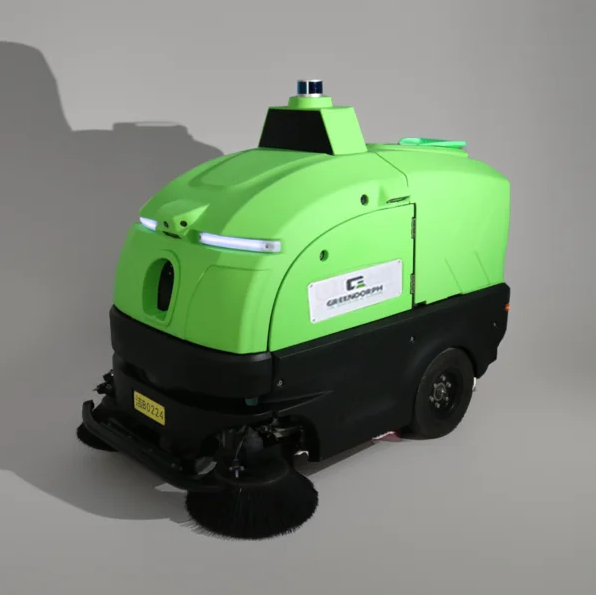
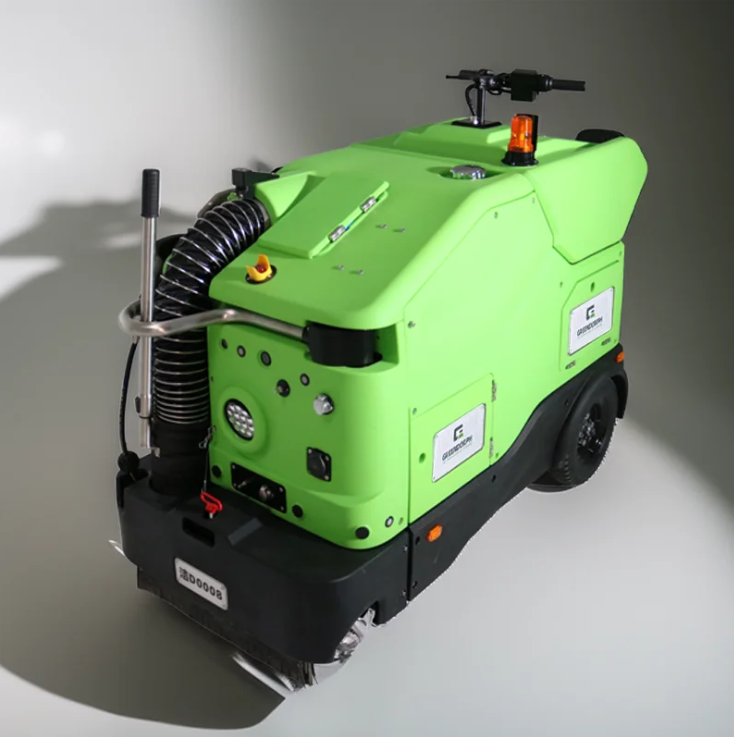
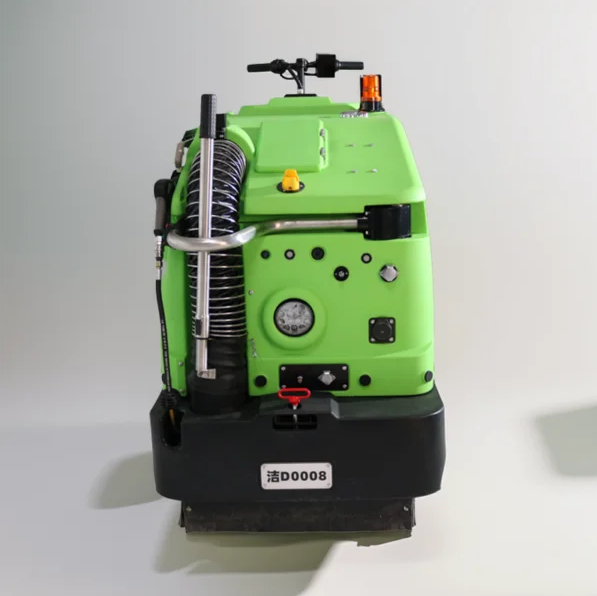
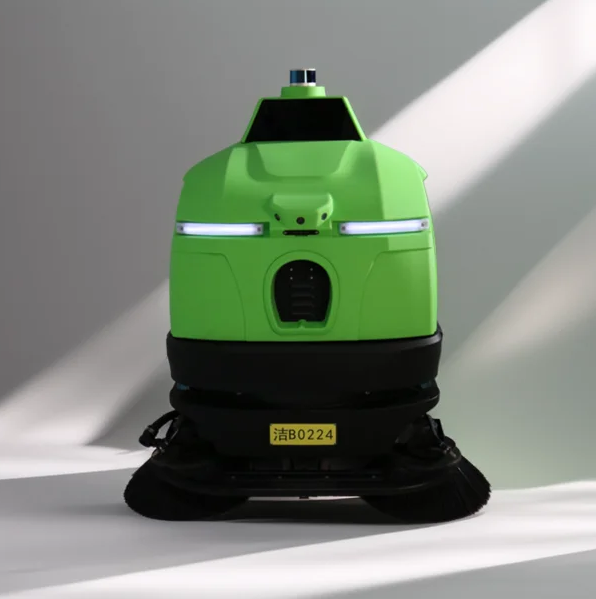
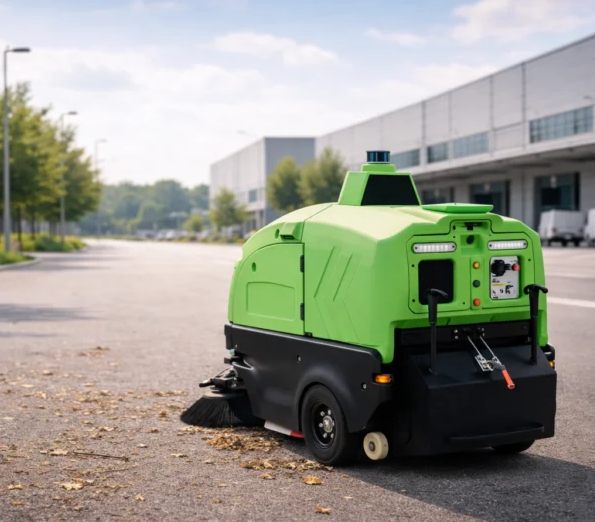
Our company develops robotic cleaning equipment for industrial environments. Greendorph YJ130 is designed for autonomous outdoor cleaning and supports breakpoint resumption. If the machine needs charging, water refilling, or waste-bin emptying, the system can record progress and continue from the interrupted point after work resumes.
The model also combines multi-line LiDAR, single-line LiDAR, 3D cameras, and ultrasonic sensing. These systems support obstacle detection during autonomous operation. For sites with changing traffic or temporary objects, sensing can make route execution more practical.
Dust Suppression Matters as Much as Sweeping
Dry sweeping in dusty environments can lift fine particles back into the air. This is why dust control features deserve careful attention when selecting equipment.
YJ130 uses spray dust suppression together with a dust-shaking mode. Its dust-control design is intended to reduce dust around the brush area and above the waste bin. This makes it relevant for facilities where loose dust can be disturbed during cleaning.
For buyers comparing a floor cleaning machine industrial setup, the key question should be whether the machine can manage both debris collection and dust movement. Brush design, water use, bin capacity, route speed, and cleaning frequency should be evaluated together.
Edge Cleaning Improves Overall Site Results
Dust often builds up along walls, curbs, storage boundaries, and the edges of paved lanes. These areas are easy to miss when a machine mainly focuses on open floor space.
A useful sweeper should be able to work close to boundaries without frequent route corrections. YJ130 can perform close-edge cleaning with a minimum gap of 10 cm. This supports better coverage along road edges and fixed boundaries.
The same principle applies when evaluating a floor cleaning machine industrial configuration for warehouses or large service areas. Main-floor productivity is important, but edge access, turning space, sensor performance, and obstacle response can affect real cleaning results.
A Practical View of Machine Selection
No single sweeper suits every dusty facility. Buyers should first identify the dust source, cleaning area, operating hours, route complexity, and waste type. Water capacity and waste-bin size should also match the planned cleaning cycle.
YJ130 uses a 120 L water tank and a 150 L waste bin. These capacities can support longer cleaning tasks before service stops, depending on site conditions and dust volume. Greendorph also provides remote and on-site mapping options, which can support deployment in facilities with different route layouts.
For B2B users, a practical approach is to compare equipment against actual operating conditions rather than selecting by one specification. Dust control, route continuity, edge coverage, sensing, service intervals, and deployment requirements should be reviewed as one system.
Why High-Dust Facilities Benefit from Mechanized Sweeping
Industrial floor sweepers are important because high-dust sites need repeatable cleaning, not occasional surface improvement. Mechanized sweeping can help control debris movement, reduce missed zones, and make large-area cleaning easier to schedule.
When the equipment also combines dust suppression, route automation, obstacle sensing, and close-edge cleaning, it can support a more structured cleaning process. The goal is not simply to replace manual labor. It is to create a cleaning method that fits the scale, dust level, and operating rhythm of the facility.