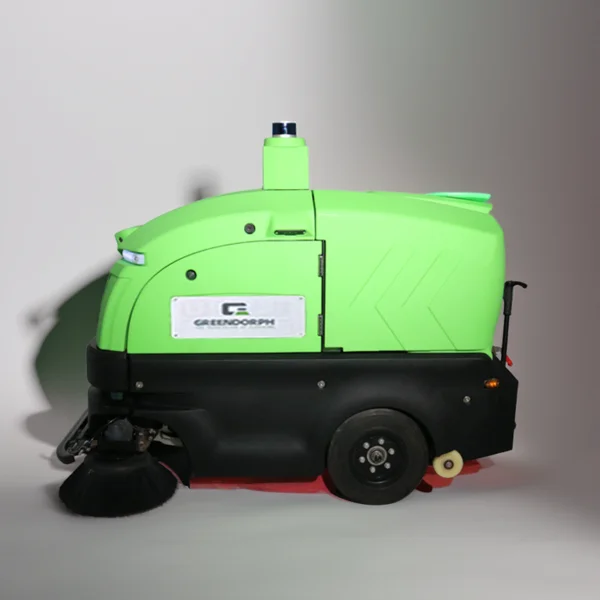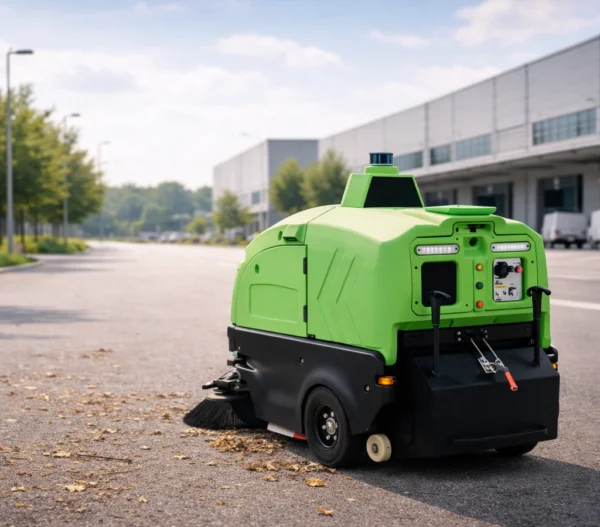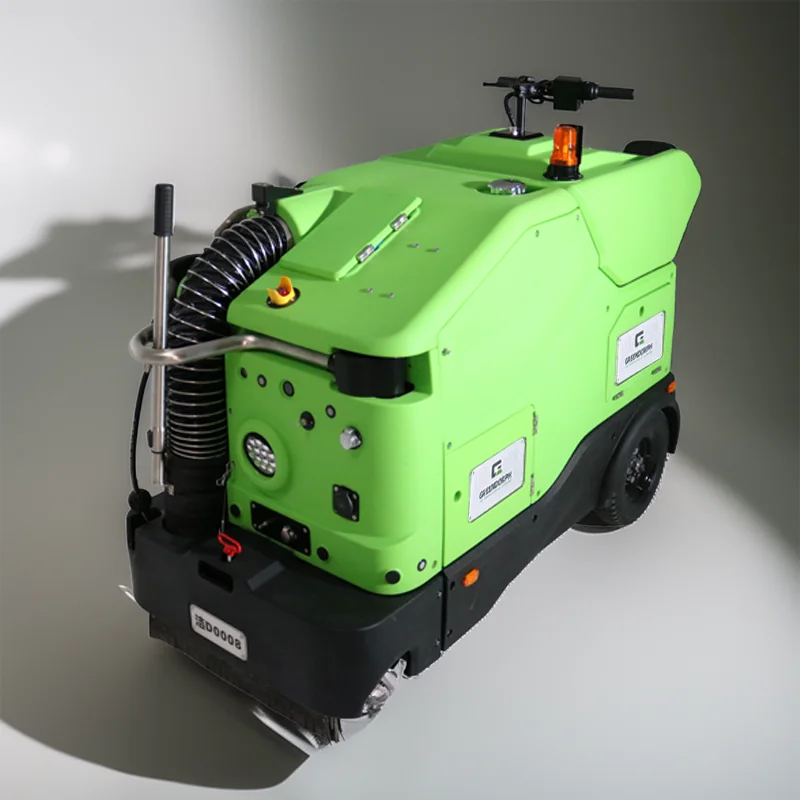
Effective floor cleaning in industrial environments demands more than simply applying water and detergent. The true measure of a cleaning system lies in how efficiently it removes soiled solution from the floor surface, because residual moisture creates safety hazards, extends drying time, and can lead to slip accidents. In a ride on sweeper scrubber, the water recovery subsystem represents one of the most carefully engineered components, balancing vacuum power, squeegee design, and fluid dynamics to achieve near-dry results immediately after cleaning. We have observed that understanding this science helps facility managers evaluate equipment not just by scrub width or tank capacity, but by the fundamental physics that determine whether a floor is truly clean and safe.
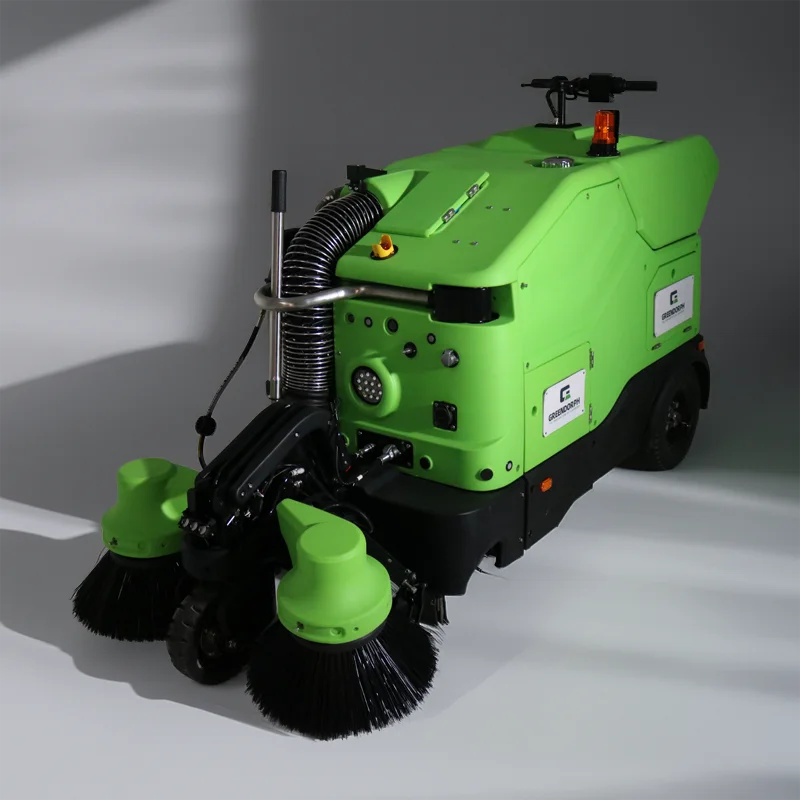
Squeegee Geometry and Vacuum Dynamics
At the heart of water recovery lies the squeegee assembly, a precisely shaped elastomer tool that creates a controlled seal against the floor. A ride on sweeper equipped with scrubbing capability uses a rear-mounted squeegee that trails behind the brush deck. The squeegee’s angle, blade material, and split pattern determine how effectively it channels water toward the vacuum inlet. When the ride on sweeper scrubber moves forward, the leading edge of the squeegee lifts water into a concentrated stream, while the trailing edge maintains contact to prevent bypass.
From a fluid mechanics perspective, the vacuum system generates negative pressure that must overcome both gravitational forces and surface tension. We design the airflow path to maintain consistent velocity across the entire squeegee width, ensuring that water is extracted uniformly rather than pooling in low spots. In a properly tuned ride on sweeper, the vacuum motor creates a pressure differential that draws the water-laden air upward through a recovery hose and into a separate tank. The separation of air and water is achieved through baffle systems and drop boxes that reduce turbulence, allowing the airstream to exit while retaining the recovered liquid.
The Role of Solution Flow and Brush Interaction
Water recovery efficiency begins before the squeegee ever contacts the floor. The scrubbing process itself must suspend soil without oversaturating the surface. In a ride on sweeper scrubber, solution flow is metered to match floor type and soil load. Excessive water increases the hydraulic load on the recovery system, potentially overwhelming its capacity and leaving behind a film. Insufficient water reduces cleaning effectiveness.
The brush or pad applies mechanical energy to dislodge embedded dirt, creating a mixture of water, detergent, and suspended solids. This mixture is then swept toward the squeegee by the brush rotation and machine travel. We have found that brush pressure and pattern design significantly influence recovery outcomes, because the scrubbing action must propel the solution into the path of the squeegee without splashing it outside the seal. Advanced ride on sweeper models use variable brush speed and pressure controls to maintain optimal suspension based on real-time feedback from floor sensors.
Material Science and Maintenance for Consistent Performance
Even the most sophisticated water recovery system depends on the condition of its components. Squeegee blades are manufactured from polyurethane compounds formulated for specific floor types—harder compounds for smooth concrete, softer blends for uneven or textured surfaces. Over time, blade edges wear and develop nicks that allow air infiltration, breaking the vacuum seal and reducing recovery efficiency. We at Greendorph recommend routine inspection of both the squeegee blades and the vacuum hose connections, as any leak in the system directly compromises the ability of a ride on sweeper scrubber to leave a dry floor.
Additionally, the separation of solids from the recovered water plays a role in long-term reliability. Debris that enters the recovery tank can clog filters or accumulate in the vacuum pathway. Many modern ride on sweeper platforms incorporate debris baskets or pre-filters that capture large particles before they reach the tank, maintaining consistent airflow. When these maintenance practices are followed, the recovery system delivers repeatable performance from run to run, ensuring that facilities avoid the inefficiencies of re-cleaning or the risks of wet floors.
The water recovery system in a ride on sweeper scrubber is a study in applied physics, combining squeegee geometry, vacuum dynamics, and precise solution control to achieve safe, dry results. For industrial facilities where floor conditions directly affect productivity and safety, understanding this science allows operators to select equipment that consistently removes both soil and moisture in a single pass. When we evaluate a ride on sweeper, we look not only at cleaning width or battery life, but at the engineering choices that determine whether water is effectively extracted. By prioritizing recovery performance, facility teams can maintain cleaner environments with fewer resources and greater reliability.