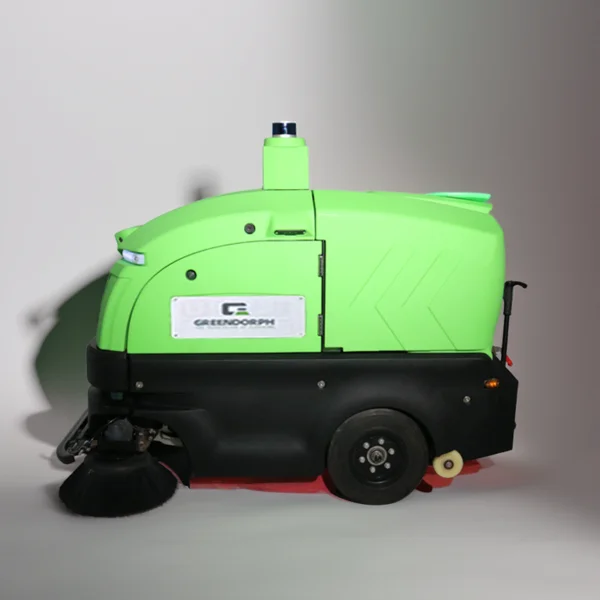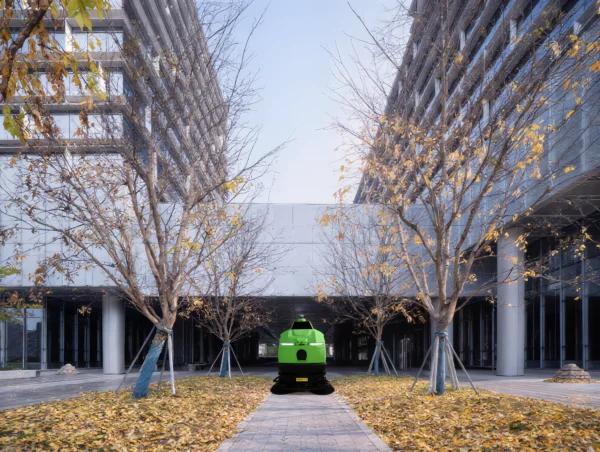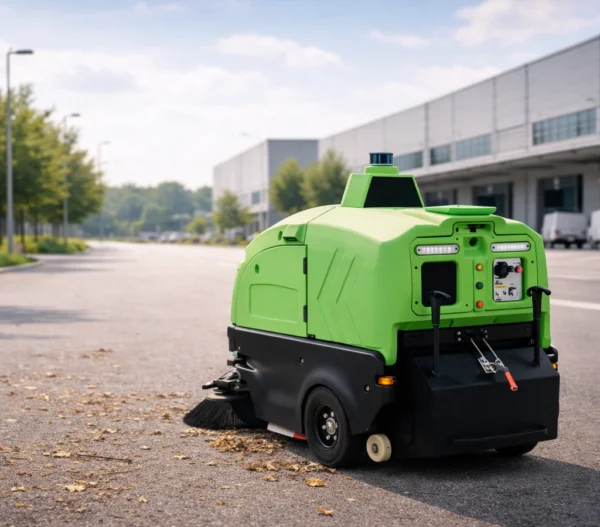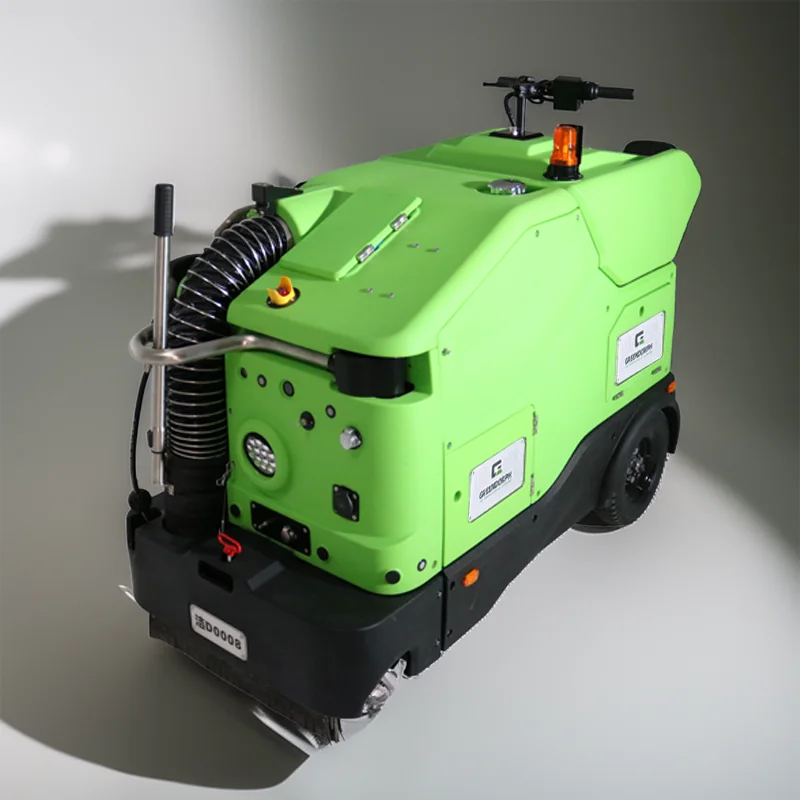
Understanding the engineering anatomy of an autonomous cleaning machine is essential for facility managers and procurement specialists who evaluate long-term performance. Unlike consumer-grade indoor units, a professional outdoor robot cleaner operates under variable weather conditions, traverses uneven terrain, and must maintain consistent throughput across expansive areas. At Greendorph, we design these systems with modular architectures that balance durability, maintainability, and intelligence. In this article, we dissect the core structural layers that define a high‑reliability outdoor robotic vacuum cleaner, providing insight into how each subsystem contributes to field‑proven dependability.
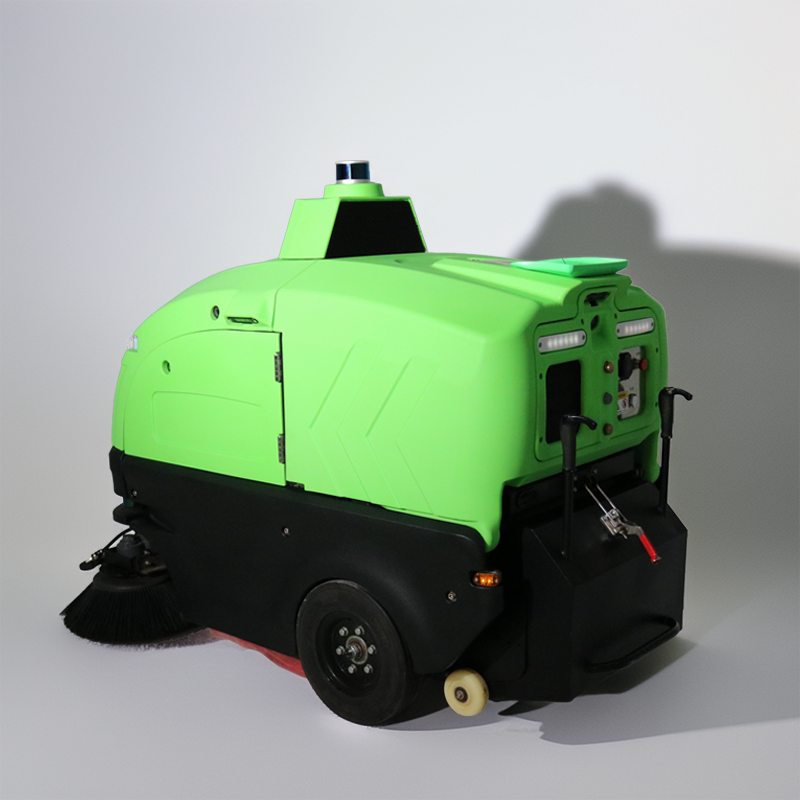
Chassis and Propulsion: The Foundation of Terrain Adaptability
The structural integrity of any outdoor robot cleaner begins with its chassis. Industrial‑grade aluminum or high‑impact polymer frames provide the necessary rigidity while resisting corrosion from moisture, road salts, and debris impacts. Unlike indoor units that operate on predictable flat surfaces, an outdoor robotic vacuum cleaner must negotiate curbs, slopes, and mixed surfaces ranging from asphalt to interlocking pavers. This requires a propulsion system built around high‑torque brushless DC motors, independently suspended drive wheels, and pneumatic or semi‑pneumatic tires that maintain traction on wet or loose substrates. The suspension geometry is engineered to keep the main brush head in constant ground contact, ensuring that suction efficiency does not degrade when traversing minor elevation changes. Collectively, the chassis and drivetrain form the mechanical backbone that enables continuous operation across the diverse environments found in commercial parks, transportation hubs, and industrial campuses.
Debris Management System: From Intake to Containment
Effective debris pickup relies on a carefully orchestrated sequence of mechanical agitation, air flow, and filtration. A professional outdoor robot cleaner integrates a main brush—typically cylindrical with staggered bristle patterns—that dislodges compacted debris from pavement joints and textured surfaces. This is complemented by side brushes that extend the working width and pull material from edges into the primary air stream. The suction system, powered by a high‑efficiency centrifugal fan, creates negative pressure that transports debris through a wear‑resistant duct into a hopper. Separation technology is critical: cyclonic or multi‑stage filtration removes fine particulates before air exits the unit, preventing filter clogging and maintaining suction performance over extended cycles. In our designs, the hopper capacity and filter access points are configured to align with typical shift lengths, minimizing downtime for emptying and servicing. This integrated debris management architecture allows an outdoor robotic vacuum cleaner to maintain consistent pickup rates without operator intervention between scheduled maintenance windows.
Sensor Fusion and Onboard Intelligence
The structural complexity of an outdoor robot cleaner extends into its electronic and perception layers. A professional unit relies on sensor fusion that combines multiple modalities: LiDAR for long‑range structural mapping, ultrasonic sensors for obstacle detection, inertial measurement units for precise localization, and GNSS for absolute positioning in open areas. These data streams feed into an embedded control unit that runs real‑time navigation algorithms. The system must distinguish between transient obstacles—such as pedestrians or service vehicles—and permanent infrastructure, adjusting path planning accordingly. Additionally, environmental sensors monitor temperature, humidity, and precipitation to trigger operational mode changes or return‑to‑dock behaviors during adverse conditions. This intelligence layer transforms the outdoor robotic vacuum cleaner from a pre‑programed sweeper into an adaptive machine capable of maintaining cleaning schedules autonomously while coexisting safely with human activity.
Power, Connectivity, and Serviceability
Underpinning all operational capabilities is a power system designed for high‑uptime deployment. Professional outdoor robot cleaner platforms utilize lithium‑iron‑phosphate or other thermally stable battery chemistries, packaged in sealed enclosures with thermal management to sustain performance across seasonal temperature ranges. Swappable battery configurations enable continuous operation through battery‑exchange shifts, eliminating lengthy recharge pauses. Connectivity architecture incorporates cellular, Wi‑Fi, and optionally LoRaWAN for telemetry uplink, allowing fleet managers to monitor battery status, filter loading, brush wear, and cleaning coverage from a cloud platform. Serviceability is embedded at the structural level: quick‑release brush cartridges, tool‑less hopper removal, and modular electronics boards reduce mean time to repair. These design choices ensure that the outdoor robotic vacuum cleaner delivers predictable operational costs and minimal disruption—critical factors for B2B applications where cleaning schedules directly impact facility usability.
A professional outdoor robot cleaner is far more than a simple automation of manual sweeping; it is a system of integrated mechanical, electrical, and software engineering. Each structural component—from the chassis that withstands rugged terrain to the sensor suite that enables safe autonomy—must be purpose‑built for outdoor commercial environments. At Greendorph, our engineering focus on modularity, durability, and intelligent control has resulted in outdoor robotic vacuum cleaner platforms that operate reliably across hundreds of global deployment sites. For organizations seeking to automate large‑area cleaning, understanding this structural depth provides the foundation for making informed, long‑term investment decisions.