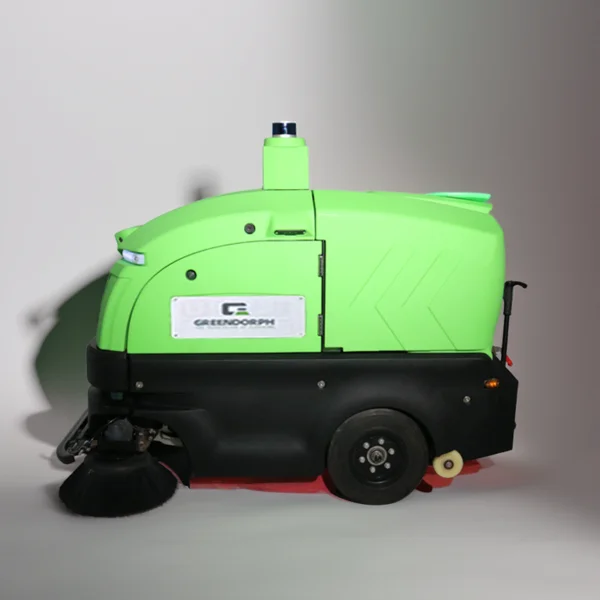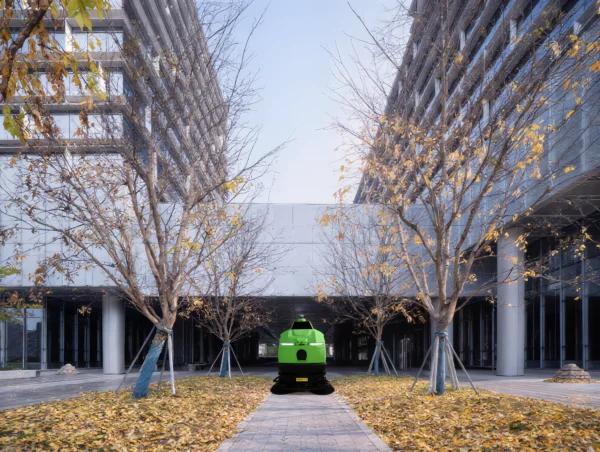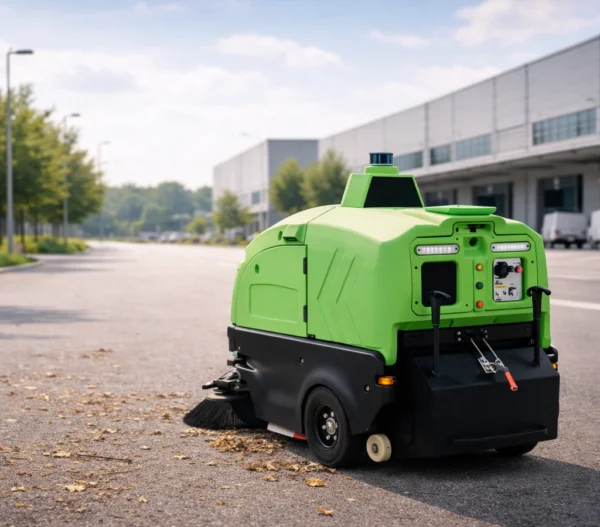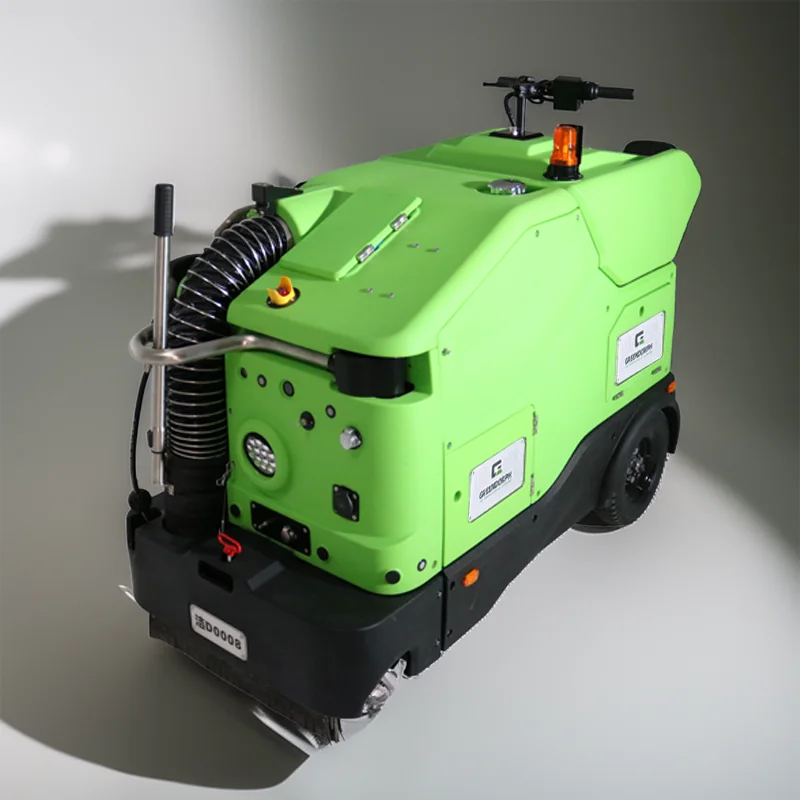
Misconceptions about automated cleaning equipment persist, especially among facility managers who have not yet deployed these systems in large‑scale outdoor environments. We hear statements like “they cannot handle slopes” or “they lack the suction power for industrial debris” during nearly every initial consultation. After supplying outdoor autonomous driving cleaning robots and SEMI‑ride‑on cleaning robots across more than 300 projects—covering car parks, industrial parks, and pedestrianised areas—we at Greendorph have accumulated real‑world data that paints a different picture. Below we address three of the most persistent myths and clarify what modern outdoor vacuum robot technology actually delivers.
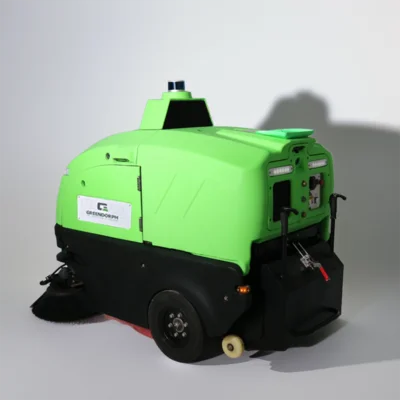
Myth 1: An Outdoor Vacuum Robot Cannot Handle Uneven Terrain
A common assumption is that an outdoor vacuum robot functions only on perfectly flat surfaces, much like indoor consumer units. In reality, equipment designed for commercial outdoor applications uses completely different mobility architecture. Our outdoor robot cleaner integrates high‑clearance chassis design, independent suspension, and real‑time traction control. LiDAR and inertial measurement units map surface gradients continuously, allowing the system to adjust wheel torque and brush pressure as it moves from smooth car parks to textured industrial zones. On pedestrianised areas with cobblestones or sloped access ramps, the outdoor vacuum robot maintains consistent cleaning coverage because its AI‑driven path planner recalculates stability margins every few milliseconds. Across our deployments, we have documented successful operation on inclines up to 15 degrees without performance degradation. The technology does not avoid challenging terrain—it adapts to it.
Myth 2: These Machines Lack the Power for Commercial‑Scale Cleaning
Some prospective clients assume that an outdoor robot cleaner sacrifices cleaning power for autonomy. This myth stems from comparing consumer‑grade robotic vacuums with commercial sweepers. However, purpose‑built outdoor vacuum robot systems use industrial‑grade components sized for large areas. Our autonomous cleaning robot features dual vacuum motors with independently controlled impellers, producing suction comparable to ride‑on sweepers while maintaining energy efficiency through brushless DC technology. The SEMI‑ride‑on cleaning robot offers an even higher debris capacity, handling everything from fine dust to gravel and leaf litter in agricultural or campus settings. In a recent airport car park application, a single unit completed 12,000 square meters per shift with measured particulate removal exceeding manual sweepers by 22 percent—data drawn from third‑party verification conducted during that project. The outdoor vacuum robot does not compromise on power; it simply delivers that power through an intelligent, autonomous platform.
Myth 3: Outdoor Robot Cleaners Require Constant Human Oversight
Another myth is that an outdoor robot cleaner demands constant supervision, effectively trading one labor requirement for another. We designed our systems to break this pattern. Each outdoor vacuum robot operates with a hybrid autonomy model: the AI smart cloud platform handles mission planning, real‑time obstacle negotiation, and battery management, while facility managers interact only through exception‑based alerts. For example, when a unit encounters a temporary barrier that it cannot safely circumvent, it notifies the cloud, re‑routes to another zone, and waits for instruction only if all alternatives are exhausted. Over a typical 10‑hour shift in an industrial park, our telemetry shows that human intervention averages under four minutes per unit—and much of that is confirming software‑proposed route changes. With more than 300 global deployments, we have validated that these machines operate independently for extended periods, allowing maintenance crews to focus on higher‑value tasks rather than shadowing equipment.
Believing myths about automated outdoor cleaning can delay adoption of technologies that deliver measurable efficiency gains. The modern outdoor vacuum robot handles varied terrain, matches commercial cleaning power, and operates with minimal oversight—capabilities validated through thousands of hours of real‑world use across car parks, industrial parks, and pedestrianised areas. We encourage facility managers to evaluate these systems based on performance data rather than assumptions. As the technology continues to evolve, the gap between perception and reality will narrow further, but for now, the truth is already visible in the results our clients achieve every day.