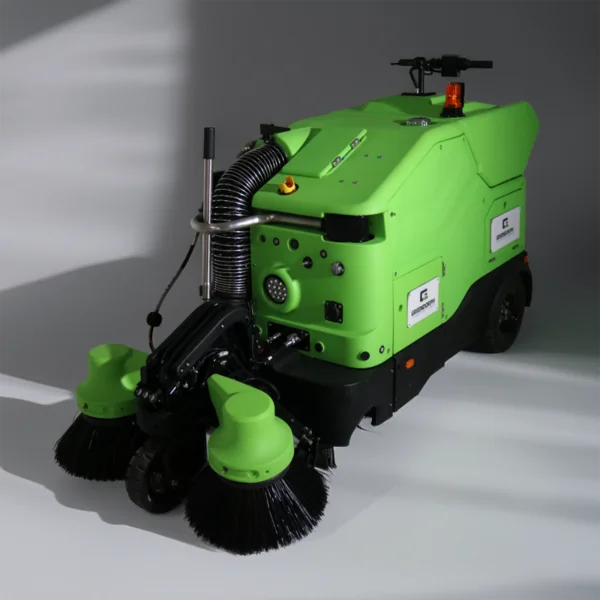
Public cleaning teams often cover sidewalks, pedestrian plazas, parking areas, and other busy outdoor spaces in one shift. The workload becomes heavier when workers must sweep, collect dust, rinse surfaces, and remove scattered debris with separate tools. A modern street sweeper can reduce this pressure by combining several cleaning steps and lowering repeated manual handling along the route.
Automation does not mean removing people from public cleaning work. It is more useful when machines take over repetitive movement, collection, and surface-cleaning tasks while operators still watch routes, obstacles, and site conditions. This shifts staff time from constant physical sweeping toward equipment operation, inspection, and targeted cleaning.
Why Public Cleaning Creates Labor Pressure
Public areas rarely contain one type of debris. Leaves, fine dust, wrappers, soil, and small litter may appear on the same route. Staff may need to switch between brooms, hoses, blowers, and collection tools. Each change adds walking, lifting, setup, and transport work.
Route length adds another burden. Workers may cover the same plaza, sidewalk, or parking area several times during a shift. When the process relies heavily on manual sweeping, physical fatigue can build as the route continues.
Autonomous and assisted functions reduce some of these repeated actions. Instead of asking workers to push or carry several tools across a site, one machine can handle movement and multiple cleaning steps from a single operating position.
Automation Changes How Crews Use Their Time
The main labor benefit comes from task consolidation. Equipment that sweeps, vacuums, sprays water, and controls dust can reduce separate cleaning passes. Operators can then spend more time checking corners, entrances, drains, or places where debris gathers unevenly.
Auto-follow functions can also help on routes with frequent stops. In suitable conditions, the machine can follow the operator, reducing repeated mounting, repositioning, and short-distance driving. This can be useful when workers need to move between the machine and nearby cleaning points.
A street vacuum sweeper can also reduce direct handling of loose dust and litter. Vacuum collection moves debris into the machine instead of requiring workers to form piles and transfer material by hand. The result is a less repetitive routine for public-space crews.
Multi-Function Cleaning Reduces Tool Changes
Labor pressure is connected not only to staffing numbers but also to the number of tools needed for one route. High-pressure flushing can loosen surface dirt. Water-spray cleaning can handle dusty sections. Turbine blowing can move debris from edges, while targeted tube collection can reach specific spots.
When these functions are combined, crews can move between different cleaning conditions without repeatedly returning for another tool. Dust-suppression misting can also help control fine particles during sweeping and collection.
This approach suits public areas where conditions change within a short distance. A pedestrian path may need general cleaning, while a nearby curb or corner may require stronger collection. Fewer tool changes can make the route simpler to organize and reduce unnecessary movement.
A Practical Example From Urban Cleaning Work
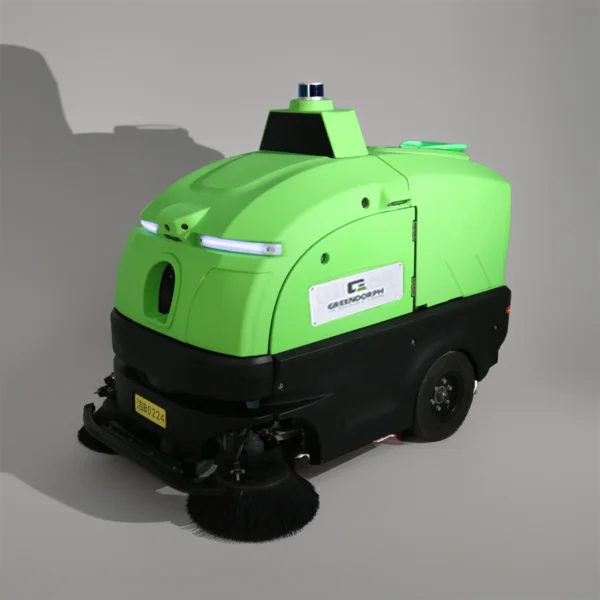
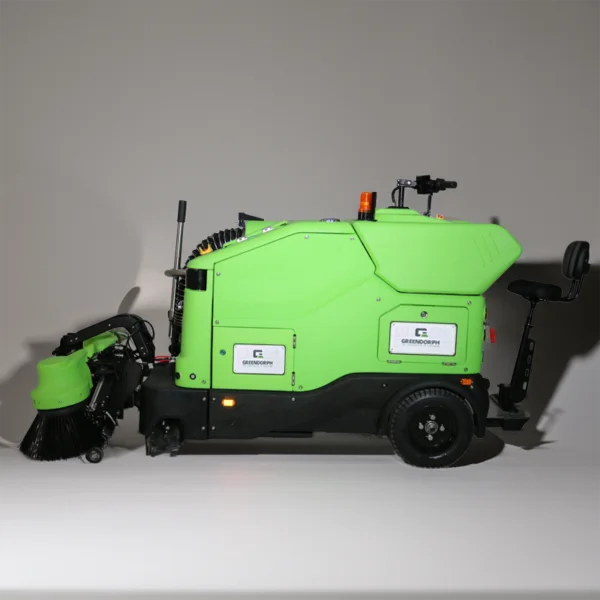
This is where our product development connects with the wider labor issue. Greendorph developed the Omniclean Urban Street Sweeper YJ80 for urban cleaning tasks that require flexible operation. It offers three modes: manual ride-on operation, auto-follow, and towed traction.
The YJ80 combines a vacuum system with high-pressure flushing, water-spray cleaning, turbine blowing, targeted tube collection, and dust-suppression misting. These functions allow crews to handle several cleaning steps with one compact unit instead of moving between separate machines and hand tools.
Its compact footprint helps operators work on sidewalks, pedestrian plazas, parking structures, and mid-sized outdoor areas. This matters because labor savings can shrink when a large machine needs repeated backing, turning, or repositioning in narrow spaces.
The unit provides up to eight hours of runtime on a single charge. Its electric operation is near-silent and produces zero emissions at the point of use. These characteristics can help crews plan longer cleaning sessions in areas where noise or local exhaust is a concern.
Route Planning Still Needs Human Judgment
Automated functions still require clear operating rules. Staff need to check pedestrian movement, slopes, obstacles, surface changes, and route boundaries. Auto-follow mode should be used in conditions that fit the operating environment and allow the worker to keep control of the cleaning task.
Maintenance remains part of the labor plan as well. Vacuum components, spray systems, collection areas, and batteries need routine inspection. A machine may reduce repetitive sweeping, but poor upkeep can create interruptions that cancel part of the time saved during operation.
Buyers should therefore evaluate labor reduction through the complete workflow. Useful questions include how many manual steps are removed, how often tools must be changed, how much repositioning is reduced, and whether operators can finish more of a route with less physical repetition.
A More Manageable Public Cleaning Workflow
Autonomous and assisted cleaning functions can reduce labor pressure by combining tasks, limiting repeated manual handling, and simplifying movement along public cleaning routes. The practical gain comes from reducing unnecessary walking, tool changes, repeated sweeping, and short repositioning tasks while keeping people responsible for supervision and judgment.
For teams evaluating a street vacuum sweeper, route width, debris type, charging plans, noise conditions, and required cleaning functions should be reviewed together. At Greendorph, we use these practical factors when developing equipment such as the YJ80, helping cleaning teams organize daily work around fewer repeated tasks and more focused operator control.