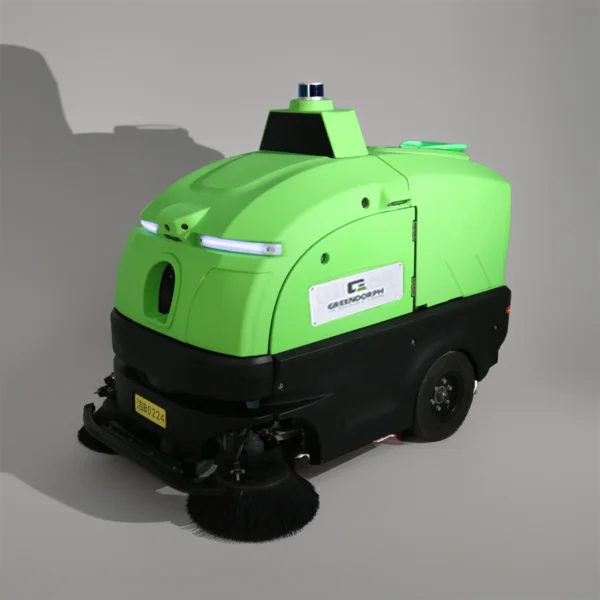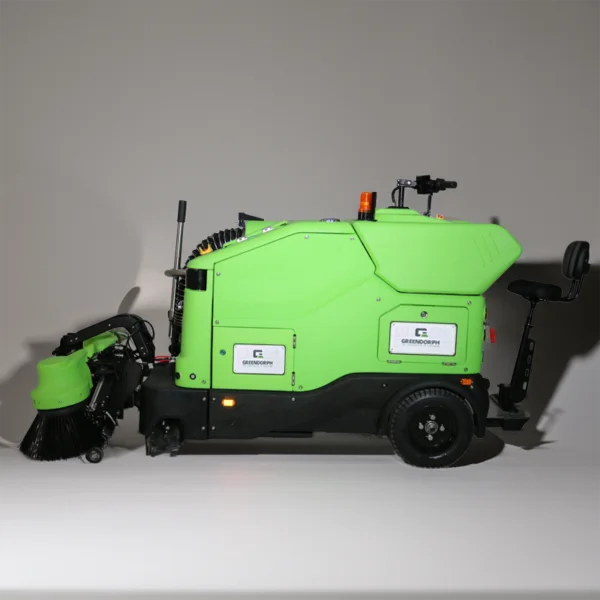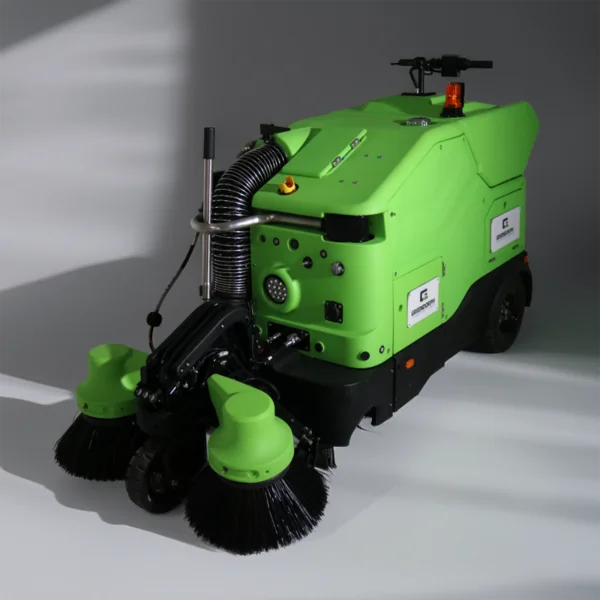
Selecting commercial surface maintenance machinery requires a meticulous evaluation of structural, mechanical, and power dynamics. High-traffic properties, ranging from urban plazas to multi-level garages, accumulate an unpredictable mix of sand, fine dust, and bulk litter daily. Leaving this debris on the ground acts like an abrasive sandpaper, wearing down floor sealants and creating slip hazards. Utilizing a modern, heavy-duty outdoor ride on sweeper offers facility managers an engineered method to protect infrastructure assets and maintain spotless public pathways.
A successful procurement process goes beyond basic catalog specifications to analyze how a machine interacts with real-world site challenges. Narrow pedestrian lanes, low overhead garage clearances, and varying concrete finishes demand highly agile steering and robust tire configurations. By understanding dust collection physics, battery endurance, and structural dimensions, operations teams can make highly informed investments. This analytical approach to buying industrial machinery upholds high daily sanitation standards while protecting your property’s capital budget.
Verifying Turning Radiuses and Spatial Maneuverability
Tight pedestrian corridors, winding park walkways, and concrete support columns present serious physical challenges for bulky cleaning vehicles. Large highway trucks risk colliding with delicate landscaping walls or blocking visitor traffic, causing costly property damage and operational delays. Buyers must prioritize compact equipment footprints that navigate narrow bottlenecks easily without sacrificing overall cleaning width or productivity.
A compact footprint helps a ride-on sweeper maneuver easily in tight spaces, from sidewalks and pedestrian plazas to parking structures and mid-sized outdoor areas. At Greendorph, we design our chassis frames to navigate these restrictive layouts safely, protecting both the machine and surrounding property fixtures. This spatial agility delivers hard-to-reach corners and narrow pathways receive the same deep clean as wide-open spaces.
Analyzing Battery Lifespans and Continuous Running Times
Maintaining extensive commercial and municipal properties requires consistent, reliable energy storage to facilitate that daily cleaning routes run smoothly. Traditional lead-acid battery packs require regular manual water top-offs and dedicated, well-ventilated charging rooms to handle hazardous gas emissions. Switching to high-density lithium-ion battery chemistries reduces these maintenance chores while providing exceptional fleet readiness.
Operators get up to 8 hours of runtime on a single charge, with near-silent electric operation and low-emission — making the YJ80 a reliable ride on vacuum sweeper for daily cleaning tasks. This extended battery performance allows your team to complete massive facility loops without experiencing frustrating mid-shift power drains. We prioritize high-efficiency electric drivetrains to help your maintenance staff cover maximum ground with minimal charging stops.
Engineered Closed-Loop Dust Control for Compliance-Grade Sanitation
Traditional sweeping equipment only achieves superficial debris clearance, often causing fugitive dust dispersion that fails modern public facility environmental compliance standards. Dry pavement cleaning in open commercial zones disturbs embedded micro dust, which degrades ambient air quality, compromises visitor experience, and creates ongoing sanitary inconsistencies for municipal and business properties.
Our ride-on vacuum sweeper adopts an engineered closed-loop dust management system tailored for commercial-grade field operation. It integrates pre-sweep humidification, enclosed airflow circulation and layered filtration structure to contain particulates at every working stage. Rather than relying on single passive filtering, this technical design blocks dust resuspension during high-speed sweeping shifts, delivering stable, compliance-friendly air quality outcomes for high-traffic public and commercial sites.
Comparing Brush Durability and Main Broom Geometries
Outdoor concrete and asphalt parking surfaces present incredibly harsh operational conditions, including rough expansion joints, heavy gravel, and speed bumps. Lightweight sweeping brushes quickly wear down under these demanding daily workloads, leading to poor debris collection and frequent, expensive brush replacements. Buyers must look for heavy-duty synthetic brushes designed to handle both heavy gravel and fine sand efficiently.
Adjustable side brushes allow operators to clear debris from deep gutters, expansion joints, and tight wall edges easily. We focus on optimizing brush contact angles to empower our machinery lifts diverse debris types with equal efficiency. This precise mechanical calibration keeps your pathways clean while significantly extending the operational lifespan of the brushes.
Streamlined Electric Mechanical Design for Reduced Fleet Downtime
From a professional equipment procurement perspective, mechanical complexity directly determines long-term fleet stability and total ownership cost. Conventional fuel-powered sweepers adopt multi-component hydraulic transmission systems with abundant wearable parts, which are extremely sensitive to outdoor dust, gravel and variable pavement conditions. Continuous field abrasion leads to frequent component aging, system failures and unplanned maintenance downtime.
Optimized for commercial fleet operation, our outdoor ride on sweeper adopts integrated direct-drive electric structure and brushless motor configuration. It removes redundant transmission components and eliminates the routine upkeep burdens of traditional fuel machinery. This industrial-grade simplified mechanical architecture improves environmental adaptability, lowers field failure rates, maintains continuous fleet availability, and delivers measurable cost savings for long-term facility asset management.
Securing Safe Operations with Standardized Quality Certifications
Deploying heavy cleaning machinery alongside employees, visitors, or students requires strict compliance with international safety and quality standards. Uncertified equipment poses potential electrical and mechanical risks that can lead to operational liabilities or insurance complications. Facility managers must prioritize hardware that has undergone rigorous third-party testing to guarantee safe operation in crowded public zones.
Looking for industry-recognized certifications verifies that the equipment meets strict mechanical and electromagnetic guidelines. We design our ride on vacuum sweeper units to meet the highest safety benchmarks, ensuring they hold CE and RCM certifications. This international recognition gives facility managers peace of mind, knowing our machines operate safely in both indoor and outdoor environments.
Adaptive Autonomy for Standardized and Scalable Facility Maintenance
Modern commercial facility procurement prioritizes standardized, replicable cleaning results rather than labor-dependent manual operation. Manual sweeping output varies greatly by operator experience, shift fatigue and on-site judgment, making it difficult for large properties to unify sanitation standards across multiple zones. Labor instability further aggravates inconsistent daily maintenance execution.
Our intelligent autonomous sweeping system delivers adaptive, scenario-based cleaning logic instead of rigid fixed-path travel. Equipped with real-time environment recognition and dynamic route adjustment capabilities, the equipment independently completes full-coverage, standardized sweeping with minimal manual intervention. This intelligent upgrade unifies sanitation quality across sprawling commercial layouts, solves the uncertainty of labor-dependent cleaning, and reallocates human resources to high-value facility management work.
Conclusion
Upgrading your facility maintenance fleet to modern, electric ride-on sweeping equipment is a vital step toward building a cleaner, safer, and more sustainable property. Moving away from manual cleaning routines helps properties cut labor costs, reduce water consumption, and lower carbon emissions. Choosing compact, quiet, and highly maneuverable electric sweepers protects your flooring assets while keeping operations highly reliable. At Greendorph, we are dedicated to providing the reliable autonomous solutions needed to keep global facilities looking their best.