Urban public pathways and corporate hardscapes require a methodical approach to particulate containment and general debris removal. Daily operations continuously deposit a fine layer of abrasive sand, seasonal leaf litter, and paper waste across asphalt road networks. Conventional mechanical brooms often worsen local air quality by launching these micro-particles directly back into the surrounding breathing zones. Transitioning to an advanced outdoor street vacuum introduces a high-velocity alternative that securely isolates fine debris without dispersing contaminants into the neighborhood.
Selecting the right commercial utility setup requires analyzing specific physics principles, structural dimensions, and overall energy use profiles. Different public spaces present unique challenges, such as tight historic alleyways, low-ceiling parking decks, and wide-open public transport plazas. By looking past basic product sheets to examine true field performance capabilities, facility procurement teams can design highly predictable cleanup programs.
The Mechanics of Mechanical Particle Displacement
Standard sweeping equipment utilizes a set of rotating plastic or steel wire brushes to push surface debris sideways into a collection hopper. While this physical action works well for lifting large stones or tree branches, it struggles with microscopic dust grains. The physical impact of the rotating bristles often throws fine silica particles forward, creating localized dust clouds on the road.
These escaping fine particles slowly settle back onto surrounding infrastructure, creating uncomfortable air quality conditions for nearby pedestrians and building occupants. Furthermore, mechanical bristles cannot reach deep into the low expansion joints of concrete pavements, leaving behind hidden dirt deposits. Over time, these remaining residues grind down the pavement surface under heavy vehicle tires, speeding up physical wear.
Harnessing High-Performance Negative Pressure Suction
Modern debris collection relies on creating a high-velocity negative-pressure air current to pull waste cleanly off the pavement. A continuous vacuum seal lifts light plastic cups, heavy gravel, and micro-particles instantly without relying on aggressive brush contact. This airflow method effectively reduces the risk of throwing dust forward, keeping the surrounding public environment remarkably clean.
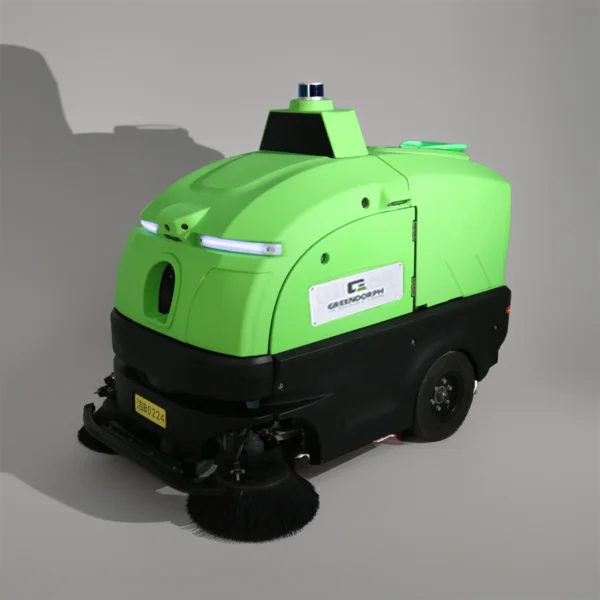
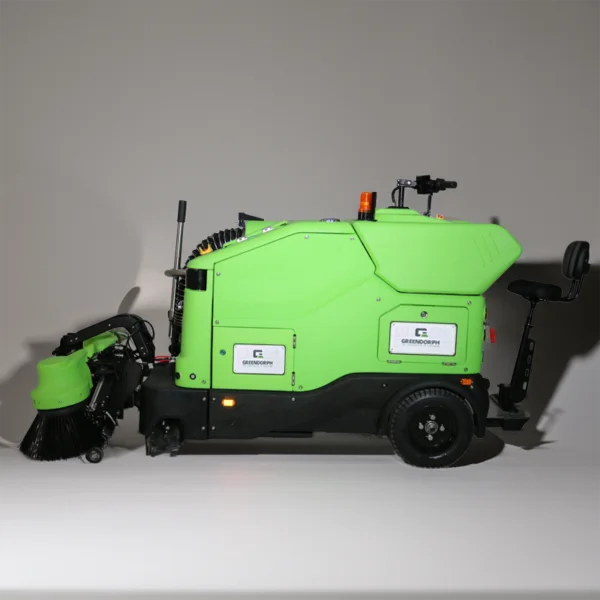
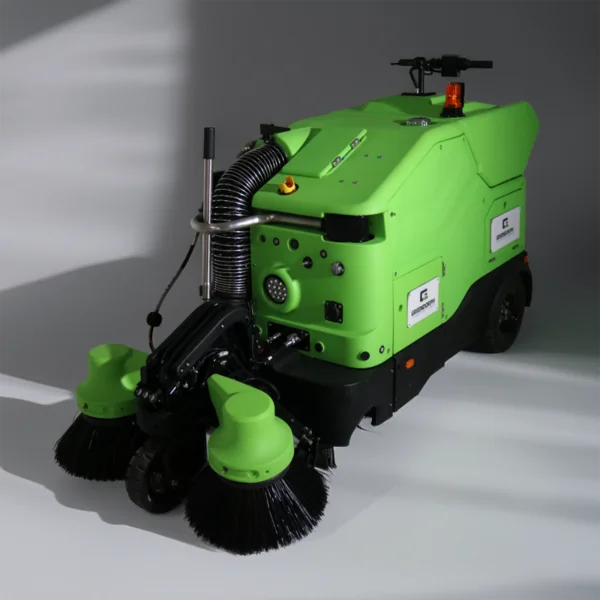
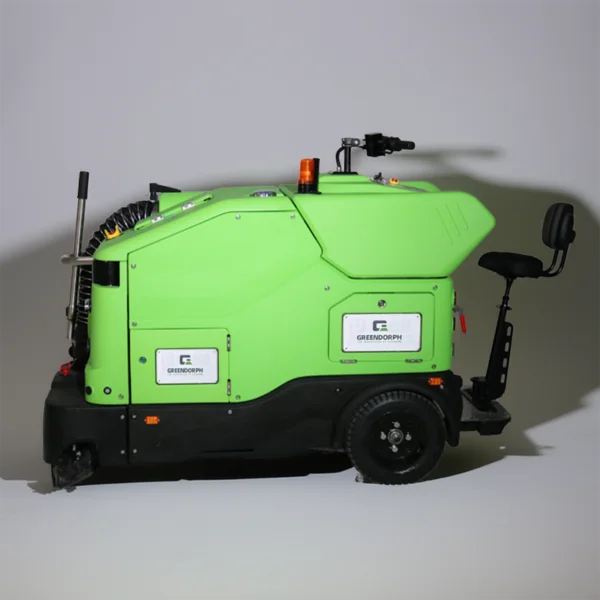
For instance, our specialized Greendorph YJ80 Vacuum Street Sweeper is built around a high-performance negative-pressure suction system to optimize urban dust control. This advanced configuration works in sync with five integrated functions: targeted vacuum-tube collection, intelligent dust-suppression misting, turbine-speed airflow blowing, water-spray cleaning, and high-pressure surface flushing. This comprehensive approach consolidates multiple cleaning functions into a single versatile platform.
Closed-Circuit Particle Containment Enabled by Wet Binding Technology
Conventional pavement cleanup methods separate dust suppression and debris collection as independent processes, which often leads to secondary particulate dispersion even when vacuum systems are in operation. Fine road dust stays suspended in airflow and may escape through equipment gaps, threatening the health of pedestrians in densely populated urban zones. Integrating wet binding into the suction workflow creates a closed-circuit containment strategy to resolve this inherent flaw.
Our outdoor street vacuum synchronizes precision misting and high-velocity negative-pressure suction. Tiny water droplets agglomerate micro dust ahead of collection, preventing particles from drifting outward. Matched with multi-layer filter assemblies, the whole system locks agglomerated contaminants within the hopper throughout continuous municipal cleaning shifts. This coordinated technology minimizes particle leakage and maintains stable ambient air quality in urban public areas.
Navigating Narrow Public Sidewalks and Plazas
Narrow public walkways, pedestrian corridors, and city plazas present serious layout challenges for oversized, heavy municipal machinery. Large utility trucks can easily crack expensive decorative paving stones, block active pedestrian paths, and disrupt local storefront businesses. Urban centers require agile, low-profile equipment designed to maneuver smoothly around street lamps, benches, and transit signs without risking structural property damage.
Our compact electric chassis models feature highly responsive steering layouts designed specifically to handle tight public pathways safely. At Greendorph, we focus on building agile utility vehicles that allow operators to maneuver around benches, trees, and signposts. This spatial agility delivers uniform deep cleaning for compact public plazas and expansive outdoor roadways.
Transitioning to Quiet Electric Power for Flexible Daily Shifts
Operating loud combustion-engine utility trucks during early morning shifts can create major noise disruptions for nearby residential properties. These high noise levels often force managers to delay essential cleanings, leading to scheduling conflicts and reduced productivity. Shifting to advanced, battery-powered electric drivetrains helps municipalities run quiet, eco-friendly cleaning shifts at any hour of the day.
Our fully electric street vacuum cleaner models operate near-silently for up to 8 hours per single charge. This extended runtime allows your municipal team to complete extensive sidewalk routes without experiencing frustrating mid-shift power drains. Moving to electric power cuts fuel expenses, reduces localized emissions, and keeps your neighborhood streets peaceful and quiet.
Streamlined Electric Drive Architecture to Cut Whole-Life Fleet Expenditure
Municipal sanitation vehicles run continuously on grit-laden road surfaces, creating harsh working conditions for transmission and hydraulic assemblies of fuel-powered sweepers. Abundant movable components suffer accelerated abrasion, triggering frequent fluid leakage, unexpected malfunctions and recurring professional service costs. Excess mechanical complexity raises the total cost of ownership for urban sanitation fleets year after year.
Equipped with brushless motors and direct-drive layouts, our sweeping equipment removes bulky hydraulic pipelines and numerous wearable transmission parts. This optimized electric framework eliminates routine upkeep tasks associated with combustion machinery. With fewer vulnerable components prone to failure, the equipment sustains stable performance under long-duration urban operations, curbs unplanned downtime and helps municipal departments control long-term maintenance spending.
Optimizing Labor Productivity Through Smart Fleet Automation
Persistent labor shortages and high employee turnover make it increasingly difficult for cities to maintain consistent daily cleaning schedules. Heavy manual sweeping is physically exhausting work, exposing cleaning personnel to harsh weather conditions and moving vehicle hazards. Upgrading to advanced, automated utility equipment helps bridge this labor gap, turning routine floor care into a highly efficient workflow.
Deploying a smart autonomous machine allows your valuable human staff to focus on complex building maintenance and safety. Our advanced automated systems handle navigation and obstacle avoidance on their own, requiring minimal manual supervision during active cleaning. This reliable performance maintains consistent cleaning outcomes while keeping your facility’s daily labor allocation highly productive.
Conclusion
It’s time to modernize public sanitation—electric vacuum sweepers deliver cleaner communities with lower costs, less water waste, and zero emissions. Compact and quiet, they navigate tight spaces while safeguarding your surfaces. Our team is committed to engineering low-emission autonomous solutions that keep public spaces pristine, inviting, and highly safe.