Heavy manufacturing plants, brick factories, and busy distribution warehouses face continuous challenges from abrasive dust, mineral shavings, and packaging waste. Left unchecked, fine particulate matter grinds down protective surface sealants, accelerates structural cracking under heavy forklift traffic, and poses respiratory concerns for employees. Manual floor sweeping or dragging standard push brooms simply cannot match the scale of large industrial acreage. Utilizing a specialized industrial cleaning machine provides operations managers with a reliable, structured methodology to handle these harsh environments smoothly.
Every manufacturing zone presents distinct architectural challenges, from narrow warehouse aisles packed with storage racks to open-air material handling bays. Evaluating specific equipment parameters—such as autonomous navigation logic, particle containment filters, and long-term drivetrain maintenance needs—is essential for procurement success. This technical evaluation helps teams transition away from unpredictable manual cleaning toward a highly reliable automated process. Choosing technology that matches your facility’s precise layout protects your infrastructure investment while keeping your annual utility budget fully optimized.
Managing Complex Debris Profiles in Heavy Material Manufacturing
Industrial zones generate a highly demanding mixture of heavy fragments and airborne dust that alters operational workflows throughout the year. Coarse gravel, metal filings, and shattered pallet pieces collect rapidly along loading docks, increasing the risk of tire punctures for transport machinery. Standard commercial sweepers often struggle with this dense debris or suffer premature component failures under heavy mechanical strain.
Our engineering focus centers on building robust collection systems that capture diverse waste profiles without requiring manual pre-sorting by operators. At Greendorph, we design our high-torque brush mechanisms to lift heavy materials and fine dust with equal efficiency. This advanced collection physics keeps busy forklift lanes effectively clear, ensuring a smooth and predictable operational flow for daily production.
Mitigating Fine Silica Dust and Safeguarding Facility Air Quality
Dry sweeping across concrete warehouse floors can easily trigger massive dust clouds, creating immediate inhalation hazards for staff. Industrial facility operations must prioritize high-efficiency filtration systems that capture fine silica and carbon soot securely instead of venting them back into the room. Investing in advanced industrial vacuum cleaners enables effective capture of these micro-particles, safeguarding staff health and shielding sensitive warehouse electronic equipment.
High-performance fabric filters keep fine concrete and chemical dust particles remain sealed within the machine during long shifts. We optimize these internal filtration paths to guarantee that exhaust air remains remarkably fresh and clear. This strict focus on air quality metrics makes automated vacuum systems perfectly suited for indoor manufacturing environments and food grade storage facilities.
Navigating Tight Architectural Spaces with Compact Autonomous Layouts
Restricted warehouse walkways, narrow inventory aisles, and busy assembly corridors challenge oversized industrial sweepers daily. Large utility vehicles risk colliding with structural support columns or blocking active production lines, causing expensive property damage and logistical delays. Plant managers require compact, highly agile machinery engineered to navigate around delicate manufacturing hardware and tight layout corners easily.
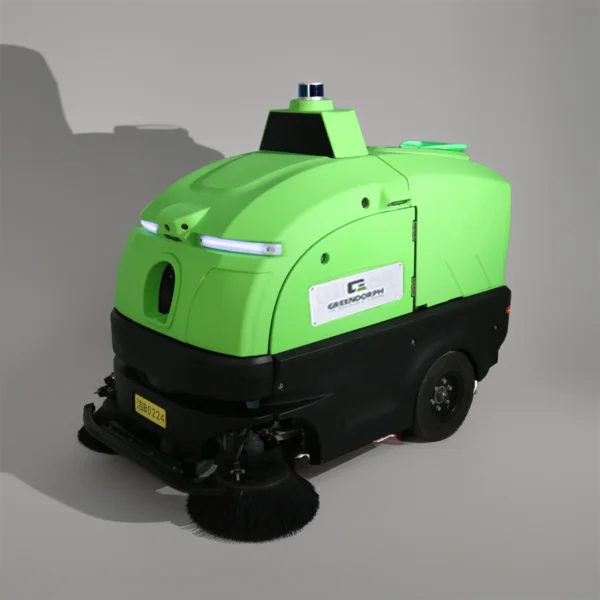
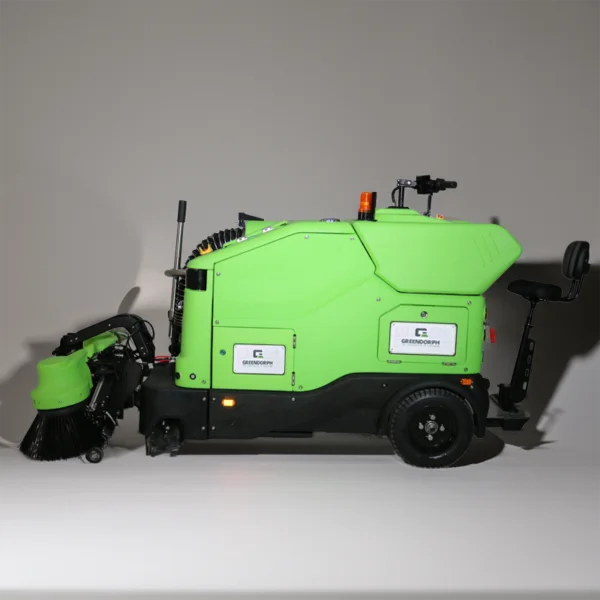
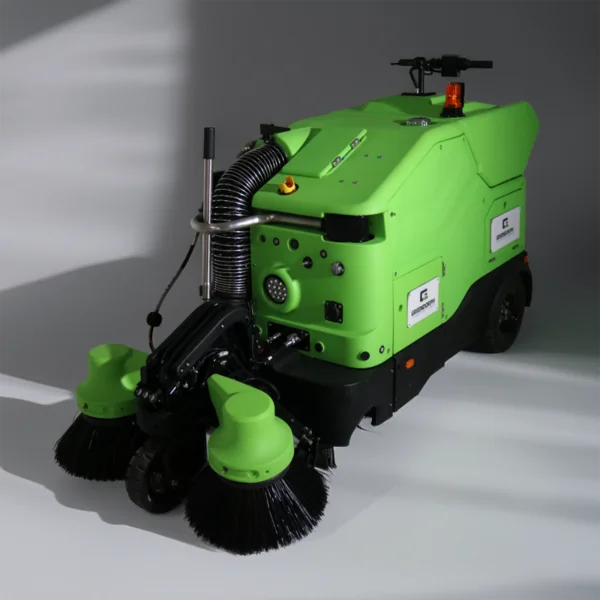
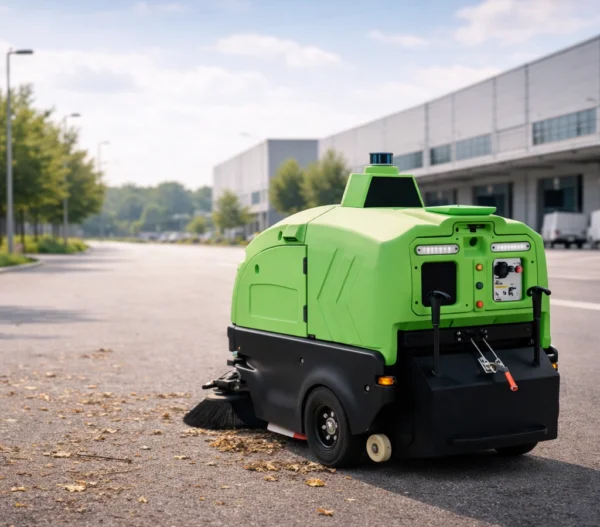
Our compact autonomous chassis designs incorporate advanced steering setups that allow the machinery to spin in place safely. For example, our specialized Greendorph Auto Sweeper YJ130 model is built to handle demanding outdoor and indoor environments seamlessly. This agile configuration allows the machine to clean right up to the edge of concrete barriers and access tight storage bays effortlessly.
Streamlining Facility Logistics with Proven Automation Case Studies
Real-world deployments across heavy industries demonstrate how intelligent automation transforms routine floor care from a constant chore into a hands-free workflow. For instance, the Austral Bricks case study showcases how automation solves heavy dust accumulation under demanding brick manufacturing conditions. This successful real-world application proves that intelligent navigation systems keep pace with the harshest physical manufacturing environments without requiring continuous human tracking.
Autonomous navigation systems follow fixed paths precisely, ensuring consistent debris removal without needing a constant human driver. Our industrial cleaning machine models deliver consistent, precise, and fully automated floor maintenance for any facility. This automated workflow frees valuable personnel to focus on complex building maintenance, quality control, and urgent facility security duties.
Long-Lasting Electric Power Supports Cross-Zone Scheduled Cleaning
Noisy fossil-fuel cleaning equipment imposes rigid limits on operation timing, as overnight cleaning activities risk generating noise pollution that disturbs surrounding residential areas. Restricted working windows disrupt standardized sanitation plans and may create accumulated waste on production and logistics surfaces. Modern battery-electric drivetrains break such constraints, supporting flexible, low-noise cleaning operations across all facility zones around the clock.
Our high-capacity battery packs deliver 6–8 hours of continuous operation per full charge. The extended runtime supports large-scale cross-zone cleaning tasks with few unnecessary stops. Greendorph optimizes electric drive systems for superior energy efficiency, allowing industrial sites to implement stable, all-day cleaning routines to match manufacturing and logistics timetables.
Simplified Electric Mechanical Layout Cuts Long-Term Servicing Costs
Industrial cleaning equipment works amid pervasive dust, metal debris and abrasive particles, which accelerate wear on the intricate hydraulic assemblies, transmission belts and fluid modules fitted on conventional combustion sweepers. Continuous abrasion raises risks of fluid leakage and unplanned equipment shutdowns, driving up recurring maintenance spending for industrial operators. Direct-drive electric architecture effectively alleviates these common pain points.
Equipped with brushless motors, our industrial vacuum cleaners cut down the quantity of wearable moving components substantially. This streamlined, high-power configuration delivers broad adaptability for diverse industrial floor environments and lowers routine servicing workloads. The refined mechanical structure improves operational stability, minimizing idle time and sustaining continuous cleaning service within factories and logistics hubs.
Enhancing Human Asset Productivity with Intelligent Navigation Systems
Persistent labor shortages and high employee turnover make it increasingly difficult for factories to maintain consistent daily cleaning schedules. Heavy manual sweeping is physically exhausting work, exposing cleaning personnel to harsh weather conditions and moving vehicle hazards. Upgrading to advanced, automated utility equipment helps bridge this labor gap, turning routine floor care into a highly efficient workflow.
Deploying smart autonomous machinery allows your valuable human staff to focus on complex building maintenance and safety. Our advanced automated systems handle navigation and obstacle avoidance on their own, requiring minimal manual supervision during active cleaning. This reliable performance sustains consistent cleaning outcomes while keeping your facility’s daily labor allocation highly productive.
Conclusion
Modernizing heavy industrial sanitation requires shifting away from loud, high-emission diesel sweepers toward clean, silent electric alternatives. Incorporating highly agile vacuum systems helps facility teams complete extensive cleaning routes quietly without disrupting nearby residential communities. These battery-powered utility vehicles keep plant floors clean, protect local air quality, and dramatically reduce long-term maintenance costs. Our team remains fully committed to engineering the robust, sustainable electric tools required to keep global industrial environments pristine and safe.