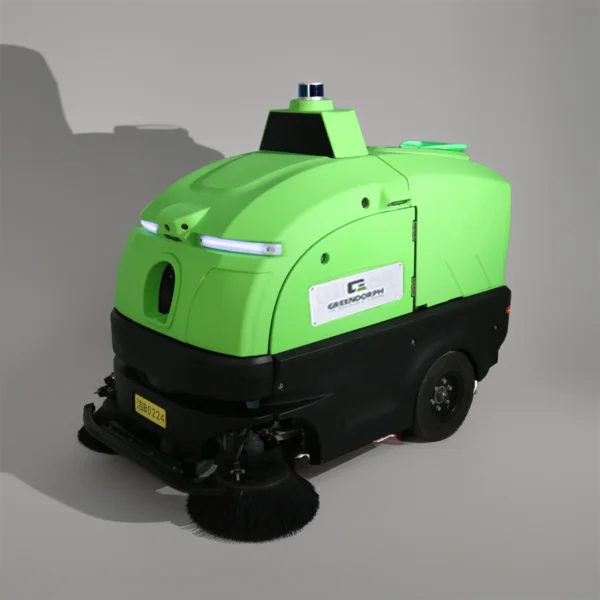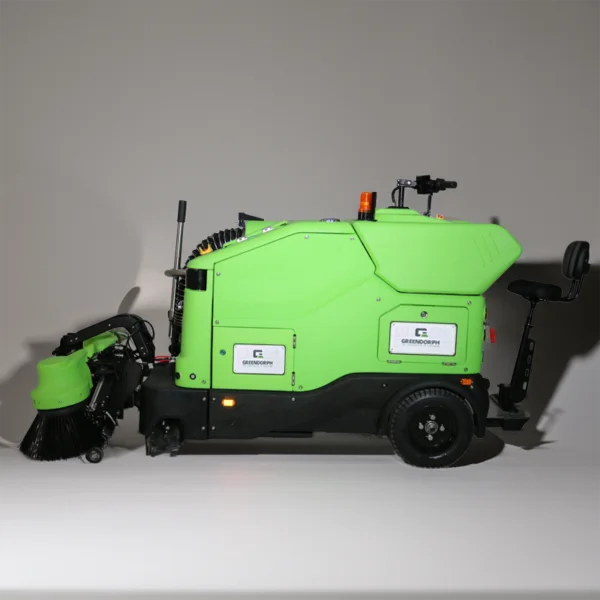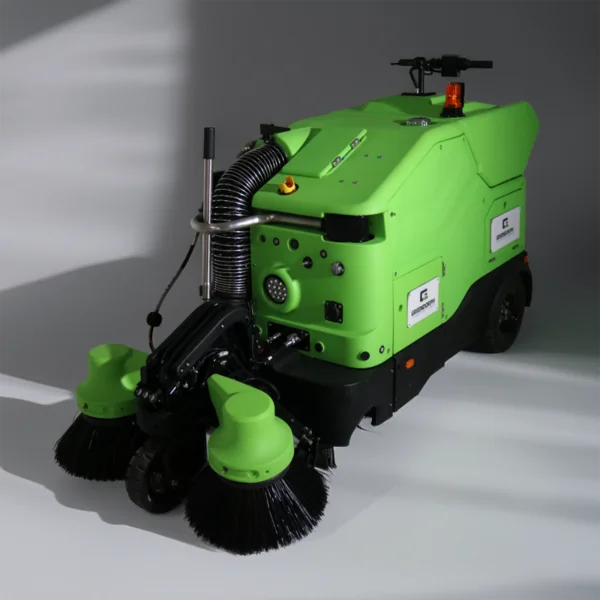
Preserving the aesthetic appeal and structural durability of communal outdoor spaces requires a systematic approach to surface sanitation and environmental care. Large residential estates, gated communities, and historic neighborhoods constantly face an accumulation of environmental debris, fine soil particles, and organic matter. Leaving these materials unmanaged allows them to settle deeply into paving crevices, where foot traffic grinds them down and speeds up structural surface wear. Utilizing a heavy-duty residential floor scrubber machine offers estate managers and neighborhood associations a highly predictable framework to maintain pristine shared pathways.
Residential grounds care involves addressing distinct architectural challenges, from expansive concrete parking zones to intricate brick-paved walking paths. Property teams often discover that small, lightweight indoor appliances like an autonomous home floor scrubber lack the physical capacity and rugged construction needed for outdoor hardscapes. By evaluating critical engineering parameters—such as mechanical brush downpressure, advanced multi-sensor navigation, and dust suppression systems—procurement teams can secure reliable long-term investments.
Understanding the Structural Scale of Shared Residential Hardscapes
Communal residential neighborhoods feature extensive networks of outdoor sidewalks, public plazas, and recreational courtyard layouts that demand specialized maintenance tools. Winding pedestrian paths and exposed concrete driveways cannot be cleared effectively using standard indoor cleaning products designed for tight household rooms. Instead, these large outdoor spaces require heavy-duty brush mechanisms capable of lifting deeply embedded dirt from rough, textured pavements.
Communal areas require robust equipment layouts that provide high cleaning efficiency within a safe, pavement-friendly weight distribution frame. Heavy municipal trucks can easily crack decorative paving stones or distort underlying soil basements, leading to expensive repairs. Compact outdoor utility machines bridge this gap perfectly, allowing neighborhoods to achieve professional-grade floor maintenance without risking any structural damage to their paths.
Overcoming the Seasonal Obstacles of Heavy Organic Debris Accumulation
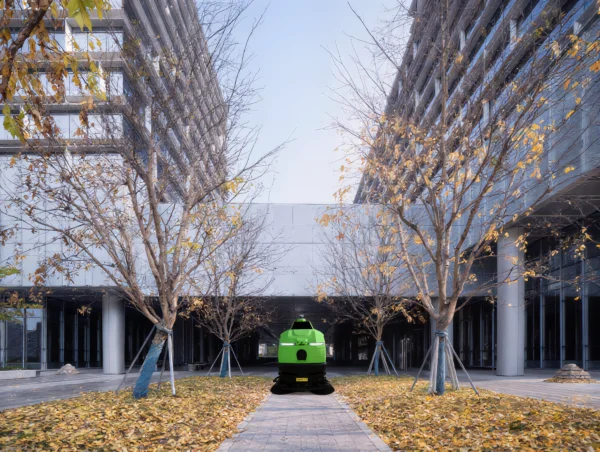
Outdoor residential spaces experience a continuous influx of natural waste that shifts drastically with changing weather patterns and seasonal drops. The iconic Gray Street features a dense canopy of mature trees and heritage red-brick pavements. While beautiful, they create a relentless maintenance cycle that quickly overwhelms basic property care tools.
The seasonal struggle highlights why standard sweeping routines fall short: the biggest enemy here isn’t just dust—it’s organic debris. Leaves and twigs constantly accumulate on the textured brickwork. Manual sweeping is too slow to keep up, especially during autumn when wet leaves stick firmly to the red bricks and create slippery pedestrian hazards.
Engineering Solutions for Complex Textured Stone Pavements
Clearing compacted leaves and fine sand from textured paving blocks requires matching mechanical brush rotation with strong vacuum suction forces. Standard commercial sweepers often pass over deep brick grooves, leaving hazardous dust layers and organic residues effectively untouched behind them. Modern utility equipment resolves this by utilizing adjustable, high-torque side brushes that actively pull debris out of recessed grout lines.
Our R&D team carries out targeted optimization for brush contact angles, enabling the equipment to deliver consistent cleaning performance for various forms of waste. Our dedicated sidewalk scrubbing equipment adopts adaptive mechanical brushing logic to clean coarse concrete pavement while slowing abrasive loss of brush bristles. Reasonable contact pressure effectively strips compacted gravel and damp organic residues, delivering pristine cleanliness for community public sidewalks.
Navigating Intricate Estate Paths via Advanced Multi-Sensor Fusion
Restricted neighborhood walkways, tight cul-de-sacs, and busy community center entryways present serious navigation challenges for large utility vehicles. Bulky cleaning machines risk colliding with decorative fencing, blocking private resident driveways, or disrupting peaceful neighborhood activities. Ground teams require compact, highly agile utility platforms engineered to navigate around delicate landscaping borders and unexpected path bottlenecks smoothly.
Using a combination of LiDAR, 3D cameras, and ultrasonic sensors allows a modern machine to map its surroundings in real time. This advanced autonomous setup enables flexible obstacle avoidance, ensuring that the equipment moves safely around pedestrians and parked cars. At Greendorph, we prioritize precise spatial tracking to keep community operations running smoothly without needing constant manual steering.
Differentiated Equipment Design Cuts Long-Term Fleet Maintenance Burden
Residential outdoor hardscape maintenance imposes far harsher operational wear than ordinary indoor environments, placing rigorous demands on equipment structural stability. Conventional fuel-powered sweepers rely on cumbersome hydraulic transmission systems and multiple wearable components, which are prone to aging and failure under long-term exposure to outdoor dust, fallen leaves and textured pavement abrasion. Such structural complexity leads to frequent professional maintenance and continuous operational cost pressure for property management teams.
Although an autonomous home floor scrubber delivers convenient cleaning performance for indoor flat floors, its lightweight structure and low-tolerance components cannot adapt to rugged outdoor residential pavements and brick road surfaces. Our professional outdoor electric sweeping equipment adopts brushless direct-drive design, greatly simplifying internal mechanical configurations and eliminating fragile hydraulic assemblies. This industrial-grade structural optimization reduces daily servicing frequency, improves field adaptability, and effectively lowers annual equipment maintenance expenditures for residential communities.
AI-Powered Autonomy Stabilizes Residential Sanitation Labor Efficiency
Community property cleaning faces universal operational pain points including unstable labor supply, high work intensity and inconsistent manual cleaning quality. Traditional manual patrol sweeping relies largely on human operation, easily affected by weather fatigue and subjective judgment, resulting in uneven cleanliness across residential footpaths and courtyard zones. Intelligent cleaning automation effectively solves the instability of labor-dependent maintenance modes.
Equipped with multi-sensor fusion navigation and dynamic path planning algorithms, modern autonomous utility equipment executes standardized, repeatable cleaning tasks with minimal human intervention. The machine intelligently avoids pedestrians, landscape facilities and temporary obstacles to achieve full-coverage cleaning of winding community paths. This intelligent operational mode standardizes daily sanitation results, releases manpower for high-value community management work, and realizes sustainable optimization of residential workforce allocation.
Conclusion
Caring for extensive residential architecture requires moving away from outdated manual push brooms toward quiet, fully automated electric utility machinery. While standard indoor appliances fit indoor rooms, large estates demand rugged outdoor platforms to handle heavy leaf accumulation and textured hardscapes. Transitioning your property workflows to low-emission battery power protects delicate stone pathways, improves local air quality, and lowers annual repair bills.